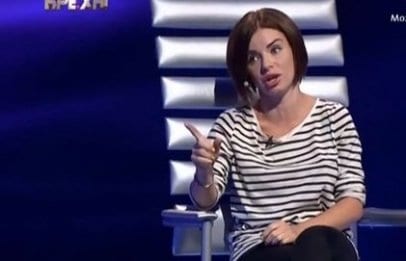

Appearing on a Russian television show, gay-for-pay pop star Julia Volkova, one half of “lesbian” music duo TATU, said she would never accept a gay son.
“I would condemn him [for being gay], because I believe that a real man must be a real man,” she said. “God created man for procreation; it is the nature. The man for me is the support, the strength of . . . I won’t accept a gay son.”
Volkova’s homophobia pertains only to a theoretical son: when pressed by the interviewer, she said she would accept a lesbian daughter because for men being gay is a “bad freedom” and the “freedom for men” is that they get to, and should, sleep with lots of women. Men have “no right to be a fag.”
“I have many gay friends,” Volkova continued. “I believe that being gay is all still better than murderers, thieves or drug addicts. If you choose out of all this, being gay a little better than the rest.”
Volkova’s bandmate Lena Katina has previously confirmed that TATU’s lesbian image was manufactured; following the controversy of Volkova’s statements, she took to Facebook to make her own:

Since the story broke, Volkova’s interview has been removed from YouTube.
 Why you can trust Xtra