The year is 2015, and Luke Griffin is a settled 32-year-old househusband in Washington, D.C. He is married to America’s only openly gay senator, Barnes, whom he met on a reality show 10 years ago. Together, they lead a picturesque life with their two young kids.
But when a scandal reveals that Barnes has been sleeping with several of his congressional staffers and threatens to withhold custody of the kids during the ensuing divorce, Luke finds himself in dire need of money. Cash-strapped and cornered, Luke returns to Endeavor, the glitzy reality TV show that won him fame in his early twenties.
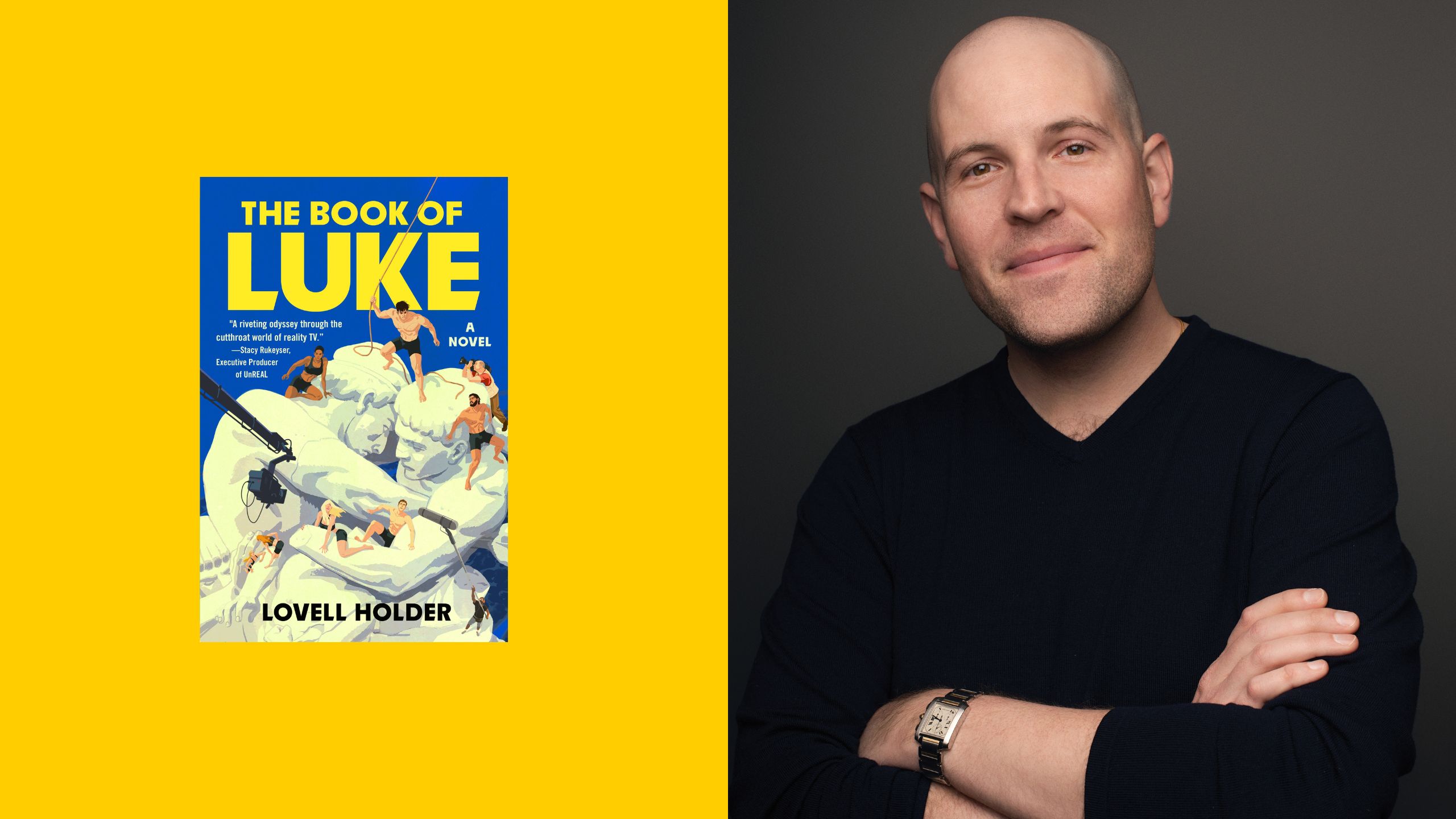
That’s the premise of The Book of Luke, the debut novel by screenwriter Lovell Holder. The Book of Luke jumps between Luke’s first run in Endeavor’s early seasons in his twenties and his semi-forced return later on. The story also slowly pieces together Luke’s role in a tragedy that changed the course of his adult life.
Beyond satisfying Survivor fans, Holder’s debut also exemplifies a growing trend in contemporary queer fiction. Rather than stories being anchored in themes typically found in stories starring gay characters such as coming out, first love and homophobia—Luke shows how authors are imagining more mature stories for their queer protagonists, including stories about parenthood and dicey queer politics. This expansion of themes reflects how real-life social advancements like marriage equality and greater queer representation in media have made stories like Luke’s more plausible.
Since Obergefell v. Hodges, the Supreme Court ruling that legalized same-sex marriage across the U.S., the number of real-life same-sex married couples has nearly doubled, according to U.S. Census Bureau data. As of 2024, there are also over a million LGBTQ2S+ adults in the U.S. who are parenting children, according to the Bureau.
The Book of Luke reflects the rise of gay spouses and parents. When Luke joins Season 1 of Endeavor in 2003, he is one of the only gay cast members on the show. Another competitor he meets is a closeted Bollywood celebrity whose coming out could jeopardize his career. His fellow contestants express surprise that Luke, a former football star, came out with such little fuss.
(In Survivor’s first season in 2000, there were two queer contestants: Sonja Christopher, who was the first person to be eliminated, and Richard Hatch, who went on to win the season. Hatch’s win was seen as quietly groundbreaking at the time.)
But ten years later, when Luke returns to the show in 2015, being gay is a non-issue for the other cast members, and there are many more out characters on the show. The bigger drama brews around Luke’s Republican husband supporting anti-trans policies to get ahead in D.C., and other queer contestants ostracizing Luke as a sellout.
In other words, the queer themes in The Book of Luke texture the plot, but they don’t define it. Homophobia and stigma against gay people still plays a role in the story—especially in a betrayal that shapes Luke’s life after the first season—but the world of Luke is tolerant enough to allow other themes to take priority. Luke can be a former football star, a tabloid heartthrob, a dad and even a Republican man’s househusband, all without suspending disbelief that these successes aren’t believable because he’s gay. This progress allows other, more contemporary issues, like trans acceptance and what it means to be gay in the public eye, take up more space in the novel.
Beyond The Book of Luke, other fiction in the past decade has also evolved to show queer characters in more nonchalant environments, allowing new types of stories to breathe. Less, the novel by Andrew Sean Greer that won the Pulitzer Prize for fiction in 2018, focuses on a novelist pushing 50 who travels the world to avoid attending his ex-boyfriend’s wedding. Aging, avoidance and adventure are the primary themes in the novel, not someone coming out of the closet in their youth.
Or take Four Squares by Bobby Finger (2024) and The Heart’s Invisible Furies by John Boyne (2017). Both novels follow older protagonists in the present day looking back at their younger years during much more dangerous times to be gay. In Four Squares, it’s a novelist in his 60s remembering the horror of the AIDS crisis in 1990s New York City. In Furies, it’s a gay man born in 1940s Ireland marvelling at how much progress has occurred in his country over his lifetime. Both stories can only exist because it’s believable that their main characters can make it past the hurdles of their youth and find peace in adulthood.
To be fair, happier stories for LGBTQ2S+ characters existed before 2015 and the era of reality TV. E.M. Forster’s Edwardian-era romance Maurice comes to mind, as does the pulpy lesbian novella The Price of Salt by Patricia Highsmith, published in the 1950s. Both of these stories were revolutionary for their time because they portrayed adult queer characters experiencing happy endings with their partners—even if the actual world around them may not have caught up, tolerance-wise.
But these stories were both billed as fantasies, not realistic fiction. And the main conflict in the stories still centre around a covert romance. In stories like Luke, Less and Four Squares, there is nothing to hide.
Another caveat: this explosion in more relaxed gay fiction has not included everyone. Many of these modern books star white, affluent gay men who can afford to travel or live lavishly in major, progressive cities. There are fewer books about queer women going abroad to escape a breakup, or stories about Black trans characters juggling marriage and parenthood. (Although, this is one trend in fiction that doesn’t reflect real life; a higher percentage of Black LGBTQ2S+ adults are parents these days than white ones.)
A frothy homage to Survivor may not, at the surface, appear as if it has anything to do with the journey to LGBTQ2S+ equality. But it’s exactly that unremarkableness that makes The Book of Luke so noteworthy. In Luke’s story, competitions involving snake pits or flying up to Alaska take up more pages than discussions of homophobia.

 Why you can trust Xtra