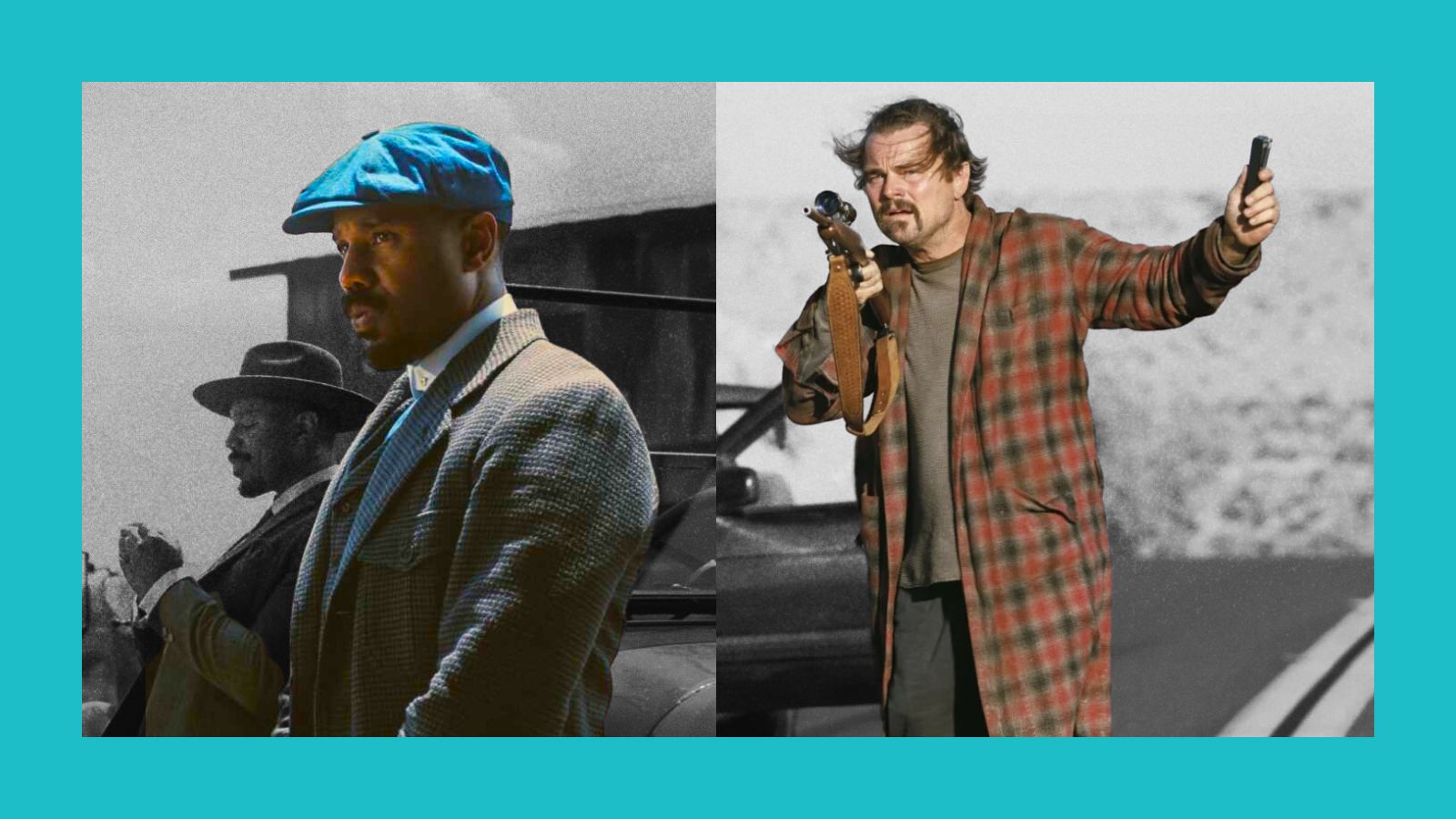
This time last year, my knowledge of what the future held was dubious at best, but I was certain of one thing: Anora was going to win Best Picture. Having swept key precursors like the Directors and Producers Guild Awards, indie darling turned industry superstar Sean Baker’s name was as good as stamped on that most coveted of Academy Awards. But this year, the Oscars race is as unpredictable as everything else in the world.
Let’s start with Best Picture. Although Paul Thomas Anderson’s revolutionary epic One Battle After Another has seemed to be hurtling, unabated, toward the prize all season, a last-minute Sinners surge is threatening to lap Anderson’s frontrunning film. Ryan Coogler’s historical musical has been unexpectedly picking up key awards at the tail end of the season—supporting actress Wunmi Mosaku won a BAFTA, and both lead actor Michael B. Jordan and the film’s ensemble scooped up surprise wins at the Actor Awards. Tack those wins on top of the film’s near-certain Best Original Screenplay Oscar (and the fact that Sinners is, by far, the most-nominated film in Oscars history), and you’ve got a serious contender.
Although One Battle After Another hasn’t missed a beat with precursor wins—so far, it’s taken top prizes from the Directors Guild, Producers Guild, Golden Globes, Critics Choice and BAFTA—sometimes frontrunner fatigue can kneecap a juggernaut’s odds at winning. In 2017, Moonlight overtook La La Land; in 2019, Green Book bested Roma; and in 2022, CODA stole The Power of the Dog’s Best Picture Oscar out from underneath it. In each of these recent cases, a big movie helmed by a major auteur was beat out last minute by a movie which, for whatever reason, felt better to vote for. Moonlight’s indie charm, Green Book’s inoffensive plot and CODA’s warmth won out over the classic industry narratives of directors Damien Chazelle, Alfonso Cuarón and Jane Campion, all of whom were seen as having made the best work of their landmark careers and worthy of the industry’s top prize.
It’s not difficult to see the parallels between Paul Thomas Anderson, who is probably the most revered American director without an Oscar, and Ryan Coogler, who is an established auteur in his own right but lacks the “overdue” narrative bolstering Anderson’s Oscar campaign. For the past two years, the Academy has inundated an “overdue” director with gold; Christopher Nolan won Best Director and Best Picture for Oppenheimer in 2024; then Baker won the same awards, alongside Best Original Screenplay and Best Editing, for Anora the following year. It’s impossible to say whether the Academy will continue that trend this year with Anderson, but if he loses, it will surely signal that the priorities of the Oscars voting body have changed.
Both Sinners and One Battle After Another would be worthy winners. They’re both ambitious, original and highly entertaining movies that tap into a collective malaise about the state of America. I’d bet on Anderson because he seems poised to win both Best Director and Best Original Screenplay, which are the two most correlative awards with Best Picture (only one film has won Picture without winning the other two since 2000: Chicago).
It also seems like One Battle has better acting prospects than its competitors. The Best Supporting Actress race has been phenomenally competitive this year, with One Battle’s Teyana Taylor, Sinners’ Mosaku and Weapons’ Amy Madigan dividing the major awards. Although Madigan has momentum after recently winning an Actor, it would be odd for her to take the Oscar, despite her industry support and veteran status. The last time somebody won in this category for a performance in a film not nominated for Best Picture was Regina King, who took the prize for If Beale Street Could Talk in 2019. While Mosaku and Taylor deliver awards-worthy performances in their frontrunning films, Madigan’s is undeniably the most transformative and flashy of the bunch. But I’m also having war flashbacks to last year, when I wrongly thought that Demi Moore, another industry veteran nominated for a horror film, would win over Mikey Madison, a BAFTA winner who was nominated for a terrific performance in a Best Picture winner. In my heart of hearts, I think this will be a very tight three-horse race, but I’d give Mosaku, the soul of the Academy’s favourite movie, Sinners, the edge.
Historically, films almost never win Best Picture without winning at least one acting prize, and I don’t think One Battle will be an exception. Sean Penn seems to have locked up the Best Supporting Actor win for his unforgettable Elmer Fudd-esque performance in Anderson’s film. He is at once ferocious and pathetic, fearsome yet rotten. Penn’s is the performance I most vividly remember from the movie (although I think about the “My name is Junglepussy” monologue on a daily basis). It’s pitch-perfect prestige acting, and I couldn’t dispute his win, even though it would be Penn’s third Oscar, and he’d be beating worthy opponents like Stellan Skarsgård, who ate his role in Sentimental Value. Above all, I’m grateful Penn’s robbing Frankenstein, a mess on all fronts, of a win here.
The lead acting categories seem a bit tidier. For maybe the best acting I’ve ever seen, Jessie Buckley will take Best Lead Actress for Hamnet, a movie that would win in almost every category if I were in charge of the Oscars. In the men’s category (yawn!), Timothée Chalamet has been lurching toward victory for his frenetic turn in Marty Supreme, but his path has recently been obstructed by some tough losses. Chalamet is coming into the Oscars without a BAFTA or Actor Award for his performance, and the last person to win Best Actor without winning either of those prizes was, funnily enough, Penn for 2003’s Mystic River. Jordan, who bested Chalamet at the Actor Awards, could swipe Chalamet’s coveted Oscar out from under him. And frankly, who could complain? While Chalamet is an unrelenting force in his film, Jordan plays two (really three …) characters in Sinners, with totally distinct personalities and emotions and faces. Why shouldn’t he be anointed for carrying the film of the year with the best performance(s) of his career? I’d be happy with either win, but don’t be surprised if Chalamet is foiled at the Oscars once again.
And while I’m overall happy with the nominee selection this year, I have a big bone to pick with the Oscars this year. Actually, I have two bones to pick, though I believe they are symptoms of the same problem.
For the past few years, the Academy has consistently nominated the film that won the Palme d’or, the highest prize of the Cannes Film Festival, for both Best Picture and Best Director. This has been a welcome trend, which has led to a series of excellent international films, like Anatomy of a Fall and Triangle of Sadness, receiving an influx of global attention. But this year’s Palme winner, Iranian director Jafar Panahi’s universally acclaimed It Was Just an Accident, was shut out of Picture and Director, though it landed nominations for Best International Feature and Best Original Screenplay. After last week’s killing of Ayatollah Ali Khamenei, who led the government that tortured and exiled Panahi for his films, Accident could not be more relevant.
It’s shameful that this earthquake of a film was snubbed for unequivocally inferior movies (looking at you, F1!). In a country that is culturally hostile toward Muslim and Arab people—and militarily hostile toward Iranians, specifically—Panahi’s absence from the biggest categories, particularly after his Palme win, strikes me as loaded, and awfully telling about the state of the Academy.
Similarly, I have a serious issue with the snubbing of Chase Infiniti for her leading performance in One Battle After Another. The Academy has a sordid history of snubbing Black actors for great performances; Viola Davis in The Woman King, Danielle Deadwyler in Till and Lupita Nyong’o in Us, all of whom missed expected Oscar nominations, come to mind. And though several Black actors received deserved nominations this year, Infiniti’s snub reeks.
Some have attributed it to a desire to nominate Kate Hudson for her saccharine turn in Song Sung Blue. Infiniti is a newcomer who will have other chances, and Hudson is Hollywood royalty (and sang and did an accent and cried in her film), these people say. I don’t buy this. Last year, Mikey Madison, who is just a year older than Infiniti, won an Oscar for playing the lead role in a Best Picture frontrunner. Infiniti was more than worthy of at least a nomination. She carried One Battle on her back, duelled with Sean Penn and Leonardo DiCaprio and Regina Hall and swallowed every scene she was in. Her absence from the nomination list, like Panahi’s, ought to be called out.
Regardless of its shortcomings, the awards beast trudges onward. The Oscars are taking place on the ides of March, and for the first time since I can remember, I won’t be watching. I’m going on vacation, and on the night of the Oscars I’ll be on the summit of a Central American volcano, suffering from altitude sickness and without access to the broadcast. When I descend back to Earth on the morning after the ceremony, I’m certain that my certainty about the Academy Awards will have been shaken once again.

 Why you can trust Xtra