On Sunday, June 26, Toronto queers will show their pride a little earlier than anticipated.
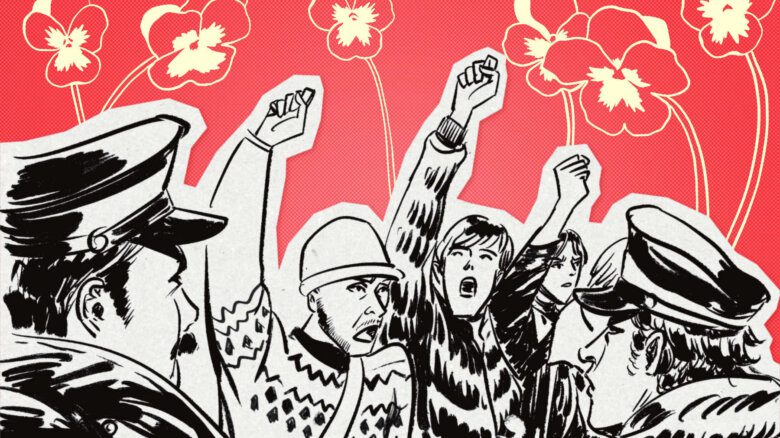
Organizers of a grassroots march called Stonewall TO will meet at Queen’s Park at noon and take to the streets, marching to the 519 Church Street Community Centre. They’ll be paying homage to the 41st anniversary of the Stonewall Inn riots, which spearheaded the gay liberation movement.
For Sasha Van Bon Bon, an organizer and representative of the event, it’s a time to question the changes in queer culture often hastily labelled as progress. With the city’s ongoing threats to pull funding from Pride Toronto this year and Queers Against Israeli Apartheid’s (QuAIA) self-removal from the 2011 parade, Van Bon Bon says she felt it was important to showcase a more political Pride.
“I was watching a lot of the things going on with the city threatening to pull funding because of QuAIA and QuAIA very quietly dropping off,” she says.
Van Bon Bon is concerned that when queer people partner with corporations or governments they are forced to compromise with people who have an agenda that is incompatible with queer liberation.
“From the point of view as a sex worker, it might be QuAIA on the chopping block at the moment… but sex workers won’t be far behind.”
“Pride was always about who we sleep with,” Van Bon Bon says. “As far as I’m concerned, it’s time to kick them [corporations and government] out of bed and get back to community organizing…we are so brilliant and so capable of doing that on our own.”
But Stonewall TO isn’t just about defending QUAIA. It’s a march that, according to Stonewall’s Facebook group, seeks to “celebrate queer liberation in all its variances” and “break the city and corporate stronghold.”
The march will begin at Queen’s Park and end at The 519, where protesters will converge with an event called Back to Our Roots, described as “a day of dancing, performance, art making, mobilizing and activism,” according to a press release.
The event will happen five days before Pride weekend, leading many to identify it as a protest against the corporate parade and tourism event of Toronto Pride. But for Van Bon Bon, Stonewall TO “is not an alternative to Pride.” She’s quick to say that the Stonewall riots, spontaneous actions against police brutality directed at queer communities, had little in common with government-funded Pride parades of today. “What Pride has turned into does not speak to the experience of the vast majority of queers,” she says.
She points to the success of last year’s grassroots Take Back the Dyke event.
“It was completely community driven,” she says. The event eschewed police presence in favour of volunteer medics and marshals. Organizers put in $500 of their own money, which was quickly returned through selling baked goods.
“Why do you need a budget to march down the street?”
Francisco Alvarez, of Pride Toronto, says that protests like Stonewall TO are “welcome” in Toronto.
“Pride is not just the official event,” Alvarez says. “Commemorating Stonewall is a really great thing to do, and we absolutely support people’s right to… demonstrate however they want.”

 Why you can trust Xtra