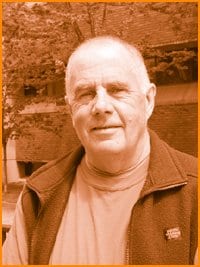
Al Johnston says he “never in million years” expected to attend a Pride party at a mainstream seniors centre.
But that’s exactly what he’s going to do next week, when Vancouver’s 411 centre holds its first-ever Pride celebration Jul 30.
“It means a lot [to me],” says the 64-year-old gay man and 411 regular. “I’m really looking forward to it.
So is Grace Owens, another 411 regular who has been helping Johnston, and the rest of the 411 queer committee, prepare for the upcoming event. It’s important to reach out to lesbian and gay seniors because “we do have unique issues,” says the 63-year-old lesbian.
Many queer seniors are still afraid to come out, she explains. “If you lived in fear most of your life, you’d be the same way.”
“People of my generation went through a lot of garbage,” Johnston agrees. “You have no idea what it was like. You couldn’t come out to your boss. You certainly couldn’t come out to your landlord. I was kicked out of the navy and kicked out of the Salvation Army.
“But I don’t dwell on it,” he continues. “I’m very out and gay-and I make no bones about it. I like being out.”
Now, Johnston is hoping the 411’s Aging with Pride party draws other gay and lesbian seniors out of the closet and into the festivities. “That would really turn me on if 200 people showed up for this thing,” he says.
With its new, increasingly gay-friendly bent, the 411 seems to be leading the way among mainstream, Canadian seniors centres.
Most mainstream centres don’t want to know about gays, Johnston says. But a handful of people at the 411 are beginning to change that. “Bit by bit we’re chipping away.”
It hasn’t always been easy.
Many members reacted with hostility when the 411 first created its gay and lesbian committee-and started talking about gay seniors’ needs-about two and a half years ago, Johnston says. Notices on the bulletin board wouldn’t last a day before people ripped them down. People would grumble about the gays and lesbians and ask what those people were doing here, he says.
But things change, people evolve. Today, there are two out lesbians on the 411’s board of directors, a designated gay and lesbian coordinator, a rainbow flag in the lobby and sensitivity workshops for staff and volunteers.
It’s important to recognize that queer seniors exist, says Sue Sorrell, the 411’s gay and lesbian coordinator. They’re largely invisible and often isolated, but they do exist and they do have needs.
She, too, is hoping the 411’s first Pride party will show people that the centre is a safe and welcoming place for gays, lesbians, bisexuals and transgendered people.
She is also hoping the party becomes an annual event.
So is Johnston. “Hopefully, next year, it will be even bigger and better,” he says.
 Why you can trust Xtra