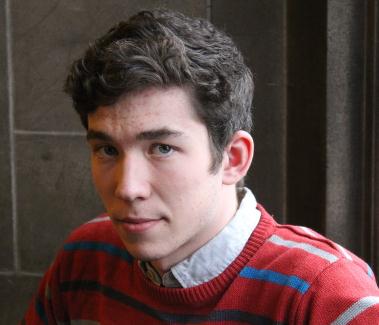
"I feel a complete lack of a political stance on gay issues," says Bent director Carter West.
The use of the pink triangle as a marker for homosexuals in Nazi Germany was still largely unknown in gay circles when Bent first hit London’s West End in 1979. Martin Sherman’s dark saga of homos under the Third Reich brought the symbol and the persecution it represented into mainstream gay consciousness and rallied gays to reexamine their history at a pivotal moment in queer activism, a decade after Stonewall and shortly before the AIDS crisis.
The next generation of artists is taking a stab at the canonical work, but with a new set of politics.
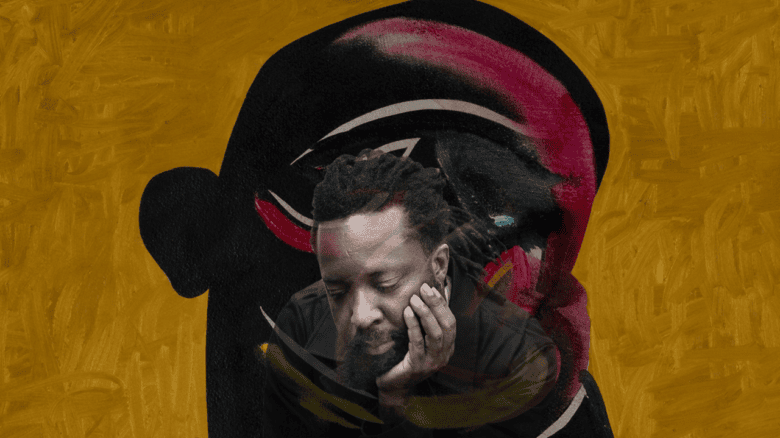
“Being gay in Canada today is very different from the time the play is set or when it was written,” says director Carter West, between puffs on a cigarette. “What the show meant to me had less to do with history or the characters’ ability to accept their sexuality than the love story it tells, so we’ve tried to make those other aspects subordinate.”
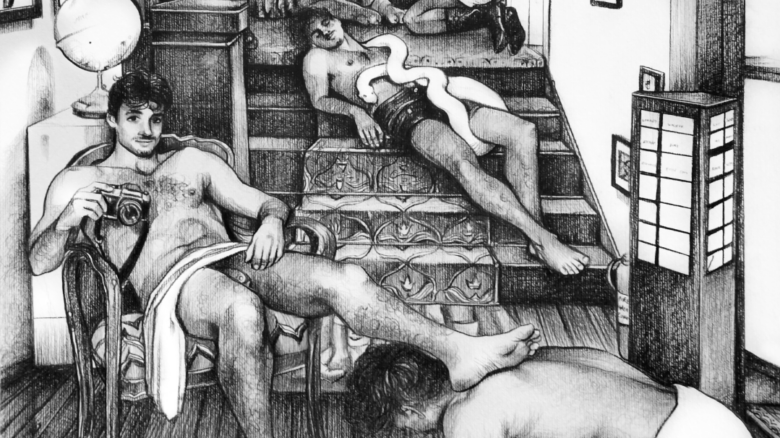
Max (Liam Volke) and Rudy (Jordan Gray) are a polyamorous gay couple, living in 1930s Berlin. While trying to arrange passage out of the country, they’re arrested by the Gestapo and sent to a concentration camp. After Rudy is beaten to death by fellow prisoners on the train, Max convinces the guards he’s Jewish rather than gay, hoping to avoid the same fate. At the camp, Max falls in love with Horst (Jad Farris) and the two carry on a clandestine affair of words, never being able to physically touch.
“We get these two separate pictures of intimacy based on the characters’ struggle to accept someone in their life,” West says. “For me, that’s been a major part of the gay experience. It’s wonderfully difficult and interesting to love someone of the same gender, so my goal here is to tell two different stories of male intimacy.”
West’s approach to the show may say less about his personal journey than his generation’s struggle to connect with queer history.
“I feel a complete lack of a political stance on gay issues,” he says. “Not because I don’t think it’s important, but because I don’t understand how to access it. I know I’m able to live the way I live because of the work of past generations. But in terms of how to move forward with that work or contribute to it in a meaningful way, I’m at a loss.”
Raised in a post-internet world where sex is never further away than the next smartphone app, West sees today’s battles as having less to do with the right to express one’s sexuality than the ability to form meaningful connections.
“The current crop of gay networking platforms have made sex so accessible to people,” he says. “It’s easy to get a quick fix. But a lot of guys really hope to find someone who will complete them. It’s a juxtaposition a lot of young gay men struggle with. Perhaps hooking up is not all our liberation can be, and I’m interested in finding out what more there is.”

 Why you can trust Xtra