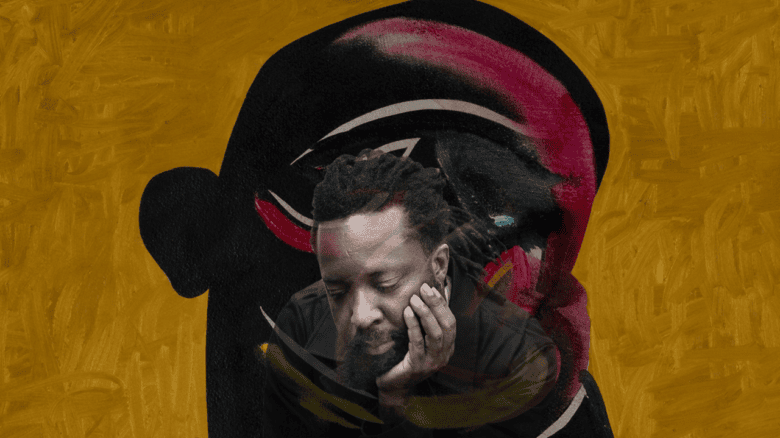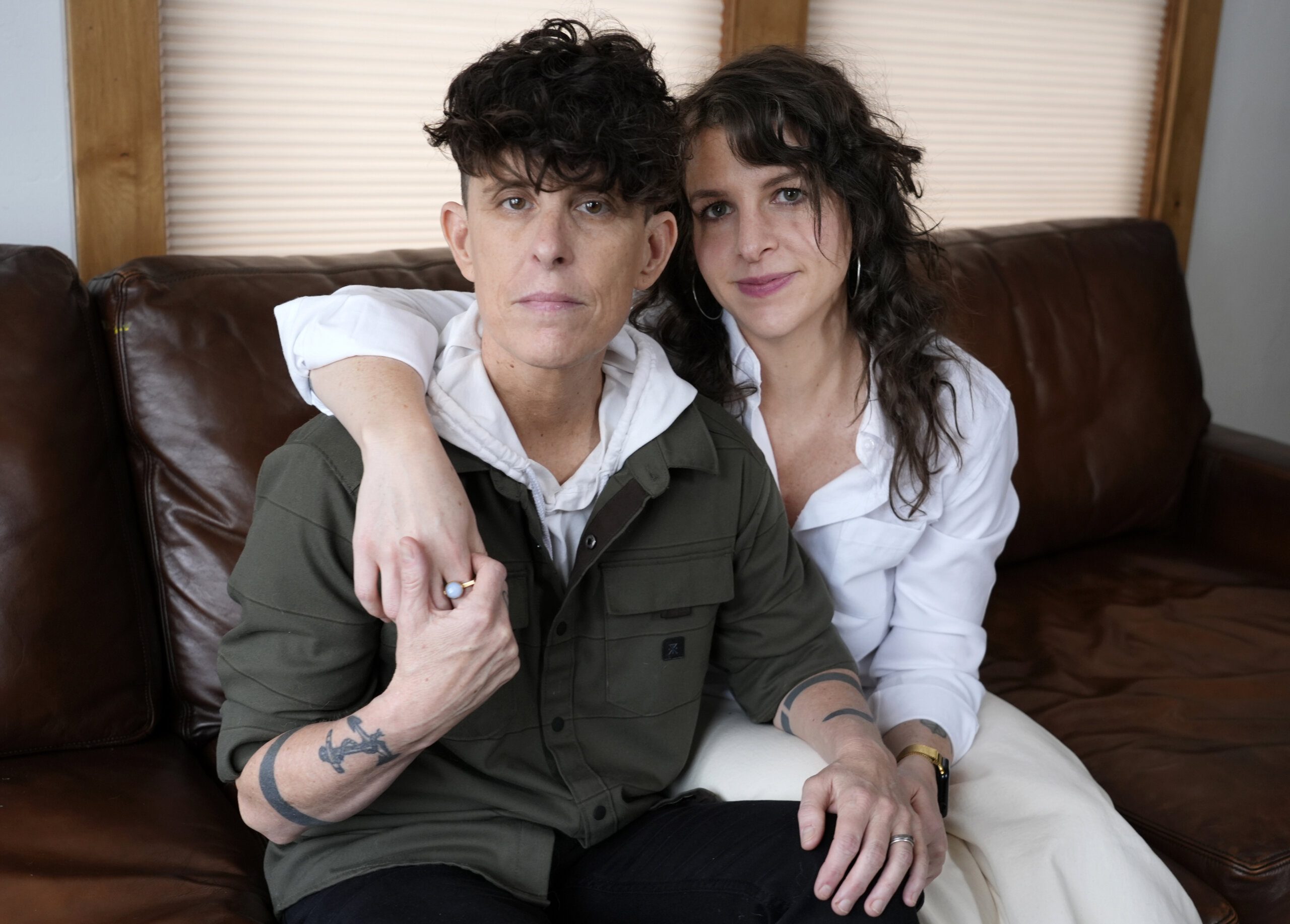
The spoken word poet Andrea Gibson died on Monday. According to their Instagram, they passed away surrounded by their wife Megan Falley, their four ex-girlfriends and their three dogs—along with their parents and dozens of family and friends—in what is surely a contender for the gayest death of all time. As I write this, there is a summer storm outside my window: brief and furious downpours followed by blazes of startling sun, because that’s the kind of contradictory harmony this death deserves.
“When I realized the storm was inevitable, I made it my medicine,” Gibson wrote in their poem “How the Worst Day of My Life Became the Best,” published in their book You Better Be Lightning. Only someone like Gibson—who lived so openly and earnestly that it felt like they were daring the rest of us to do the same—could essentially write “life’s about learning to dance in the rain” and leave me crying on my living-room floor.
“Andrea doubles down on the cliché,” Falley, also a poet, says lovingly in Come See Me in the Good Light, a documentary released earlier this year about Gibson’s 2021 diagnosis with incurable ovarian cancer. Gibson sat and thought through what the rest of us are ready to dismiss as rote, and reminded us that we only end up with clichés because every single person who ever felt that way was so moved that they had to write it down.
In their early twenties, Gibson moved from the working-class town of Calais in rural Maine to Longmont, Colorado, where they say in their documentary that spoken word poetry saved their life again and again. An electric performer, they became a rockstar of the poetry slam scene. They fell in love with how much more tangible and accessible spoken word was than other types of poetry. “Why write a poem that’s over somebody’s head?” they ask in Come See Me in the Good Light. “Even more than that, over somebody’s heart?”
When I was 14 in 2012, I sat at my desk with a friend ten feet away, doing everything I could to stay as still and cry as quietly as possible while I listened to Gibson’s words for the first time. It was their poem “I Sing the Body Electric, Especially When My Power’s Out.” I wasn’t ready to say any of what I heard—about queerness or illness or family—out loud myself. I was still telling people that I was straight and refusing to confront how it felt to watch my mom grow sicker. But just hearing it said by someone made entirely new ways of understanding the world crash over me. It helped me see how many people felt the way I did.
When my partner and I were first falling in love during our sophomore year of college, we lay in a twin bed with one earbud each, probably making both their roommates deeply uncomfortable by alternating between kissing and weeping as we listened to Gibson’s love poems. When I told everyone that I knew about my new relationship (the way we did everything in 2016, by putting it on the internet), I used Gibson’s words from “Maybe I Need You” to describe the love I felt: “Sometimes it’s just melting.” When we saw them perform two years later, I said those words again—out loud this time, in unison with the crowd.
Four years after my mom’s death in 2019, I realized I’d been nursing a bizarre expectation that I could graduate from my grief. Instead, the anniversary came and went, and I was mired deeper in guilt and sorrow and trauma than ever—and Gibson wrote “Love Letter from the Afterlife.” “In my back pocket is a love note with every word you wish you’d said. At night I sit ecstatic at the loom weaving forgiveness into our worldly regrets.” I desperately needed to hear that. Everyone who has ever lost someone does, I think. Gibson knew.
It feels wrong to be making the life and death of this singular, luminescent person about me by listing my own memories. But I also remember one of the many lines from “I Sing the Body Electric” that shocked me to stillness: “For the record, if you have ever done anything for attention, this poem is attention. Title it with your name.”
In the years before and after those small moments of mine, Gibson wrote and performed about queer and non-binary identity, class, disability, war and its intolerable fallout and, after their cancer diagnosis, mortality and what makes a life worth living. After grappling for decades with suicidality, they talk in Come See Me in the Good Light about waking up from the exploratory surgery that confirmed their cancer and feeling “almost made of gratitude and awe.”
“I just sort of felt like it was okay if I died but it would never be my doing,” they explain in the film. And, in another scene, “When I accept, ‘Okay, this is what’s happening,’ I get to be with life.” From someone who also wrote about responding to a mindfulness pusher by saying “please go back to your job at the aromatherapy aisle at Whole Foods and leave me alone,” it’s an evolution that feels authentic and hard-earned.
Their work touched thousands of people, so many of us feeling different shades of the same things, and left every single one of us better for it. Gibson served as the poet laureate of Colorado, and maintained a newsletter of updates and poetry and philosophy that addressed visitors with the greeting, “Hey Dreamboat. I’m so happy you’re here.”
Spoken word poetry is one of those things that adults who are trying to feel grown inherently cringe away from. Even (maybe especially) if we clung tightly to it when we were younger. I still know every line of Gibson’s “Honey” by heart, but nobody wants to hear spoken word at karaoke. But as Gibson said once, “Anyone who thinks poetry is frivolous has never needed someone to tell them something unspeakably hard, beautifully.”
In an era of irony-poisoned cynicism, when earnest vulnerability is often mocked, they never stopped being sonorously honest. Gibson would not tolerate the concept of “cringe,” and that’s why their perspective is such an effective antidote for apathy. It takes immense talent and an unwavering heart to capture so many people’s greatest hopes and fears in words, let alone to make those words a poem. How could they have possibly wasted time being embarrassed about it? With their example to follow, how can any of us?
“My mouth is a fire escape. The words coming out can’t care that they are naked, there is something burning in here,” they said in “I Sing the Body Electric.” They wrote because they had to, because it was what made the world make sense. It’s only human to breathe deeper when you’re struggling for air, to reach for someone else when you’re feeling alone, to open the curtains in a dark room. I will always be grateful to Andrea Gibson for helping me see the world in the good light.

 Why you can trust Xtra