When I was a kid, I spent each week of summer at a different day camp. My single mom, unable to care for her child while she worked all day, invested what she had into activities she thought might enrich her young son’s porous brain. I did tennis camp and karate camp, farm camp and “adventure” camp, the lattermost of which involved a series of treacherous zip lines and carabiners.
When I was about 10 years old, my mom cobbled together enough money to enlist me in a week-long sailing camp at a ritzy yacht club along an Ottawa harbour.
As soon as I got there I knew I would not be stepping foot on a boat. I have always had a fear of drowning, and I staunchly believe that boats are an abomination. If I was meant to be at sea, I would have gills. I had a pretty good idea of who I was at that point in my life; bookish, awkward, unlikable. I had difficulty making friends and struggled in new social environments with other kids. I liked the indoors and I liked to read and play video games and watch movies; anything to get out of the real world. I was no sailor.
I’d brought a new book to read at camp, and I was more eager to dig into it than to set sail. It was the first novel of Rick Riordan’s Percy Jackson and the Olympians series: The Lightning Thief. On Monday morning, as the teenage counsellors sipped coffee and strategized over how best to corral and entertain 40 children for the day, I sat on a couch in the club lounge and opened my book. I was instantly hooked.
Percy Jackson is the tween only child of a single mom. He is lonely and dyslexic, and he doesn’t fit in anywhere. The only thing bleaker than his present seems to be his future. But Percy discovers he is the child of the Greek sea god Poseidon, and that there are other superpowered misfits like him who must unite to defeat Chronos, the mythological titan of time and ur-villain of Western civilization. Percy fights legendary monsters, encounters gods and builds a chosen family out of his demigod comrades. He embodied my ultimate fantasy, and sitting on that couch that Monday morning, I knew I’d stumbled into my most all-encompassing escape yet.
When the time came to trek over to the sailboats, I refused, opting instead to sit on the couch and disappear further into my newfound world. I spent the rest of the day on that couch, inhaling The Lightning Thief. I finished it right before my mom came to pick me up. I told her sailing camp was fun and muttered something about going on the boat. She mercifully didn’t press further. The rest of the week panned out similarly. By day’s end on Friday, I’d finished all five books of the original series, unable to tell port from starboard.
Later in my life, when the time came to select a university major, I decided to enroll in my chosen school’s humanities program, which promised students a sweeping education in literature spanning antiquity to the modern day. There would be a heavy focus on the ancient Greeks, and, clinging to the little kid in me still enraptured by that culture, I thought it would be enjoyable, if not edifying.
The program delivered on its promise. In my first year alone, I read translations of Homer, Aeschylus and Sophocles, building upon the foundation of knowledge I’d gained from Percy Jackson and imploding everything I thought I knew about ancient Greece. Everyone in my class of 30 had also grown up loving Percy Jackson; all but one of them ended up coming out as queer or trans by graduation day. Finally, I fit in.
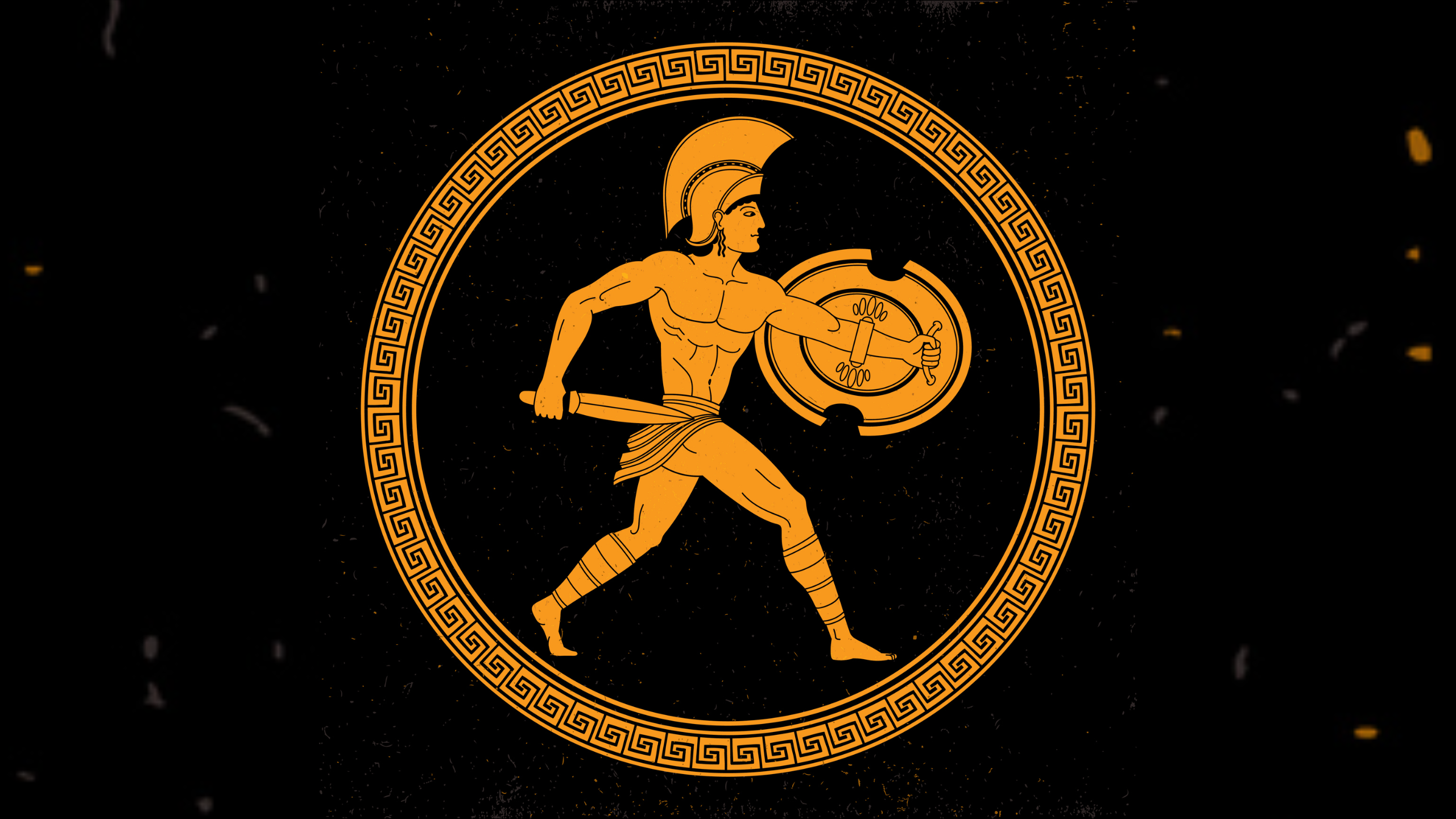
The first text we read was The Iliad, Homer’s epic poem detailing the hero Achilles’s reluctant and doomed campaign of destruction during the Trojan War. All I knew about Achilles prior to reading the poem of his life was the parable about his infamous heel, the sole chink in his armour after his baptism in the River Styx left the rest of his body impervious to wounds. That myth is not present in The Iliad; instead, his weak spot lies with Patroclus.
The exact nature of the relationship between Achilles and Patroclus is debated by scholars, but it’s undeniable that the two figures are depicted as each other’s most important and cherished person. Homosexual relationships were common in ancient Greece, and it is perfectly plausible that The Iliad’s two heroes were in love.
Achilles spends much of the poem camping out with Patroclus, unwilling to lend his godlike strength to their army’s failing effort against the Trojans. But their love is marred by a tragic fate; Achilles sends Patroclus to battle in his armour, thinking that if others mistake Patroclus for Achilles then he won’t be killed, because only an idiot would dare to face Greece’s greatest warrior. But the Trojan Hector, full of hubris and hell-bent on duelling Achilles, kills Patroclus. When Achilles hears of his lover’s death, he is profoundly heartbroken, and channels his sorrow into a divine wrath, slaughtering scores of Trojans before murdering Hector.
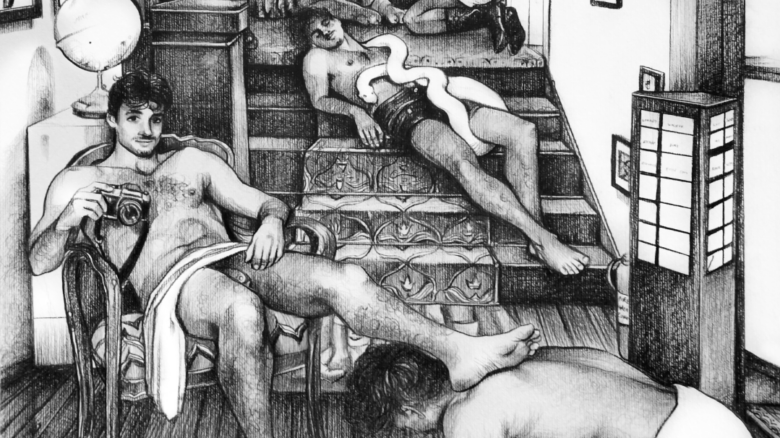
Discovering that Achilles was not merely a savage warrior but a heartbroken loverboy was revelatory. My attraction to Greek culture seemed to click into place. This was not merely an escape or a fantasy—it was a way I could understand my own nature, and place it within a millennia-old lineage of vengeful gay loverboys.
In my fourth and final year of studies, I got to dig into Plato’s Symposium. Each of the great Greek philosopher’s dialogues attempt to unearth the most basic and fundamental truth about a variety of concepts. Republic aims to describe the perfect society; Apology defends and examines the nature of truth itself. Symposium, however, is my favourite of Plato’s works because it asks—and answers—the best question there is: What is love?
The dialogue follows a series of speeches about love delivered by famous Greek men, including Socrates, at a fictional banquet. My favourite of the speeches is given by the playwright Aristophanes, who declares that the truest and most powerful kind of love is that shared by homosexuals because heterosexuals are prone to adultery and lack the virtue embodied by gay men. “Some indeed assert that they are shameless,” he says of homosexuals, “but this is not true; for they do not act thus from any want of shame, but because they are valiant and manly, and have a manly countenance, and they embrace that which is like them.” Aristophanes’s outdated patriarchal views aside, it was affirming to learn that some ancient Greek coot had defended my right to not be ashamed of who I am.
That fourth-year philosophy class was taught by another ancient coot; a greying old windbag who boasted frequently about working for the Ronald Reagan administration. In a discussion group where we covered Symposium, he managed to huff out a controversial and utterly implausible opinion: “The Greeks weren’t gay,” he said, spitting out that last word, gay, with an evident air of disgust. My former classmates and I still laugh at how stupid he sounded.
All at once, ancient Greece seems to have returned to fashion. Christopher Nolan’s film adaptation of The Odyssey has proven ubiquitous; it is a certified blockbuster, with near-unanimous praise and blowout box office numbers bolstering its currently unparalleled popularity.
As I hope I’ve made clear, I have a certain attachment to Homer, but I was mostly pleased with and thrilled by Nolan’s epic. Of its many magic tricks, the most impressive is its success in making Odysseus’s difficult voyage home relevant to contemporary audiences.
The key theme of Homer’s Odyssey is the Greek concept of hospitality, a holy rule that states the pious must treat strangers with respect. Odysseus learns this lesson the hard way, paying dearly for his wartime pillaging and frequent attempts to outwit the gods. At the poem’s end, Odysseus, like Achilles before him, exacts godlike vengeance on his wife’s suitors, who have polluted and abused his home and family during his time at sea. This is all divinely ordained by the law of hospitality, and in killing the suitors and arriving home, balance is restored.
Nolan’s version underscores these themes. Odysseus is haunted by the abuse he wrought on innocents, all the unholy pillaging and betrayal having caught up to him. He worries that the disrespect that characterized the Trojan War set a spark that threatens to eternally disrupt the balance of the world.
Watching The Odyssey in an era where the notion of a rule-based world order seems to have been tossed aside, and where the incessant pillaging of the earth itself is resulting in devastating, apocalyptic consequences for the humans responsible, felt prophetic. This revelation breathes new life into an ancient epic, demonstrating in one scene why it has lasted. We aren’t still telling Homer’s tale because of the monsters or violence, however entertaining they are. We’re doing it because Homer carried an urgent warning that, if ignored, will end us.
These stories have endured because they bear timeless wisdom that cuts to the very heart of our most universal concerns. Take the other Greek myth currently available to view in movie theatres: a pro-shot of the musical Hadestown, which tells the story of Orpheus and Eurydice through otherworldly, jazz-inflected songs by indie artist Anaïs Mitchell. I’ve seen it twice live and once on film. It gets better every time.
Though the two lovers are tragically fated to separate, each time I watch Hadestown, some small part of me still hopes the ending will change. It doesn’t. It’s a brutal story, and it might seem pointless if you’ve seen it before, if you know its end.
But the power of myth lies in its repetition. The stories of Achilles and Eurydice, of Homer and Sophocles, of Nolan and Mitchell and Riordan, ripen with age, their themes only becoming more prescient with time. Their stories are great because they beg to be told over again; and in their telling and retelling, they show that nothing has changed, though everything has.

 Why you can trust Xtra