During a 2010s-nostalgia-inspired edition of our gay music video nights a few years ago, my girlfriend and I stumbled upon the video for Hayley Kiyoko’s “Girls Like Girls.” The last time I’d seen it was as a closeted teenager, when I’d spend school nights watching Kiyoko’s videos on a loop. Alone downstairs in the dark, with one earbud in and an eye on the door in case my parents came by, I committed every detail of “Girls Like Girls” to memory, trying to manifest a lesbian love story of my own. I recognized that intoxicating feeling of having a crush, the thrill of stealing a glance and the way my heart would leap at the brush of her hand against mine. I yearned for that bravery to lean in.
“Girls Like Girls” was the song that put me on to Kiyoko, my first foray into her unapologetically Sapphic discography. Yet rewatching that iconic music video with my girlfriend years later, I was shocked by how it’d aged. The scenes were familiar, but the storyline was thin, the ending frustratingly ambiguous. It was hard to believe that this had once felt like the pinnacle of queer cinema.
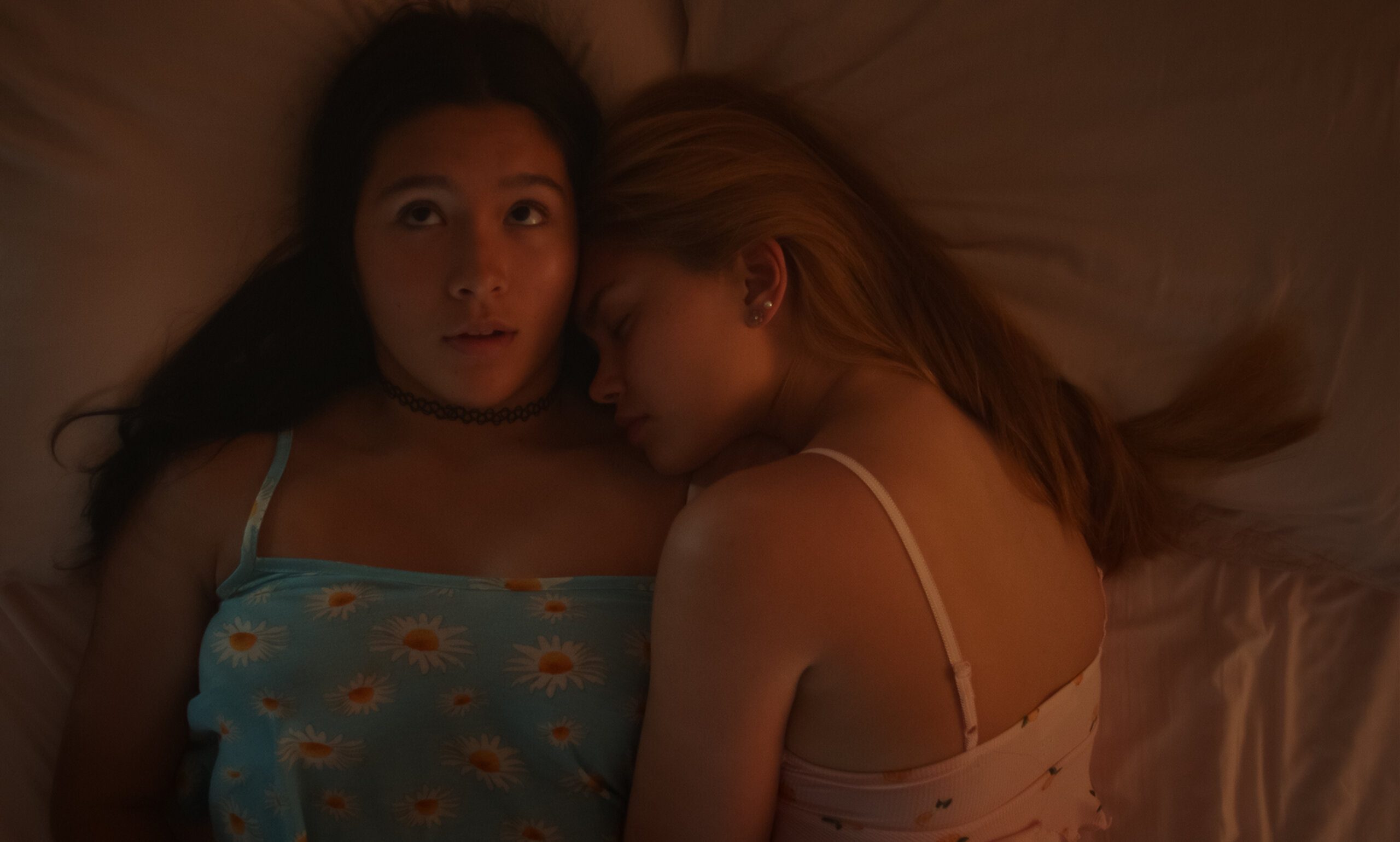
When Kiyoko announced she’d be inviting us back into the world of “Girls Like Girls” with a feature film 11 years after the music video’s debut, I was doubtful. The film is based on the eponymous YA novel she released in 2023, and both were inspired by the music video and song. Girls Like Girls follows 17-year-old Coley after her move to a small town in rural Oregon, where her friendship with popular girl Sonya grows into something more. Over the course of the summer, Coley grapples with the loss of her mother, her rocky relationship with her father and the experience of loving someone who is deeper in the closet than you are.
While “Girls Like Girls” sparked a cultural moment back in 2016—immortalized in GIFsets on Sapphic Tumblr and an instant classic in my texts with my queer best friend—I found it unlikely that the film, derivative as it is, would offer anything groundbreaking. Girls Like Girls’s parallels to its source material do tug on some heartstrings: it’s difficult not to get emotional over that sepia filter and the callbacks to the music video, from Coley’s choker to the scenes of her biking down suburban streets. And there are new moments that are unexpected and deeply recognizable: bumping knees with your crush in the back seat, “falling asleep” on her shoulder, walking amongst towering evergreens as a teen growing up in the Pacific Northwest. The film, set in 2006, leans heavily into the mid-2000s aesthetic with cameos from AIM chats, slider phones and CD binders.
It’s clear that Girls Like Girls was made with Kiyoko’s longtime millennial fans in mind. My screening was preceded by a video from Kiyoko thanking the audience for coming out and earnestly mentioning the music video’s legacy and “the impact of finally feeling seen by someone.” But over the sincerity of her message, I felt a pang of sadness over how things have changed. The room was half full for the Thursday premiere in the only theatre where the film is showing in Ottawa, in a shopping centre far out in the suburbs. If this film was meant to be seen by the young people who most need it, I wonder how many will.
Seated beside me were two teenage girls who’d brought a blanket and shared a bucket of popcorn throughout the film. I remember being in a similar place with my crush almost a decade ago, for a film that similarly rallied a committed Sapphic audience: 2017’s The Carmilla Movie, a feature film based on the cult hit lesbian YouTube series Carmilla. The movie wasn’t great, and the Cineplex in my hometown on the outskirts of Vancouver wasn’t all that full for the late-night showing. But as a suburban teen, I felt like I was part of something bigger, a community that I’d only been connected to digitally. That summer, I felt that shared experience on an even grander scale, when I went to Kiyoko’s sold-out Expectations concert with my crush-turned-girlfriend. It was the first time I’d been among so many queer people, let alone Sapphics, and it was the first time I got to kiss my then-girlfriend in a full room. After the concert, we held hands on the walk back to the SkyTrain station, and for a few minutes, were free of worry about who might see us and what they’d say.
I doubt Girls Like Girls will land with today’s teens in the same way. The dialogue is cheesy and borderline cringey in some parts, the plot flounders and the ending still doesn’t offer any easy answers. Kiyoko’s new songs in the film are wishy-washy, more into conveying a feeling than exuding any sort of style or substance (baffling choices from a soundtrack that features the likes of Young Miko and Chelsea Cutler). There is none of the bite or self-certainty that defined the peak of Kiyoko’s career. Nor is there the bold optimism and unabashed queerness of that mid–to-late-2010s era of Sapphic representation, when Kiyoko earned her title as Lesbian Jesus in the company of other 20gayteen icons like Janelle Monáe and King Princess, all of whom sang proudly and openly about loving women.
It’s true that the music video for “Girls Like Girls” had always sought to tell a different story, one focused on being a young queer person who’s figuring things out. The song itself is far more brash and cathartic: Kiyoko sings about “stealing kisses from your missus” and “building your girl’s second story/ Ripping all your floors out.” But even with its coming-of-age storyline about uncertainty and discovery, the music video deals a (literal) blow against homophobia. In the most replayed scene of the music video on YouTube, Coley punches Sonya’s boyfriend and beats him up until Sonya pulls her off him and they kiss. It’s a moment of sweet vengeance against shitty boyfriends, and you can’t help but cheer for our two heroines as they realize they deserve better than the lives that have been laid out for them. For a teenage me, that scene was a reminder that amid the crushing weight of the closet, there was a way through, and love was still possible.
That scene is notably absent from Girls Like Girls. There is no final confrontation between Coley and Sonya’s boyfriend, no violent outburst or act of revenge. Rather, the protagonists in the film seem lost, their motivations unclear. Their sense of self runs counter to what I’ve known Kiyoko’s music for: lyrics that I didn’t have to read queerness or swap pronouns into, written and sung by someone who rejected the false dichotomy between queerness and Asian identity and defied stereotypes of East Asian girls as meek.
It’s not that stories about figuring out your sexuality and grappling with the fear of coming out aren’t important; but now there are so many better versions of them. In today’s context, Girls Like Girls doesn’t feel that revolutionary. We’re spoiled for choice with lesbian representation, and particularly, representation that isn’t focused on repression, homophobia and the challenges of coming out.
Watching Girls Like Girls reminded me of that bittersweet feeling of outgrowing someone who’d once meant a lot to you. It was like going back to your childhood home, where everything looks how you remembered it, but the bed feels a little smaller, the walls a bit more enclosing, the world of your neighbourhood more claustrophobic than you remember. You still get that warm, fuzzy feeling of being in a familiar place, but it doesn’t quite feel like yours anymore.

 Why you can trust Xtra