Edmund White is prolific. Not content with his trilogy of autobiographical novels, which span a period of three decades, White also produced a much-condensed memoir called My Lives. He is now working on another set in 1970s New York. In addition to his memoirs White has written eight novels, one book of short stories and three biographies documenting the lives of other prolific gay writers.
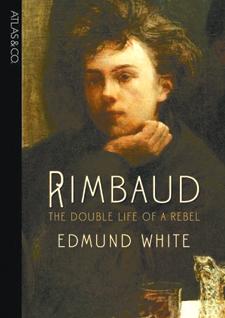
The latest of these is a short but fascinating biography of 19th-century French poet Arthur Rimbaud. “I always wanted to write about Rimbaud because he was an idol of my adolescence,” says White. “I think a lot of adolescents like him. He’s a favourite of Jim Morrison, Bob Dylan, Patti Smith. They’ve all written songs about him.”
Boorish and hard to get along with, Rimbaud alienated almost all of his contemporaries. It didn’t help that he and an older poet named Paul Verlaine were one of the most notorious homosexual couples of their day. But by the time of his death Rimbaud had been hailed as the father of symbolism by the same people who had once shunned him.
“Rimbaud is a sort of punk hero of the 19th century,” says White. “He revolutionized French poetry by age 16 and had finished writing forever by age 20. He spent most of the rest of his life in Africa as a gun runner and died of cancer of the knee at age 37.”
The poet, says White, is an ideal subject for a short biography because he had such a short life. “Without distorting or neglecting anything you can get all of it into 200 pages,” he says.
Brief though it is White’s biography of Rimbaud stands apart from many of those already in print because of its treatment of Rimbaud’s relationship with Verlaine. “I think a lot of people who tackle [Rimbaud] want to ignore that aspect,” says White. “Some people criticize my Proust book for emphasizing his homosexuality too much but, since he never had sex with any women and had sex with many men, his whole life was really gay. A lot of defenders of the altars of these great writers, if they’re straight they think it demeans them to talk about their homosexuality too much.”
White has never been one to shy away from the unsavoury details. His own memoirs include hundreds of unflinching accounts of his sexual encounters, giving the impression that there is nothing he wouldn’t reveal to his readers. His biographies are equally forthright, treating readers to the details of an examination of Verlaine’s penis carried out by medics bent on proving his homosexuality, and the gory details of Verlaine and Rimbaud’s epic fights.
“The two of them were just notorious, and always drunk on absinthe, always stabbing people or setting their houses on fire — total guests from hell. Eventually they went off to London, had a terrible quarrel and reunited in Brussels where Verlaine shot Rimbaud and went to prison for two years. Everyone blamed Rimbaud for having driven this older man mad.”
Some of these unpleasant aspects of Rimbaud’s character came as a surprise to White. “I always thought Rimbaud was a very sympathetic, nice, interesting boy. I don’t think so now,” he says.
“He had a real cruel streak. And then when he stopped drinking and gave up poetry he became a very hardnosed but not very successful businessman. I don’t much like to see that side of him. What I do like is his poetry, and I came to admire his poetry even more.”
 Why you can trust Xtra