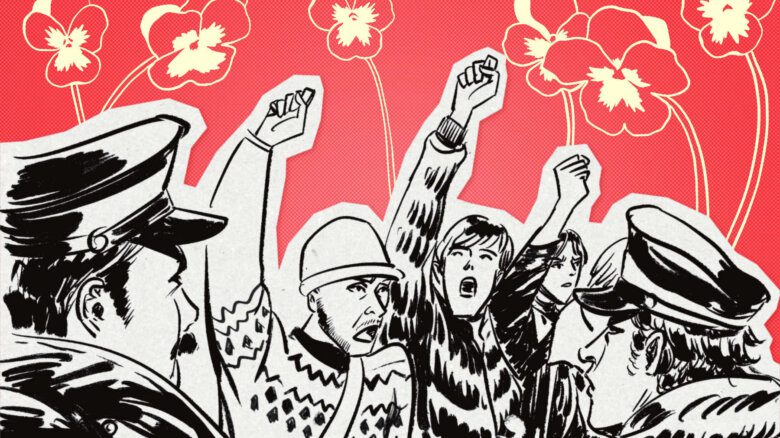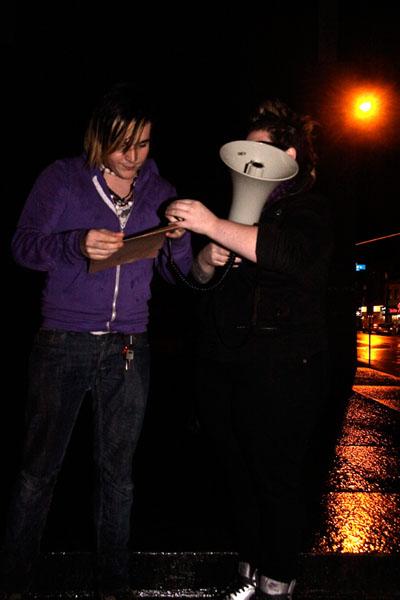
A large crowd clustered around the Human Rights Monument on the evening of Oct 20, spilling onto the sidewalk and huddling in the doorway of City Hall. Umbrellas made a patchwork quilt of octagonal canopies, each one tilted slightly upward as everyone faced the three main organizers of the event.
Queer rights activist Dillon Black stood in front of 200 people and began the candlelight vigil to commemorate Spirit Day, a memorial for lives lost because of bullying.
“There are no queer teen suicides, only queer teen murders,” said Black.
Black and two other activists, Quinn Blue and Joanne Gordon, took turns reading a speech into a megaphone. They stood united in their conviction that change needs to happen in order to prevent more deaths like that of Jamie Hubley.
Two students from AY Jackson Secondary School, Katie LeBrun and Stephanie Wheeler, shared their favourite memories of Hubley.
LeBrun, a member of student council, said she was determined to make internal changes at her high school. Wheeler spoke of her campaign to sell rainbow bracelets and unicorn buttons in memory of Hubley. The proceeds will go to the Youth Service Bureau and Jer’s Vision.
Pink Triangle Youth participants Erica Butler and Rhonda Chamberlain talked about the hope that weekly group meetings give dozens of youth who face bullying outside the safe space that Pink Triangle Services provides.
They stressed that “two hours out of 168 is not enough” and that there needs to be more safety and acceptance in these youths’ day-to-day lives.
Nuka Fennell, a queer youth from Nunavut who has two mothers, shared his story of struggle and social stigma in the far north and his so-far successful and rewarding search for a welcoming community since leaving the north when he was 16.
After a moment of silence, members of the crowd solemnly recited the names of youth who have committed suicide because of homophobia and transphobia.
Black ended the evening with another quote, this one from The Rumpus column “Dear Sugar.”
While the first words of the night were a call-to-arms, demanding justice and change in wider society, the last words were touching and personal, a plea to anyone who has stared at a handful of pills or put a blade to their wrists, the voices of countless bullies pushing them to a fatal resolve.
“Nobody will protect you from your suffering. You can’t cry it away or eat it away or starve it away or walk it away or punch it away or even therapy it away. It’s just there, and you have to survive it.”
 Why you can trust Xtra