Apparently there are, in fact, people who read Playboy for the articles. (HA! Just kidding! It’s boobs. The only reason Playboy exists is boobs.) Grant Morrison, a DC Comics writer and the author of a new book called The Super Psyche, was recently featured in the magazine, where he gave his two cents on the background and ideologies of various comic series, including the inherent gayness of Batman.
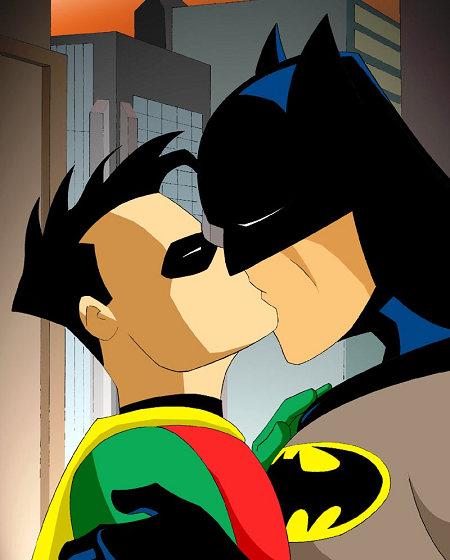
Gayness is built into Batman. I’m not using gay in the pejorative sense, but Batman is very, very gay. There’s just no denying it. Obviously as a fictional character he’s intended to be heterosexual, but the basis of the whole concept is utterly gay. I think that’s why people like it. All these women fancy him and they all wear fetish clothes and jump around rooftops to get to him. He doesn’t care — he’s more interested in hanging out with the old guy and the kid.”
Advertisement
Personally, I’d like it if Batman were gay, but that’s mostly because he’s hot and rich and built like a brick shithouse. The only downside is that, simply put, Batman himself is kind of boring. I mean, he’s badass in and of himself, but here’s a quick quiz: ask someone who their favourite character from the Batman universe is. Chances are, no one will actually say Batman. Oh Batman, will you ever win? . . . Probably not. Oh well, at least we’ll always have Batgirl.
 Why you can trust Xtra