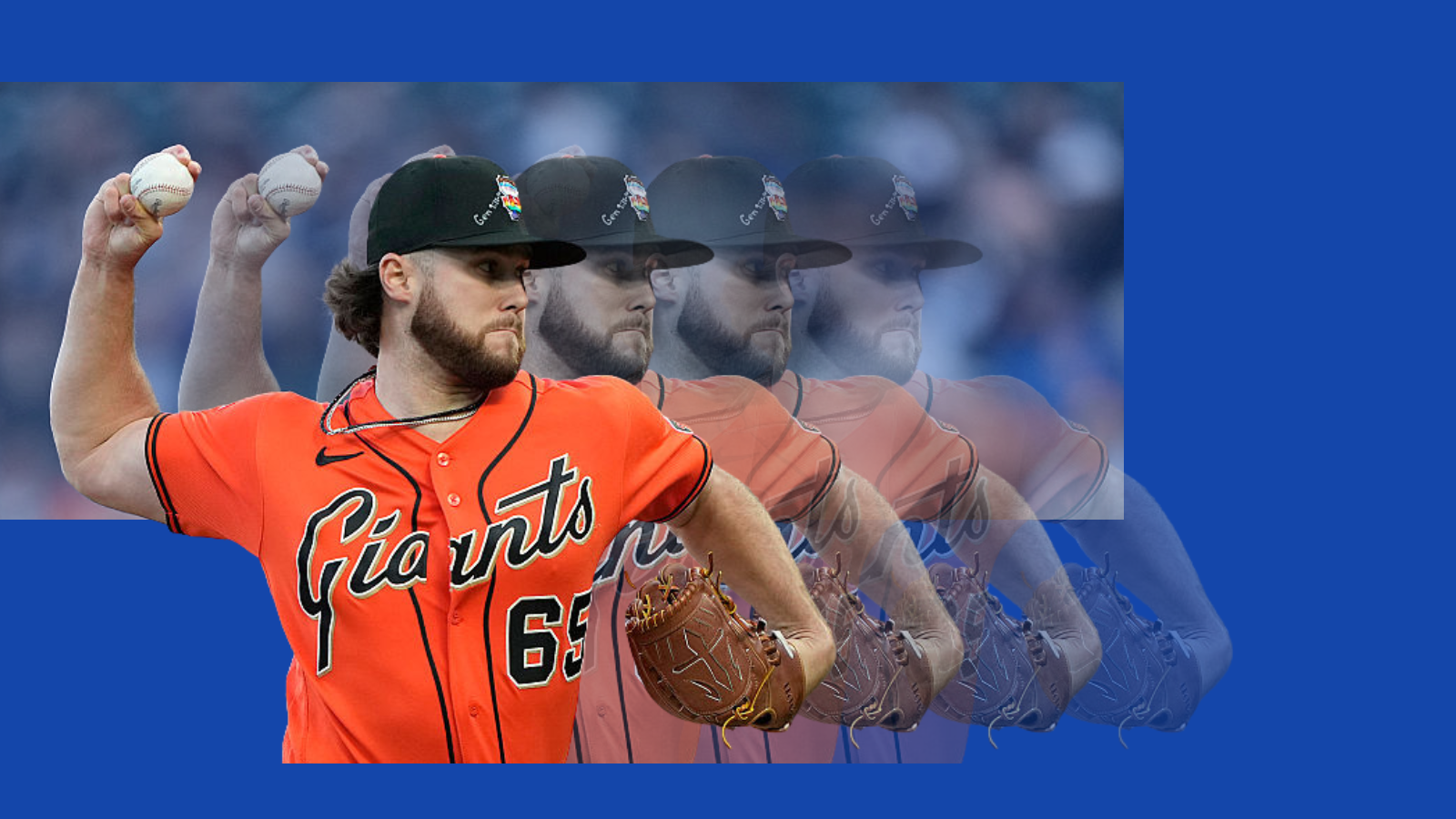
A couple of weeks ago, the San Francisco Giants hosted their annual Pride Night, an evening when queer fans are explicitly invited to the park to enjoy America’s pastime, a sport in which queer people haven’t always been welcomed as fans. But instead of a joyous night of baseball, a handful of Giants players decided to put their own politics and religion above the spirit of the welcoming event.
Relief pitchers Landen Roupp, JT Brubaker and Ryan Walker hand wrote references to Genesis 9, a Bible verse about the aftermath of Noah’s flood, on their Giants rainbow-coloured hats while pitcher Sam Hentges opted to wear the traditional black-and-orange Giants hat. In Genesis 9, God ends the flood and signals to the survivors emerging from Noah’s ark with a rainbow in the sky. The chapter ends with Noah getting drunk and passing out naked in his tent.
The passage is commonly cited by Christian conservatives to claim ownership of the rainbow over queer people who have adopted rainbow flags as symbols of their own liberation.
This mini player rebellion against Pride is another in a long series of homophobic athlete protests against official Pride events. Several years ago, multiple NHL teams either cancelled Pride events or saw teams refuse to wear special Pride jerseys. As the conservative backlash against queer lives in the U.S. has grown, these cultural flashpoints have become more and more common.
I find myself growing more and more exhausted at the constant discourse around these sports Pride Nights. Queer people just want a safe time to come out to the ballpark, stadium or arena and enjoy the same professional teams that everyone else does. Teams aren’t declaring their wholesale support for queer people by hosting a Pride Night—just making clear that any fan has a space in their stands. But instead we get these repetitive player revolts against the whole idea and yet another negative media cycle to wake up to the next day.
It’s tiring.
From the team and league perspective, Pride Nights are a chance to sell additional merchandise in the form of rainbow-coloured jerseys and other apparel and accessories, more so than a chance to recognize and celebrate queer fans. Gay and trans fans just want a safe space to attend a game of their favourite team, or maybe introduce their favourite team to their queer friends.
But baseball players, who tend to be more socially conservative than a metropolitan fan base, are leading the backlash against such events, making clear that their own beliefs should take precedence over all, including the safety of queer fans inside the ballpark. Of course, these players deny it. Roupp stated after the game that there “was no hate at all” in his actions. “First of all, as a believer, I would push them to read the Bible,” he said.
Hentges, for his part, was more explicit, stating that he felt he was being “forced to support” something that he did not morally support. “I don’t hate the LGBTQ community,” he said. It’s quite common for religious conservatives to say they don’t hate queer people, it’s part and parcel of “hate the sin, not the sinner.” But in the ideal world of these people, LGBTQ2S+ people are just misguided and wouldn’t exist if they just read the Bible and stopped sinning.
That is a form of hate. If you wish something to stop existing, you hate it by default.
The player protests triggered a cavalcade of forced consequences. Fans expressed their revulsion, and LGBTQ2S+-friendly clergy members in the Bay Area pushed the team to respond more forcefully against the players. Major League Baseball issued a formal warning against the team, citing a rule that nothing can be drawn or written on the front of official uniform caps.
The league had to take action or risk turning hats into personal billboards for players going forward. However, in response, of course, the institutionally bigoted Trump Department of Justice opened an investigation into whether the league unfairly discriminated against the players’ Christian beliefs. The case is hogwash, of course—MLB bans anything from being written on the front of player caps—but we don’t live in a world of fair government, and the DOJ could end up shopping for a friendly conservative court for a show trial if they wish to pursue it.
It is likely that the players didn’t really understand what they unleashed, in this case, but I want to be clear that it was the players’ decision to trigger this course of events. Queer fans have little to do with this. We simply want to go to the ball game without having homophobia shoved in our faces.
I find myself at a crossroads when it comes to Pride-themed events in sports. On the one hand, they are always a giant headache. Earlier this week, both Egypt and Iran objected to their match in Seattle being a Pride match at the World Cup. The match was played and it was a massive success, or a complete miss, depending on which news outlet you read the following morning. I don’t think anyone who attended or watched on TV will think that either team supports queer people, and no one will remember that this one game was for Pride.
In general these days, these events are just sources of pain and controversy and a chance for owners to sell rainbow jerseys. Is all of this worth it?
At the same time, we live in a time when queer people hold a precarious position in Western society. The homophobes and transphobes are in power and are doing everything they can to erase us, from government language to our history to our healthcare. Holding on to these superficial queer money grab events can be a way to maintain our visibility.
I think that is worth something to all of us, though I worry that the days of sports Pride Nights are numbered.

 Why you can trust Xtra