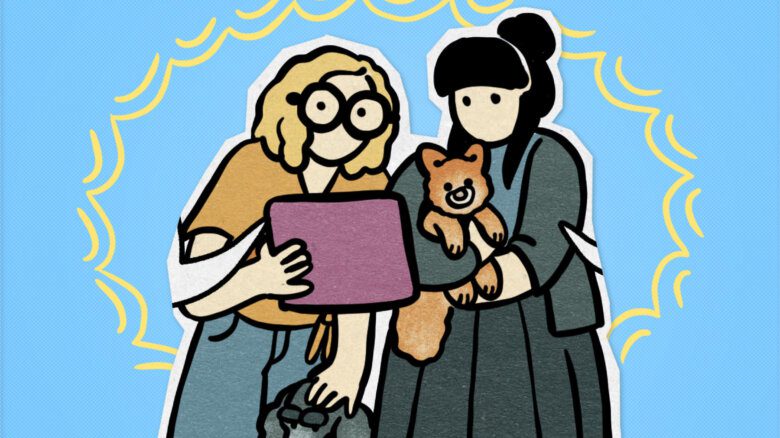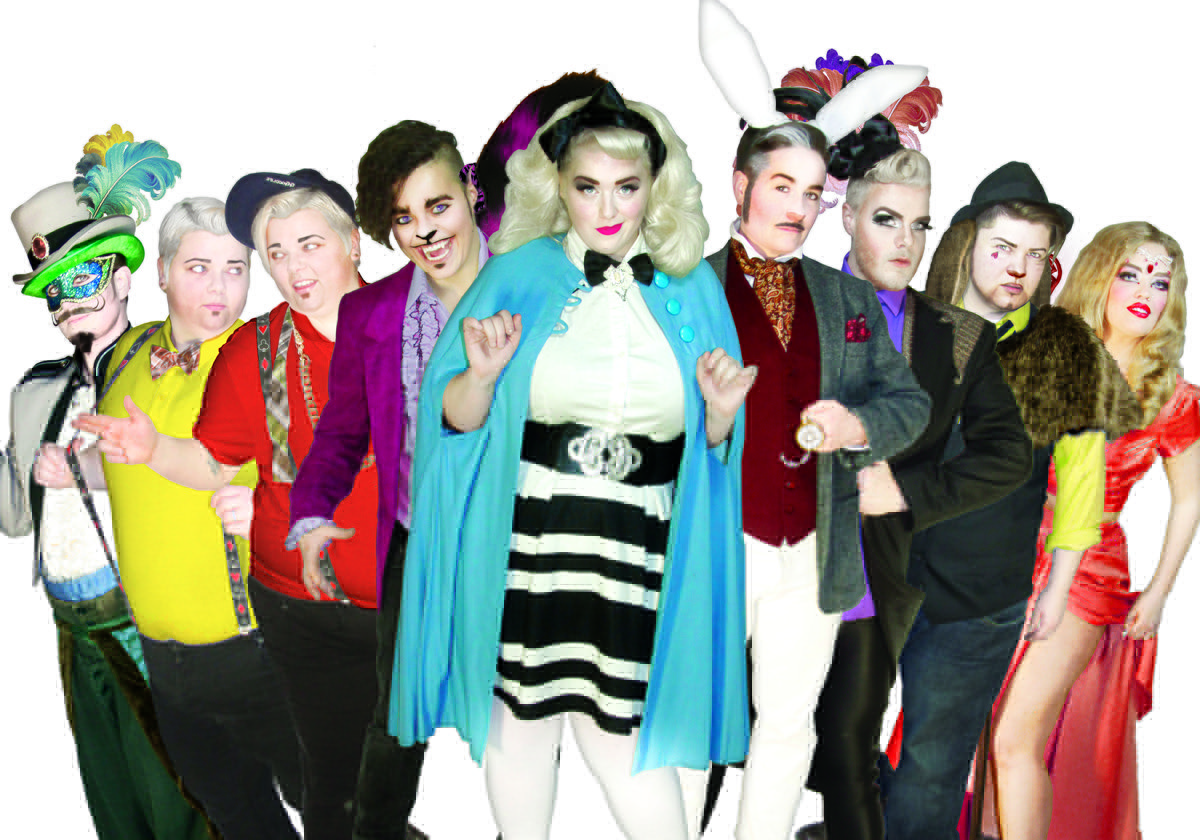
Alice knows there’s something different about her, but isn’t sure what it could be. She considers this while preparing to go out somewhere with her sister. She’s dawdling too, while she decorates her gloves garishly. When her sister sees them, she angrily tells Alice to change. Just then, a white rabbit appears and, while “A Whole New World” from Aladdin is sung, Alice follows him into a wonderful place where people occasionally show their butts and tits.
This is indeed a version of Alice in Wonderland, but not one that anyone’s familiar with. Everyone knows Disney’s 1951 animated version, where Alice starts daydreaming, while her sister reads aloud about King William I, but then finds herself down a hole, navigating ridiculous encounters while she tries to find a rabbit with a waistcoat and pocketwatch who’s late, late, for a very important date. This is not that.
The drag king collective The Yes-Men and the burlesque trio, A Platinum Production — both of which tend to do more plot-driven shows — have teamed up for a drag and burlesque-filled musical take on the classic tale. But instead of hunting for a rabbit, then giving up and, after fleeing from a decapitation-happy queen, deciding that logic is a good thing, this time Alice is taken on a metaphorical and physical journey of self-discovery and acceptance, with odd characters giving her pointers along the way.
To give a sense of just how queer this production is, A Platinum Production’s Johnny B Goode plays the Mad Hatter in drag. “Well, it’s sort of andro-drag. I don’t wear a wig, but I do wear makeup, heels and tights,” he says. “And any time the Mad Hatter’s really excited about something, he goes really femmy, but whenever he’s serious he’ll get a bit more masculine. He sort of represents both masculine and feminine in one person for Alice.”
Alice, played by burlesque performer Belle Jumelle, is on stage nearly the entire time, holding the plot together while acts materialize around her. There is some lip-synching, five cast members sing live (songs ranging from “Let’s Have a Kiki” to “Turn Down for What”) and there are two group numbers where everyone’s on stage — the ridiculous tea party scene, presided over by the tights-sporting Goode, and the final scene, where instead of being unfairly judged by the Queen of Hearts (who, incidentally, is the Queen of Tarts in this production), everyone shows their support for the decision Alice has come to while stripping off her clothing.
Down the Rabbit Hole runs Friday, April 10, 8 and 10:30pm, at Buddies in Bad Times, 12 Alexander St, Toronto
buddiesinbadtimes.com
(This story was first posted April 8, 2015)

 Why you can trust Xtra