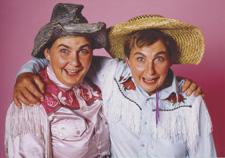
Guitar-playing, yodelling lesbian twins. Hot, right?
Okay, maybe not on paper, but this documentary about New Zealand’s beloved Topp Twins — Jules and Lynda — is universally appealing, even if you don’t have a soft spot for old-school butches with bad hair and plaid shirts.
The Topp Twins: Untouchable Girls is framed by a celebratory concert marking Jules Topp’s successful struggle with cancer, with many of the characters in their unfolding story appearing in the audience or onstage. Strumming the opening notes of a tune, Jules asks, “How did this happen?” and the film proceeds to tell us, by way of some powerful interviews with people they’ve influenced over the years and the twins themselves, who share a connection that’s amazing to witness.
The Topp Twins are national icons in New Zealand. An “anarchist variety act” (according to Billy Bragg, who appears in the film), they have performed as a country music–singing comedy duo for more than 25 years, and have been openly gay from the get-go. They got their start busking in the town nearest the farm they grew up on, which they credit with giving them the freedom to stumble happily into their identities, including an early realization, upon seeing lesbians who looked and dressed just like them that “we must be lizbeins too.”
Maori land-claim protests in the 1970s kick-started their political activism. Apartheid, anti-nukes and gay rights were taken up in turn (Helen Clark, prime minister at the time, speaks about the key role the twins played in the passing of the Homosexual Law Reform Act). All of it’s folded into their act, making the film much more than just biography — in many ways it’s the story of New Zealand, too. But the politics go down easy: natural performers and accomplished musicians, they’re the antithesis of earnest lesbians.
Much of their schtick is character comedy, with the girls dressing up (and showing great drag range) as personalities drawn straight from the Kiwi psyche: Dilly and Prue Ramsbottom, hard-drinking posh socialites; the Kens, passionate rugby fans and true “sheep are nervous” blokes; and, my favourite, Camp Mother and Camp Leader, turned out in their pink velour and wooly cardigans. All provide commentary throughout.
The twins remain confirmed country girls, and the film is punctuated by scenes shot on Jules’ horse farm, a treasured refuge. Her knack with the animals gives insight into the twins’ deft touch at wrangling audiences. They understand that the trick works best when you’re not being cynical; everyone’s included — steelworkers, Maori, farmers, the Women’s Institute, rugby fans — and no one’s laughing at anyone.
As appealing as the twins and their story are, the skill of Winnipeg-born Leanne Pooley’s filmmaking completes the package. Structured, complex, confidently paced and beautifully shot, with wonderful old footage and photos (including some truly awful lesbian hair), it’s officially the most successful New Zealand documentary ever made. Untouchable girls? Only in the best sense of the word.
 Why you can trust Xtra