About a month ago, I woke up before dawn in a fevered panic. I had slept through my alarm and my flight from Toronto to Guatemala was leaving in an hour. Within minutes I was in an Uber, wired despite the lack of caffeine in my system. Soon a new panic settled in—I’d left my luggage at home. I pleaded with my driver to speedily return to my place, and when he got there, I ran in and grabbed my bags and hopped back into the car. As he raced to the airport, I prayed to every god that the security line would be short.
I was already anxious about the trip. After a couple of days in the city of Antigua, I would be ushered to the base of Acatenango, a volcano known for its brutally steep seven-kilometre hike that culminates in a sensational view of the eternally erupting Volcán de Fuego. I have never been a physically disciplined person, and I was terrified that my body would give out on the hike or that I’d fracture my ankle and be forced to drag my limp leg behind me, my agony increasing as I pathetically summited the mountain’s peak. But in that cab, it seemed like I might miss the flight, and with it my shot at trying something new, something hard, something dangerous. My chance at ruining my body on a Central American volcano was slipping away before my eyes.
I arrived at the airport and my heart sank. The security line was trailing out of the airport door, spilling into the dark morning. Though it was starless and black, an artificial fluorescent light which seemed to come from nowhere bathed the queue. The scene felt surreal and otherworldly, and the whole thing felt like some malicious force was inflicting it upon me. I approached the line and saw my friend, the untalented pop singer Gracie Abrams. Her pronounced cheekbones could not conceal her anger.
“We’re going to miss the flight because of you!” she bellowed. “And you haven’t gone on the Stairmaster once since we booked this trip. Even if we make it to the hike, you’ll fail!” Layers of shame and panic overtook me, the intensity almost too much to bear. Before I could apologize, I woke up in my bed, my dream of the airport and Abrams already a distant memory.
Though my unfortunate rendezvous with Gracie Abrams was a fabrication of my subconscious, the Guatemala trip and volcano hike were real. Evidently, I was deeply haunted by my fear about it. The trip was actually scheduled to begin a week after I woke up from my nightmare, and I supposed the best way to assuage my terror was to train for the hike. I have never in my life had a fitness-related accomplishment. I have not run a ten-minute mile or swam across a lake. I have not climbed a mountain. With this in mind, I marched to the gym and got on the Stairmaster and threw on a podcast about the currently airing 50th season of Survivor, which boasts a cast of 24 beloved players drawn from the show’s 49 previous installments.
My love for this reality show is all-consuming. I constantly rewatch old seasons and listen to episode recap podcasts year-round and I organize a weekend-long Survivor game of my own each summer. Survivor 50, the first all-stars season in 10 seasons, is a major event in my life. My favourite member of the cast is Christian Hubicki, a bespectacled roboticist who placed seventh on Survivor: David vs. Goliath.
Christian’s nerdy disposition and tendency to lecture often put him at odds with the hunky blockheads and charming hotties that tend to play Survivor. But Christian is phenomenally wily and an expert strategist. Time and time again, he has pulled rabbits from hats. During an early episode of Survivor 50, Christian’s tribe was suffering after days without fire, which meant that food couldn’t be cooked and water couldn’t be boiled. Armed with a lifetime of advanced physics expertise, Christian managed to single-handedly produce a fire using a pair of eyeglasses and the sun’s rays.
He carved an eternal place in my heart during an immunity challenge in his original season, which aired in the fall of 2018. The competition’s conceit was simple; each contestant had to hang on to a wooden beam by wrapping their hands around two thin and stubby poles jutting out from its top. Pain would collect in their upper bodies as their weight pulled their torsoes from their shoulders while the blistering Fijian sun baked their skin. The last person to drop would be safe from elimination for the subsequent vote.
After about an hour, only two sufferers remained: Christian, and the smarmy Alec, who had made so many enemies that he was certain to be voted off if he could not outlast his opponent. After three hours of agony, Alec began to wince, so Christian started to monologue. He babbled on about plant root growth and exoskeleton research, layering as much additional torture onto Alec as he could. Alec pleaded for Christian to drop and save him from a near-certain demise in the game. “I know how you must feel in this moment,” Christian said through tears. “It’s just … I might never get this opportunity again.” After five and a half hours of crucifixion, Alec peeled off the beam, leaving Christian victorious.
This moment is a pure distillation of why Survivor has stayed on top for a quarter of a century. The lying and scheming and starvation may suck viewers in, but the show’s most alluring quality is its ability to demonstrate the capacity of the human will to overcome seemingly insurmountable odds. Christian didn’t outlast Alec because he was fitter or smarter or savvier than him. He won because he was determined to do so.
I contemplated Christian’s superhuman determination as I ascended another endless step on the Stairmaster. The sweat beading on my forehead had begun to drip unattractively onto my nose, and my lungs couldn’t seem to draw the breath they needed. I stepped off and looked at the time I’d elapsed on the machine. It said I’d been climbing for a mere eight minutes.
A week later, I woke up at 6 a.m. in my hostel in Antigua, where I was staying with my best friend from Toronto. They had invited me to join them on the hike, setting into motion the terror that fuelled my nightmares. We walked to the office of the hiking company we’d booked, and shortly thereafter we were corralled into a van. We were driven up kilometres of winding mountain roads. Two hours later, we reached the base of Acatenango.
The hike began easily. A gentle breeze cut through the blazing Guatemalan heat, and I started strong, leading our pack of adventurers. I felt energized, and I savoured the clean air and the exercise. As we climbed upward, flat fields morphed into a rainforest, replete with Jurassic-size leaves and lush green trees and fluorescent volcanic flora. We took our first break an hour later, and I told my friend the hike was easier than I thought.
Minutes after the break ended, I felt a dull pain in my hamstring, and realized with horror that it would worsen as the hike continued. Acatenango’s ascension is unforgiving—it is a long, uphill trek that steepens exponentially as the summit approaches. I felt like Dante traversing the earliest terraces of Mount Purgatory. The Earthly Paradise lay at the summit, but the journey toward it would be arduous and punishing.
The rainforest stretched on for hours, and the pain in my pulled muscle sharpened with each step. Within an hour, I had to muster all my willpower to limp forward, step by searing step. Meanwhile, the escalating altitude sapped the oxygen from the air. This continued for five more punishing hours. The naive optimism that had propelled me through that first confident stretch was a distant memory. I was reduced to the pain in my leg and the heat in my lungs. We had no medical supplies or painkillers or ice packs. Relief was not available on the volcano.
At some point, I looked around and noticed the tropical greenery had become an alpine forest. A snap of height-induced cold had reduced the humidity and, remarkably, it looked like I’d left Central America and returned home to Canada. For a few moments, I forgot my wrecked body and took in this new biome, the third or fourth we’d seen that day.
Eventually, we pulled up to a parking lot. We were submerged in a thick fog, and it occurred to me that it wasn’t a fog at all but a flying cloud that we had entered by foot. Our guides announced that we’d reached the final stretch, which was, according to them, the most difficult of the climb. We could expect steep rolling hills, the ups and downs of them sure to deliver pain upon our calves. I thought of the climactic car chase in One Battle After Another, when Chase Infiniti’s character turns the dizzying slopes of the Californian highway against her white supremacist adversary. And I thought of Christian, draped over his crucifix, willing himself toward a win. My win was waiting too, if I could summon the appropriate will.
The hills came and went, and somewhere along the way I befriended my pain, turning it from an adversary to a companion. We lumbered toward a clearing and in the clearing were wood cabins and a painted sign that read “Base Camp.” I collapsed into a chair and looked out past the edge of the mountain. I had expected a smack of satisfaction upon summiting the mountain, but instead all I felt was the lethargy of exhaustion and a sting of relief that the climb was done.
I heard a clap of thunder and spotted a pillar of dark grey smoke plume above the clouds. The volcano was totally obfuscated by a dense sheet of fog. I realized with lackadaisical disappointment that my Earthly Paradise might have eluded me. I was suddenly overwhelmed with nausea—a nasty bout of altitude sickness—that persisted for the rest of the evening. I stumbled to my cabin and stood at the door and stared, dismayed, into the opaque fog, willing it to clear without success. Then I turned my gaze upward and saw more stars than I’d seen in my life, trillions of them, and realized I was closer to space than I’d ever been. My nausea subsided and I snuck into my sleeping bag and fell asleep.
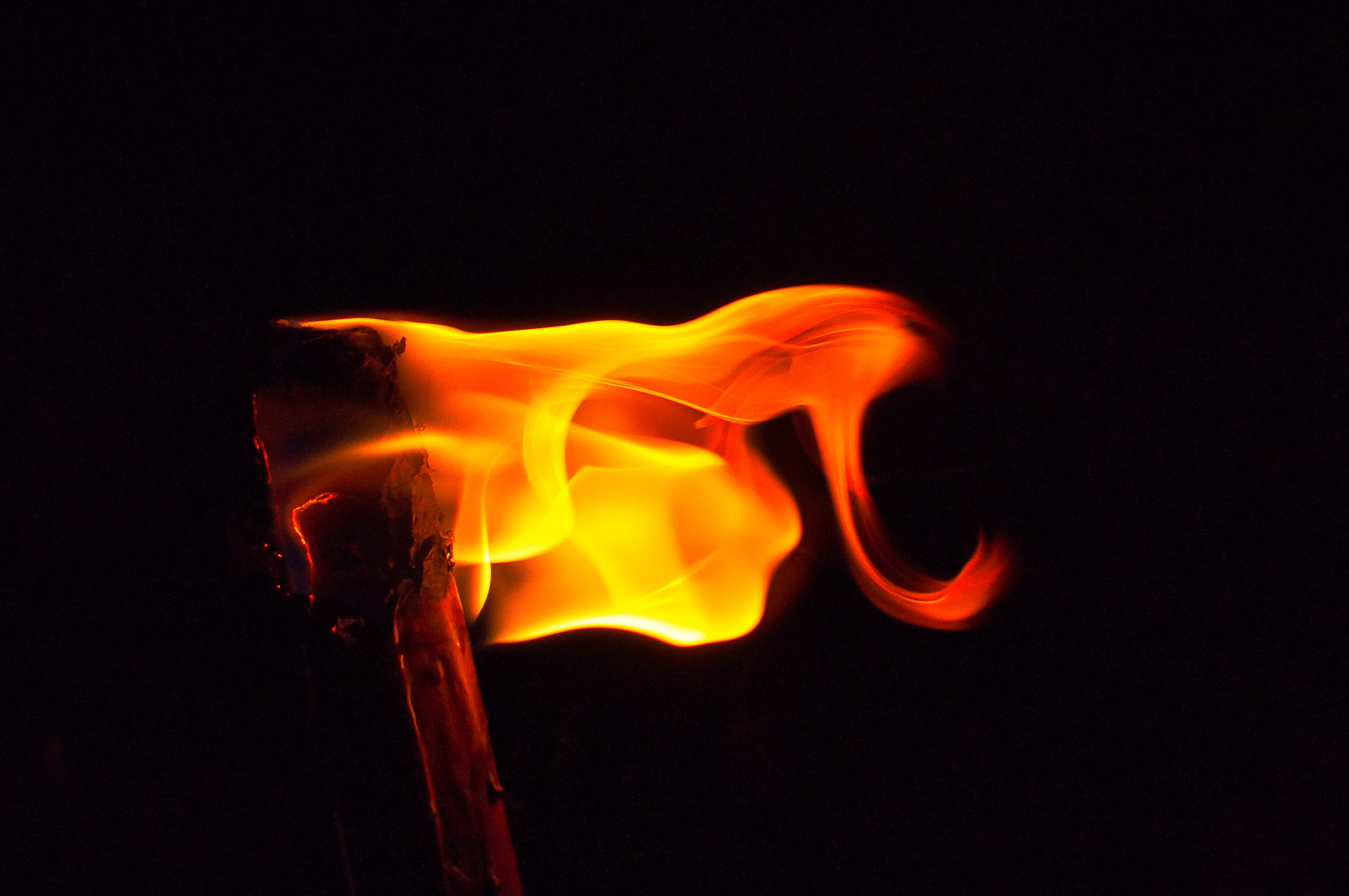
Right before dawn, I was awoken by an explosion. I looked out the cabin’s window and saw blood-red lava dribbling down Fuego’s maw. The fog had cleared and the volcano was in full view, its molten juices cutting like neon through the early-morning darkness. I walked to the base camp’s highest point as a pink sun emerged over the horizon. The day broke to my left and the volcano roared to my right, its constant eruptions perforating the air like an angel’s bugle welcoming a repentant Dante into Paradise. I felt no pain. I drank in the beauty my determination had won me. Like Christian before me, I had survived.

 Why you can trust Xtra