“The Other War alludes to the war taking place away from the battlefield, the fight for a normal life in an area that’s always in some state of bloodshed — the war for the right to personal happiness, in a place that relentlessly demands individual sacrifice,” explains filmmaker Tamar Glezerman.
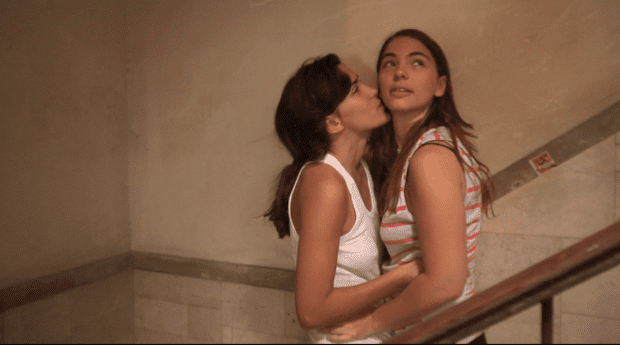
While Glezerman’s brilliant film has been making the rounds at film festivals around the world since 2006, audiences in Hogtown will be treated to a screening at Toronto’s 2015 Jewish Film Festival. The Other War tells the story of lovers Elli (Keren Berger) and Naama (Hen Yanni) as they pal around Tel Aviv during the 2006 Lebanon War, known in Israel as the Second Lebanon War.
“The story takes place during a specific war in Lebanon, but Israel is always at war, whether it’s in the more dramatic, and reported wars and escalations, or in the continuous military task of maintaining the daily occupation of the West Bank,” Glezerman says. “War is a part of the Israeli-Jewish society in every possible way and in all walks of life, as Israel has mandatory army service. Everybody either participates, knows someone who participates, knows a victim or is one.
“The army is held in very high regard, as is one’s commitment to it. It is a profoundly patriotic and militaristic society. During the second Lebanon war, I found the emotional toll of this predicament on my immediate surroundings quite devastating and compelling. The circumstances crystallized what I perceived to be an interesting example of the conflict between one’s identity as a citizen and one’s identity as a human being. I have to disclaim, however, that constant war means something completely different to the Palestinians in the territory controlled by Israel, and although this particular films looks at the Jewish-Israeli society, I feel uncomfortable not to acknowledge that when commenting on the topic.”
What’s most charming about Glezerman’s film — which clocks in at just 43 minutes with credits — is the banality encountered by its lead characters as they crisscross the terrain of everyday life; family-bound Elli helps plan her sister’s wedding as Naama spends her evenings in local gay bars and does her best to cope with her budding wanderlust. In The Other War’s virtual absence of drama, it has achieved a cinematic rarity by relying on the direction and stunning, understated performances of its actors.
Glezerman says this defining feature of the film was not accidental. “I think The Other War deals with LGBT relationships in the simple sense that it portrays characters that are gay, and it’s really not a big deal, and they just deal with life, with its love and heartbreak, just like everyone else,” Glezerman says. “They’re two women, they’re a couple, and nobody cares. I think that may be an important representation for people to watch. The film has been watched by tens of thousands of people in places like Pakistan and Saudi Arabia, and that makes me very happy. But all and all the film doesn’t deal with gay issues as much as it just deals with gay people, or, as Liz Feldman said so well, ‘I had lunch this afternoon, not gay lunch. I parked my car; I didn’t gay park it.’”
The Other War
Wednesday, May 6, 6pm
Innis Town Hall, 2 Sussex Ave, Toronto
tjff.com
*This story’s sub-headline was changed on Monday, May 4
 Why you can trust Xtra