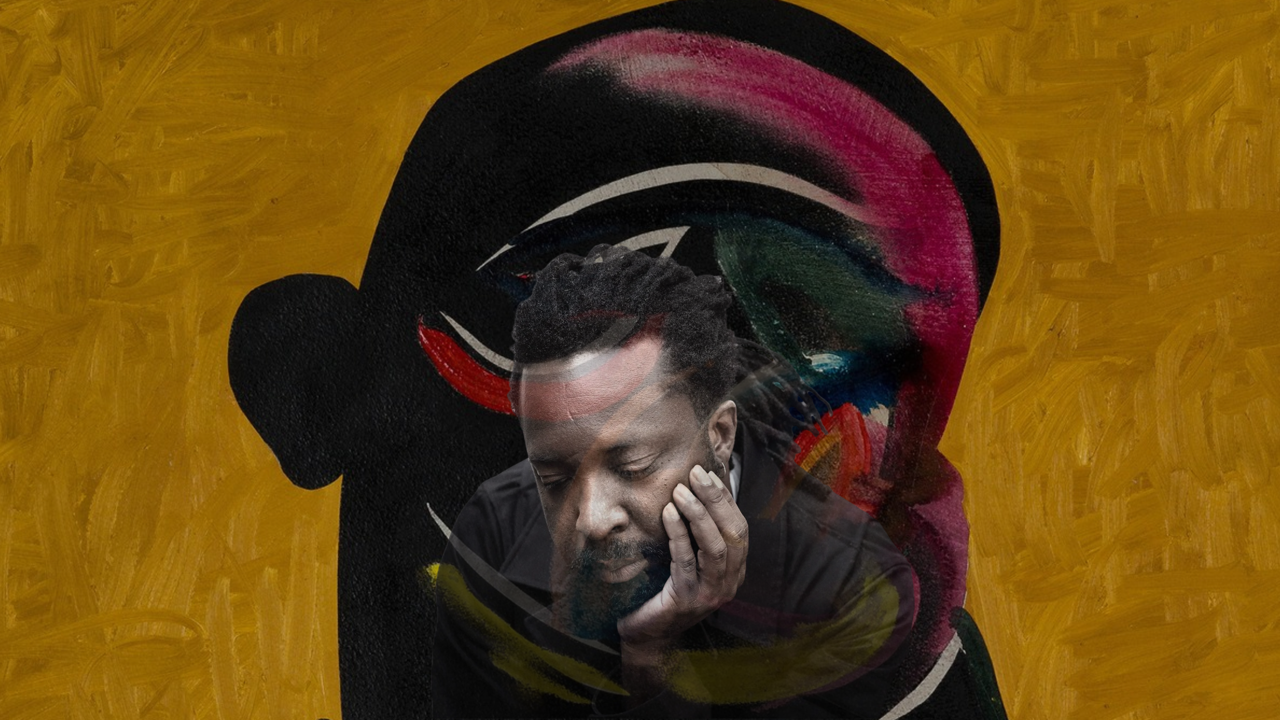
When he was 11 years old, the writer Marlon James began to disappear.
It wasn’t hard. Kingston, Jamaica, was no sprawling metropolis in the 1980s, but vanishing acts happen in any Victorian society, where national memory is selective, the bruised shadows of palm fronds contain ghosts and the stormwater gullies hold secrets and other lives, other Kingstons. You can escape without leaving. The cool kids from James’s all-boys’ school, the ones who called him “Angela” or “sissy” or “faggot”: he mapped their morning bus routes, then adjusted to avoid them—a them that included his disapproving older brother. He stayed after hours for an extracurricular art program to go home in the pitch dark, because killing mobs converge on a word like battyboy. At home, he hid himself in his bedroom, locked the door and listened to Prince, INXS, Peter Gabriel. By the summer of 1987, he’d mostly stopped talking. He knew the self-erasure had worked when the next-door neighbour, inquiring after which foreign school Marlon had been shipped off to, turned up to say, “I haven’t seen him since 1982.”
He left Jamaica in 2007 for a teaching position in Minnesota, where the paradox of in/visibility persisted: to honour his Booker Prize-winning novel A Brief History of Seven Killings, the governor declared Oct. 28 to be “Marlon James Day,” but none of the nervy white people in town so much as invited him to dinner in the 13 years that he taught there. When James recounts his life in Jamaica now, sitting in his Williamsburg apartment backed by framed sketches of male bodies in various states of nudity, there’s no trace of the solemn, white-gloved civility that liberal institutions tend to expect—demand?—of the aggrieved. “I’m perfectly fine with sitting in my hatred,” James tells me in late September. Pop psychology and that stultifying Christian virtue of forgiveness be damned. The repressed boy from school who died young in Europe, the one who let James risk his academic life to complete his art exam only to turn around two days later and mock his sashay? “Fuck him and his corpse,” says James. “I hope he suffered.”
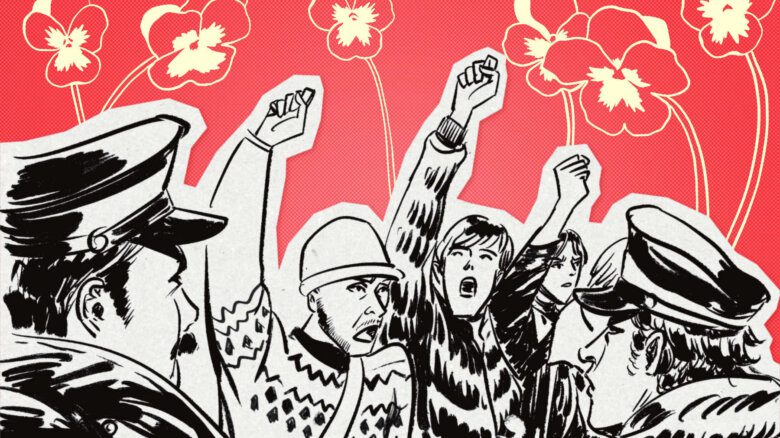
Rather than translating this early alienation into some “wan little husk of autofiction,” James has forged his history and its discontents into a fierce, 600-page weapon the shade of gunmetal. Anger, disappearance, revenge: these, too, become technologies for survival in a world where God is on a smoke break. Set in Kingston in the 1980s, his sixth novel, The Disappearers, spirals out from a fatal mob attack on a group of gay actors as they rehearse Fortune and Men’s Eyes, the Canadian playwright John Herbert’s text about homosexuality and power in the prison system. In the aftermath, one man is left dead, another is blinded, two vanish into thin air and one pledges to get revenge. There will be no reconciliation here and no miracles either. Each man, even the elders, will become boys interrupted. “It changed all of you,” says Eddy Porteous, the only one who missed the attack. When he clarifies, we get a treatise on the flattening mechanics of trauma: “I mean it changed all of you into the same person.”
The book is divided into five parts that span 20 years, and we get extended glimpses of the inner lives of men at various stages of their sexual and personal development. Some are naive and charmingly ingenuous, like the mixed-race 18-year-old Eddy, whose voice commands the first 100 or so pages of the book. Eddy’s class position and proximity to whiteness (his mother is Belgian) insulate him from some of the forces his fellow actors can’t duck. Others, like the Oxford-educated former bon vivant Havelock Titus—“the world’s only living heart donor,” who has decided to stage the play—are old enough to have outgrown their callowness and learned, instead, how to fight.
James’s formal experiment is to structure each section with a different voice and literary form, the progression loosely shaped by a gradual loss of innocence; wide-eyed diary entries make way for revenge-fantasy monologues, confrontational interviews, nightmarish hallucinations and nostalgic letters to a former lover, some drafted but never sent.
James’s men—hyper-articulate, pugilistic, funny as hell, deeply unlucky—often look to music, film and literature to find a language for their identities that doesn’t locate them as deserving of annihilation. In this pursuit, they learn they can’t dignify their way into humanness in the eyes of those who want them dead, so they find a utility for hatred. “Liking people who hate you is what the X-Men do,” says Jordan Brown, who gets the most psychic real estate in the novel and whose sole purpose becomes his self-destructive vigilanteism; he becomes fixated on John Rechy’s The Sexual Outlaw, a manifesto against the persecution of gays, and a subplot in Toni Morrison’s Song of Solomon, in which a clandestine group of Black men commit retaliatory murders against white people.
His retaliations start small: biting closet cases who pay him for sex, giving them hickeys so their wives see. The impulse metastasizes. Having slipped or been pushed through the social safety net meant to protect its populace, James’s brutalized men must fill themselves in with whatever tools they have available. In this way, literature makes them dangerous. Brown, in particular, the most feverish reader, refuses to pay the structural costs of his own subjugation. Instead, he returns them.
“The novel is fiction,” writes James in his acknowledgments. “The novel actually happened.” Much like A Brief History, The Disappearers began as reportage, with James interviewing Jamaicans who could tell him of the queer life he missed out on when he vanished into the church, but also who could fill in what’s missing from the official record. “I’m attracted to stories with holes,” says James; a perfect double entendre—his incredible sex scenes are dizzyingly hole-dominant. (Straight women have been complimenting him on how hot the book is, and while this flatters him, James says he does not write for the straight gaze.) “In Jamaica, I don’t trust the facts,” he continues. “I trust the rumours.” The headlines in The Disappearers that index the attack don’t tell the real story; they offer a placating fantasy instead, shamelessly shifting the blame: “GAY ORGY LEADS TO MORGUE,” or “BATTYBOYS BATTLE TO THE DEATH.” Those who know what really happened heard it from somebody who was neither a cop, deacon nor judge. (Who are the true unreliable narrators of our times anyway?) James’s books take these hushed, privileged “veranda discussions” and blow them open in the public square.
Growing up, James had always heard of a fatal attack that was visited on a group of young gay men in Kingston. But he could never prove it happened until a lawyer in Toronto confirmed it was real. In criticism, the archive is often discussed as though it were a solid and reliable system, a Dewey Decimal-ordered library that can be freely consulted for evidence. History, though, is written by the victors, and sometimes requires intervention to approximate the truth.
“If you’re Edwidge Danticat, or Junot Díaz, or Jamaica Kincaid, you become the history, because the histories haven’t begun to care about us yet,” says James. “And so the fiction becomes the evidence—a way of recording, a way of witnessing.” This is, perhaps, a spiritual cousin to the scholar Saidiya Hartman’s conception of “critical fabulation,” where archival research blends with theory and imagination to restore depth to an historical record that omits its own blood-soaked embarrassments.
What the reader is made to witness is often horrifying and always vividly imagined. James has a magnificent ear for dialogue and an eye for cinematic, almost surreal, images. In one scene, university administrators fuelled by AIDS hysteria burn mattresses in the courtyard; in another, a mob chases two boys into the gully, where the subaltern queens are dressed in luminous wigs and tattered clothing, one in a stolen wedding dress, jeans with the crotch ripped out, baby locs and “thick lips in search of a face.”
When you tell people you’re reading a Marlon James novel, they sometimes wince. His world-building is intense. His characters endure cruelty. The scene when the men are attacked is chillingly split among the close perspectives of the attackers. “Kill a man with a high voice. Kill a man who float when he walk. Kill a fish,” one assailant thinks to himself. A deacon, titillated as he slaps, beats and shoves a rag down the throat of the man whose affect most reminds him of a woman, thinks, “Look at GOD.”
James scoffs when people clutch their pearls at his books. When he wrote The Book of Night Women, a novel about a woman born into slavery, many Americans told him they couldn’t read it because it was “too intense.” “You know what’s worse than reading about slavery?” he says. “Being a goddamn slave.” It’s unclear what these twee, fragile types actually want from art. Comfort? Uplift? If we can’t even accept friction in our private aesthetic experiences, what does it say about the limits of our empathy and the failures of our body politic?
“I had to tell myself too: maybe you should just shut up and bear witness, because the price that I pay is nothing compared to the price paid by the person whose experience I’m rendering,” says James. Denial is vulgar. Indifference is vulgar. Where some novelists or filmmakers pan to a beautiful image in moments of terror or intimacy, James jettisons the reader’s comfort. We should be horrified by violence, he argues, because violence is inherently horrific: it’s the numbness induced by the Hollywood bloodbath that seems more objectionable, because it’s a depiction of violence without suffering. James, who has written crime thrillers for television, knows that a gunshot wound to the belly can’t be fixed with a bandage, despite what the movies tell you. He’s more interested in lingering on the wounds that stay open, the scars that may never heal.
For James, to write is to confront and to bear witness. Because in order to understand suffering, you have to look at it.

 Why you can trust Xtra