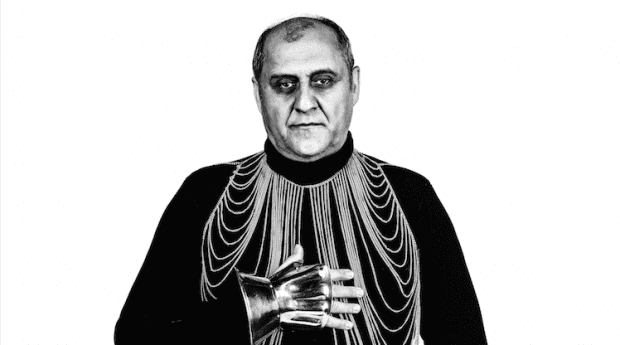
Paulie McDermid remembers his first time.
“I have been a Federico García Lorca freak, nerd, fan, crazy person for about 30 years,” he says. “I first saw a performance of one of his plays [in high school] and was overwhelmed with the queerness of it. I thought, ‘This is about sexuality, and desire and about the impossibility of that desire being realized.’ I was hooked.”
McDermid acts as a literary consultant for Modern Times/Aluna Theatre’s production of Lorca’s Blood Wedding. The play — about a young woman who runs away with the son of her family’s enemy on the eve of her wedding — gave McDermid an opportunity to draw on his extensive academic work on the playwright, as well as his own background in performance.
“I was part of the actors and the director feeling their way through the text right at the beginning of rehearsals, and was able to reflect on my lengthy academic knowledge — specifically issues of text and translation,” says McDermid. “And in those early pre-production chats I was having with [Blood Wedding’s director] Soheil Parsa and [Aluna Theatre’s artistic director] Beatriz Pizano, they were still looking through many different translations and deciding which one to use.”
“I know I argued very heavily for the Langston Hughes’ translation.”
Hughes, an African-American playwright, social activist and part of the Harlem Renaissance movement, was renowned for his innovations in jazz poetry. His use of rhythm and phrasing helps to temper some of Lorca’s elaborate imagery, which McDermid notes is often notoriously hard to translate into English.
“I think the speakability of [Hughes’ translation] really helps actors cut through any fear around both poetry and floridity of Lorca’s original,” he says. “But I also think that Hughes uses his distinctive African-American register to inject the same warmth and easygoing lyricism into the play’s language that keeps it in line with the Spanish version.”
He pauses. “Plus, Hughes was a poet, a playwright, and a queer man. So was Lorca, and so I think Hughes gets it on many levels. There’s a synergy there.”
Although Blood Wedding isn’t an overtly queer play, McDermid sees elements of subversion and dissidence around gender and sexuality in Lorca’s work that makes the piece a worthwhile addition to Buddies’ offerings this season.
“I never read any of Lorca’s plays literally in terms of gender,” he says. “It’s like they’re wearing masks. That one’s a female mask, and that one’s a male mask.”
“It’s ultimately about the passion the characters feel for each other, the desire, and the frustration of that desire — which is supremely queer. And I think we can all relate to that on some level.”
Blood Wedding
Runs Wed, March 11–Sun, March 29
Buddies in Bad Times, 12 Alexander St, Toronto
buddiesinbadtimes.com

 Why you can trust Xtra