One in five Britons thinks homosexuality is “always wrong,” according to the British Social Attitudes report by NatCen Social Research. That number has dropped dramatically since 1987, when more than three in five thought so.
Nearly half of Britons now say that being gay is “not wrong at all.”
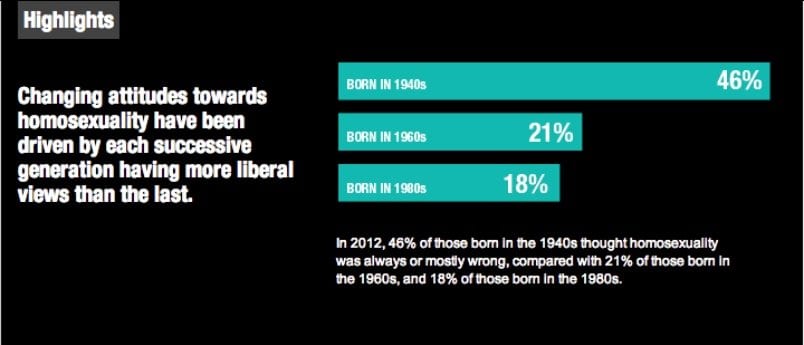
That shift is mostly driven by demographics, the study shows. Nearly half of Britons born in the 1940s still think that homosexuality is always wrong, compared to only 18 percent of Britons born in the 1980s.
Views were also strongly linked to party affiliation; Conservatives were much more likely to think homosexuality was always wrong than Liberal Democrats.
The largest social shift, however, has been among supporters of the centrist Labour party. In the 1980s, more than two thirds of Labour supporters thought homosexuality was wrong, more than even Conservatives. By 2012, that number had dropped to less than one third.
British Parliament passed a bill legalizing same-sex marriage in July, making way for weddings to begin next summer.

 Why you can trust Xtra