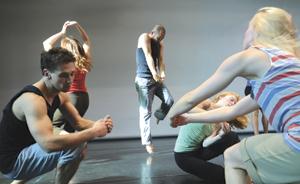
'There's a daredevil quality demanding the performer be very much in the moment,' says choreographer Christopher House. Credit: Guntar Kravis
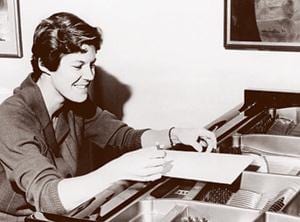
Ann Southam made music the way she lived life: quietly, minimally and without apology. The Canadian composer, who died in 2010, became internationally known for her delicate piano and electronic works in the 1960s, when composing was still an all-boys’ club. A collaborator from Toronto Dance Theatre’s earliest days, the company’s new piece, Rivers, is scored by one of Southam’s best-loved piano works of the same name.
“I really admired the joy she took in creating,” says choreographer and company head Christopher House. “A lot of people make good work but don’t really enjoy the process. For Anne the creative act was sheer pleasure.”
Southam began working with TDT founder Patricia Beatty in the mid-’60s, shortly after Beatty returned from New York, bringing modern dance with her to Canada for the first time. The relationship was symbiotic; the company gave Southam carte blanche to experiment musically and her financial contributions kept the lights on in the early years.
House met Southam when he joined TDT in 1978, and he danced numerous pieces she’d scored in his early years. He reconnected with her work after she died, when he dug up a handful of old audio cassettes she’d given him in the 1980s.
“Her compositions celebrate these repetitive structures, which pays homage to the work traditionally performed in society by women,” he says. “Some pieces have this quality of musical embroidery, like tiny threads of sound weaving over and through each other.”
Born in 1937 in Winnipeg, Southam was an heiress to the Southam media fortune and lived a creative life unmarred by financial concerns. Raised in uptight Forest Hill, after her parents relocated there in 1940, she never fit in with high society. Preferring cropped hair and sweatpants to bouffants and evening gowns, she revelled neither in wealth nor femininity. She never married but maintained several long-term relationships with women, the first one beginning in the early ’60s.
“Coming from a wealthy family made it easier for her not to be limited by sexuality or gender,” House says. “She was quite a feminist in a time when it wasn’t considered acceptable and made a name for herself in an entirely male-dominated industry.”
True to Southam’s spirit, Rivers is scored simply, with the piano played by virtuoso Christina Petrowska Quilico. The company’s 10 dancers perform on a stripped-down set, embodying Southam’s creative approach.
“Her compositions have these rigid structures, but there’s a daredevil quality demanding the performer be very much in the moment,” House says. “We’re aiming for that in the dancing as well, trying to have them approach the work as an adventure, being open to celebrating each instant.”
 Why you can trust Xtra