Democrats dominated in Tuesday’s midterm elections, gaining control of Congress and ushering in a new slate of progressives across state legislatures, governor’s mansions and statewide offices. The historic blue wave comes with the promise of reining in President Donald Trump, and with it, his administration’s attacks on LGBTQ2S+ people.
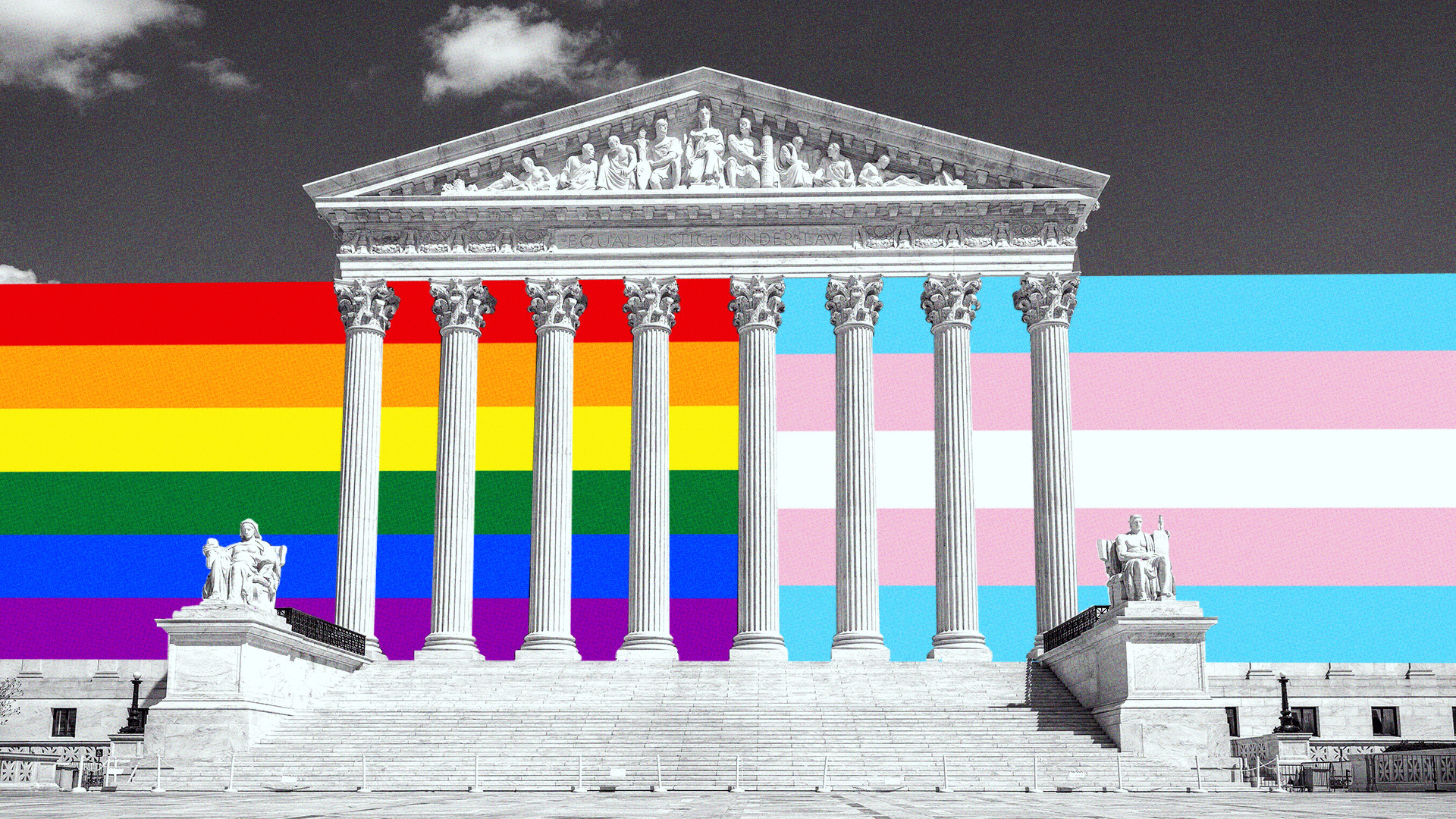
But the year isn’t over yet, and the Supreme Court still has several cases to hear. Two under-the-radar cases this term could impact just how much state laws can protect LGBTQ2S+ youth and their families for decades to come.
On Election Day, the justices heard arguments for St. Mary Catholic Parish v. Roy, a challenge from Catholic preschools in Colorado that claim the state’s requirement to sign an anti-discrimination agreement in order to receive funding for its free preschool program violates their religious freedoms. Next month, the court will hear arguments for International Partners for Ethical Care v. Ferguson, involving a group of religious parents in Washington who claim that the state’s policy to protect trans youth in licensed youth shelters infringes on their parental rights.
The religious plaintiffs in both cases argue that state laws that protect LGBTQ2S+ youth and their families infringe upon their rights to free exercise of religion or ability as parents to make decisions about their children. Legal experts say their efforts to prove harm, however theoretical, are part of the broader conservative strategy to net victories in the highest court and carve out exemptions to discriminate or make it difficult to enforce LGBTQ2S+-inclusive laws.
“St. Mary and IPEC do not fit neatly into a headline, and that is exactly why they deserve attention,” Luce Remy, the vice-president of public policy at the LGBTQ2S+ non-profit Family Equality, tells Xtra. “In both, the challengers are asking the Court to act on harms that have not happened to them: the schools never applied to the program, and the parents have not alleged that the Washington laws were ever applied to their families.”
As voters cast their ballots on Nov. 3, the Supreme Court heard two hours of arguments for St. Mary Catholic Parish v. Roy. Throughout the hearings, the conservative justices appeared sympathetic to the Archdiocese of Denver, two Catholic parishes and Catholic parents who argued that the preschools should be able to discriminate based on the sexual orientation or gender identity of a student or their parents.
The Catholic preschools St. Mary and St. Bernadette parishes claim they weren’t able to participate in Colorado’s universal preschool funding program, which requires them to sign an equal-opportunity agreement to enroll children regardless of race, ethnicity, religion, sexual orientation, gender identity, income, disability, lack of housing or income level. Doing so, the Catholic preschools wrote in their petition to the court, would mean burdening their religious beliefs about same-sex marriage or trans identity.
However, dozens of other faith-based providers have had no problem signing this pledge—which applies to every publicly funded private, public, secular and religious preschool, according to the state. The program, which was approved by Colorado voters in 2020 to expand preschool access across the state, reimburses parents for the cost of 15 hours of preschool for four-year olds, totalling about US $6,300 per child. In previous rulings, lower courts sided with Colorado, holding that the law was neutral and did not exclude religious schools.
But after Tuesday’s arguments, the Supreme Court’s conservative majority seemed poised to rule once again in favour of the religious conservatives. Liberal justices Ketanji Brown Jackson and Sonia Sotomayor raised concerns that allowing Catholic schools to discriminate against same-sex families could open the door to other challenges by religious groups trying to exclude students based on race or other characteristics.
“The problem [Colorado] was trying to address with this law is that when a four-year-old is enrolling in school, you really don’t want the school asking about their parents’ sexuality or gender identity,” says Shawn Meerkamper, managing attorney at the Transgender Law Center. “What’s at stake here is whether or not we’re allowing organizations to use tax dollars to discriminate against children because of their parents.”
The conservative movement has long tried to sow divisions between religious groups and LGBTQ2S+ people in the United States—and over the last decade, the conservatives on the Supreme Court have been their accomplices in that crusade. In Colorado alone, the Court has carved out exemptions to other anti-discrimination laws on religious grounds for wedding website designers, therapists and cake-makers.
While conservatives have tried to gain the licence to discriminate against LGBTQ2S+ people, the movement has also bolstered false narratives claiming that schools or medical providers are secretly helping young people transition behind their parents’ backs. Trump repeated this fiction on the campaign trail in 2024, pushing tales that schools were performing surgeries on kids without parents’ knowledge.
This, of course, couldn’t be further from the truth. But now, religious parents and organizations are building on this fear of deception and taking it to the courts. In December, the Supreme Court will hear arguments for International Partners for Ethical Care v. Ferguson, a case that questions whether parents have legal grounds to challenge Washington state’s law aimed at protecting “runaway” youth in licensed youth shelters.
In 2023, Washington passed a bill to protect trans youth under 18 years old who find themselves in unsupportive home environments. Typically when a young person goes to a licensed shelter, the shelter has to notify the parents ideally within the first day, though it can wait up to 72 hours. However, if a young person has left their home and is seeking protected healthcare that is gender-affirming or reproductive care, the law allows shelters to first contact the state’s Department of Children, Youth and Families. This agency can help connect youth to services like mental healthcare or temporary host homes before contacting the parents and trying to facilitate reconciliation with their children.
Matthew Wilson, the executive director of Oasis Youth Center, a Washington-based non-profit that provides after-school programming for LGBTQ2S+ young people, says this law grew out of a real need for supportive spaces for queer youth in the state. Wilson, who testified in support of the law in 2023, said that more than half of the youth who come to Oasis’s centers in Tacoma and Lakewood have faced housing insecurity at some point.
Nationwide, nearly a third of LGBTQ2S+ young people have experienced homelessness or housing insecurity, according to a 2022 report from The Trevor Project.
“There’s a lot of family rejection, especially if it’s tied to religion,” Wilson says. The shelter law, he says, helps ensure that when a young person leaves or is kicked out of their home because of their trans identity or because they’re seeking an abortion, they are able to stay continuously housed in one place for up to three days. “It allows everyone to have a break and cool down.”
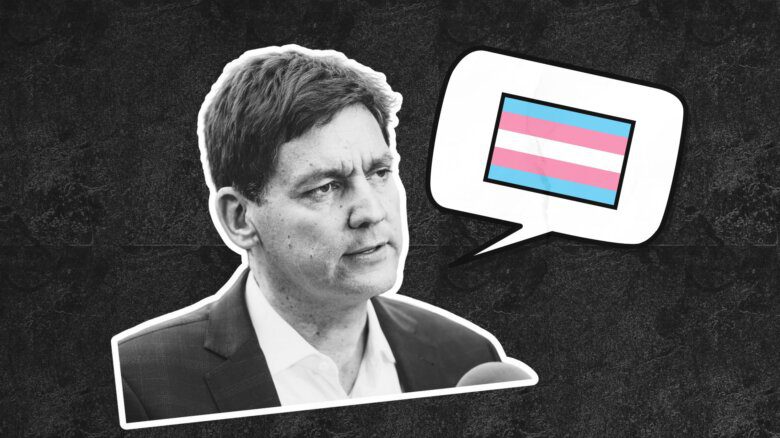
But a group of anonymous parents who have children questioning their gender, along with International Partners for Ethical Care, a non-profit group campaigning against gender-affirming care for youth, sued Washington governor Bob Ferguson in late 2023, asserting that they should have standing, or the legal grounds, to challenge the state’s shelter law on the basis that it infringes on their parental rights.
In order to have standing in court, a person or entity has to prove that they’ve been injured in a tangible way, that there is a clear connection between the actions they’re challenging and the injury and finally, that a decision in the plaintiff’s favour will fix the harm.
Two anonymous parents claimed in their petition to the court that they were forced to “alter” their parenting—by using their children’s chosen names and pronouns—in response to Washington’s law after their teenage children came out as trans. Another set of parents said in the same brief that their religious beliefs conflict with the existence of trans identity, and worry that their children, who have expressed gender dysphoria, will leave their homes seeking supportive environments, and gain access to trans-inclusive mental health services without their consent.
Alizeh Bhojani, the policy director of Legal Voice, a Washington-based gender justice organization, says that these parent plaintiffs are essentially claiming they are the ones who have been hurt by the law for having to support their trans children. “I just don’t know why the Supreme Court would take up a case on a narrow, fairly settled issue of standing,” she adds.
Lisa Keating, the executive director of Washington state’s LGBTQ Commission says that in the three years since the law has been enacted, she has not heard of a single shelter using this delayed parental-notification process.
“You can’t even put sunscreen on a student,” Keating says. “The intent behind the plaintiffs is to destroy or erode standing doctrine because if they erode aspects of standing in law, they can pursue this case as is—and that would have a chilling effect.”
In both cases, the Supreme Court could rule narrowly to allow the parents to challenge Washington’s law, or St. Mary Parish to be exempt from Colorado’s anti-discrimination law. Broader rulings for either case could have more sweeping implications on parent and religious-group challenges to LGBTQ2S+-inclusive policies.
Advocates say that both cases are examples of the religious right trying to pit theoretical harms to religious providers or parents against blue state laws trying to protect and safeguard LGBTQ2S+ youth.
“The movement is using real fear,” Bhojani says. “There is a concern in this day and age about control over your kids, about what parenting means in a world of AI, where everything seems to be spiralling out of control—and [conservatives are] using that fear to strip away people’s rights.”
Decisions in these cases are expected in June.

 Why you can trust Xtra