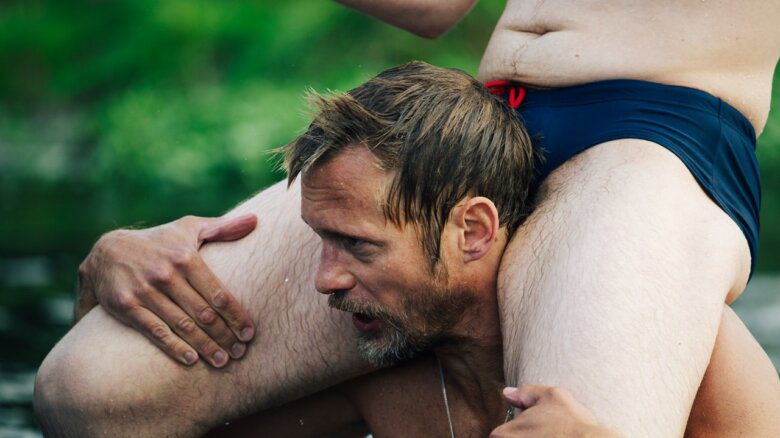
Recently, I wrote a master’s thesis on The X-Files, a series I’ve loved since I was a teen. I aimed to turn a critical eye toward its persistently misogynistic world view, perhaps subconsciously feeling that my research would only be valid if I critiqued the show, despite my love for it. When I handed in the first draft, my supervisor’s feedback was blunt. “This reads like you hate the show,” he told me, and encouraged me instead to explore what I love about the series.
Jane Schoenbrun explores a similar rejection of intellectual detachment in their new feature, Teenage Sex and Death at Camp Miasma. The film’s protagonist, young writer-director Kris (Hannah Einbinder), is working on a reboot of Camp Miasma, a beloved slasher series along the lines of Friday the 13th. The series clearly means a great deal to Kris—she recalls seeing it for the first time at a far-too-young age, and has since memorized every plot line and character detail. However, she also knows that she has been hired specifically because of the series’ problematic origins: the series’ villain, Little Death (Jack Haven), has a deeply transphobic origin story, and film studio executives want a queer filmmaker like Kris to paper over the series’ sins and revive its “zombie IP” with a woke reimagining.
Due to these Hollywood demands—and her own shame about her love for these retrograde stories—Kris tries to couch her investment in an intellectual detachment, just as I did. She professes her interest in exploring the “intersection of queerness and cultural depictions of monstrosity,” eliding her obvious love of the franchise with a more acceptably academic interest. The movie follows her research trip to visit Billy Presley (Gillian Anderson), a reclusive former actress who portrayed Camp Miasma’s first final girl. Kris’s connection with Billy reveals the falsehood of her supposed detachment: she is clearly a massive fan of Billy, and Billy’s role in the slasher series prompted Kris’s queer awakening.
Anderson’s casting is not a coincidence; the actress has had a substantial queer fan base for decades, dating back to her time on The X-Files. In an interview with Deadline ahead of the movie’s Cannes premiere, Schoenbrun said that Anderson’s casting was inspired by “thinking about childhood sex symbols,” noting that for many of their friends, “their coming of age was about Dana Scully,” Anderson’s X-Files character. Anderson’s casting is metatextually potent, allowing the connection between Billy and Kris to transcend the film’s plot and resonate more broadly amongst a generation of queer women for whom Anderson was a key influence.
There is a near-immediate sexual tension between Kris and Billy, emphasized by a comedic exchange in which the two sensually discuss fried chicken. Teenage Sex and Death is significantly lighter and more humorous than Schoenbrun’s two previous features, 2021’s We’re All Going to the World’s Fair and 2024’s I Saw the TV Glow. As in I Saw the TV Glow, though, Schoenbrun’s filmmaking challenges our understanding of the film’s reality; the blend of location filming and matte-painting backdrops lend the film an uncanny atmosphere, aided by the off-kilter performances from the film’s supporting cast.
This ambiguous depiction of reality becomes increasingly central to Schoenbrun’s exploration of queer sexuality throughout the film. In an early scene, Kris admits to Billy that sex has never been easy for her, and that she tends to hide in her work rather than face her discomfort. Later, she states that the only way she can orgasm with a sexual partner is to dissociate from reality and mentally retreat to Camp Miasma, the fictional locale of her queer awakening.
The series’ depiction of desire, repression and release is fundamentally queer; in the Deadline interview, Schoenbrun stated that the film “came from working through a ton of sexual trauma in the early stages of post-transition.” In Teenage Sex and Death, we learn relatively little about Kris’s backstory, and they do not appear to have experienced an individual traumatic event that drastically affected their connection to their sexuality. Instead, the film depicts the trauma and sexual repression that can arise merely from growing up queer in a hostile or indifferent world.
I have also never experienced a sexually traumatic event. I’ve always been supported by my family, and have never experienced direct homophobia. But I did grow up in a town where queerness was not generally seen, discussed or acknowledged. When I came out as a lesbian in my last year of high school, I was one of the only queer people I knew. I now know that there were plenty of other queer people in my school, but at the time, many of them must have been like me—closeted and scared. I missed out on the opportunity to explore my sexuality as a teen, and my health classes never even mentioned the existence of non-heterosexual sex, let alone provided any education on the topic.
I exited my teen years feeling lost, terrified and insecure about my own inexperience. Even in the past few weeks, I experienced a first kiss with a woman that was prefaced by ten minutes of discussion about our mutual terror about physical intimacy. Teenage Sex and Death perfectly captures this blend of desire, fear, uncertainty and shame in its depiction of Kris and of a younger version of Billy, who has her own frightening and confusing sexual encounter while filming the original Camp Miasma.
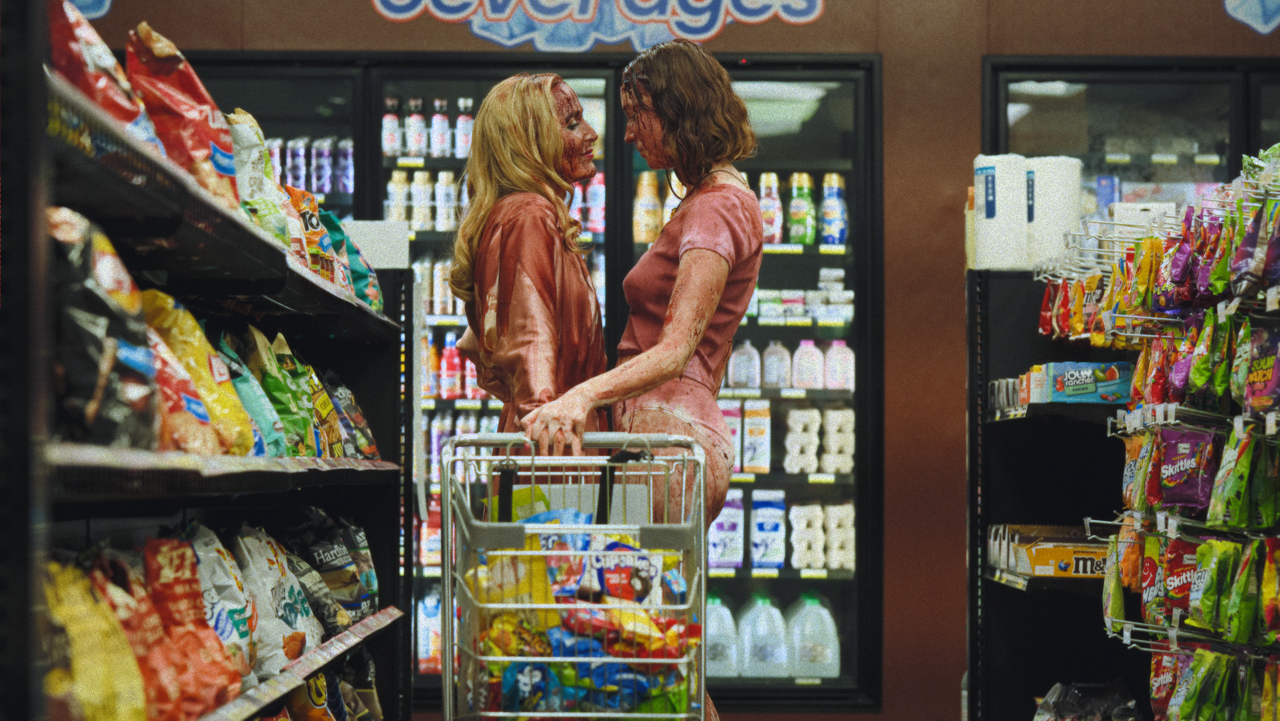
Schoenbrun does not frame Kris’s dissociation as inherently inhibiting their capacity for desire; rather, the film suggests that the issue arises from Kris’s shame and inability to acknowledge that their interest in Camp Miasma is not just intellectual but also personal and erotic. Billy tells Kris that the series is about two things: flesh and fluids. As the movie progresses, Billy helps Kris connect with the viscera and physicality of sex not by abandoning her dissociation, but by giving in to it. The line between reality and fantasy dissolves entirely, suggesting that Kris’s fascination with Camp Miasma is not simply nostalgia trapping her in the past but a foundational component of her sexuality. Embracing her emotional and sexual attachment to the series offers liberation: the true dissociation was not in her love for the series but in her denial of that love.
Ultimately, both Kris and Billy are liberated through their embrace of Little Death, the gender-fluid killer who is essentially a physical manifestation of queer orgasm, as their euphemistic name suggests. Kris embraces her Camp Miasma fantasies and her unadulterated love for the franchise in a blood-soaked climax, embracing her desires despite their problematic roots. In abandoning this intellectual detachment and accepting Little Death’s control over them, Kris is finally able to express and experience queer desire, unburdened by shame and fear.
Through this, Schoenbrun suggests that queer self-acceptance and liberation cannot be dissected and intellectualized, but must instead be visceral and full-hearted. For an anxiety-prone queer person like me, the film is a powerful reminder that I cannot intellectualize my way into intimacy, but must instead allow vulnerability and connection to guide the way.

 Why you can trust Xtra