When Legendary, HBO Max’s ballroom competition series, debuted in May 2020, I watched mostly out of curiosity to see how it would portray the culture. By the time the finale aired that July, I was hooked. The show was a perfect melange of drama, heart, talent and horniness—thanks to the body category—and the camaraderie and competition between the houses kept me company through that year’s lockdown.
I poured my grief and isolation into Legendary, invested in the against-all-odds journeys of the performers, and was inspired by the artistry and physicality of the performances. Legendary demonstrated how global the ballroom scene had become, drawing in participants from Europe and Asia, and acted as an invitation into its world. I got so into it that I bought Season 1 contestant Gravity Balmain’s online voguing lessons to channel my anxious energy while everything had been brought to a stop during the pandemic lockdowns.
That feeling couldn’t last forever. I was heartbroken when HBO Max cancelled Legendary in December 2022 (a year after FX ended Pose), and I nursed that pain by listening to Beyoncé’s ballroom-inspired album Renaissance and attending the public balls thrown by the Toronto Kiki Ballroom Alliance. It’s also why I was determined to make my way to New York to catch Cats: The Jellicle Ball.
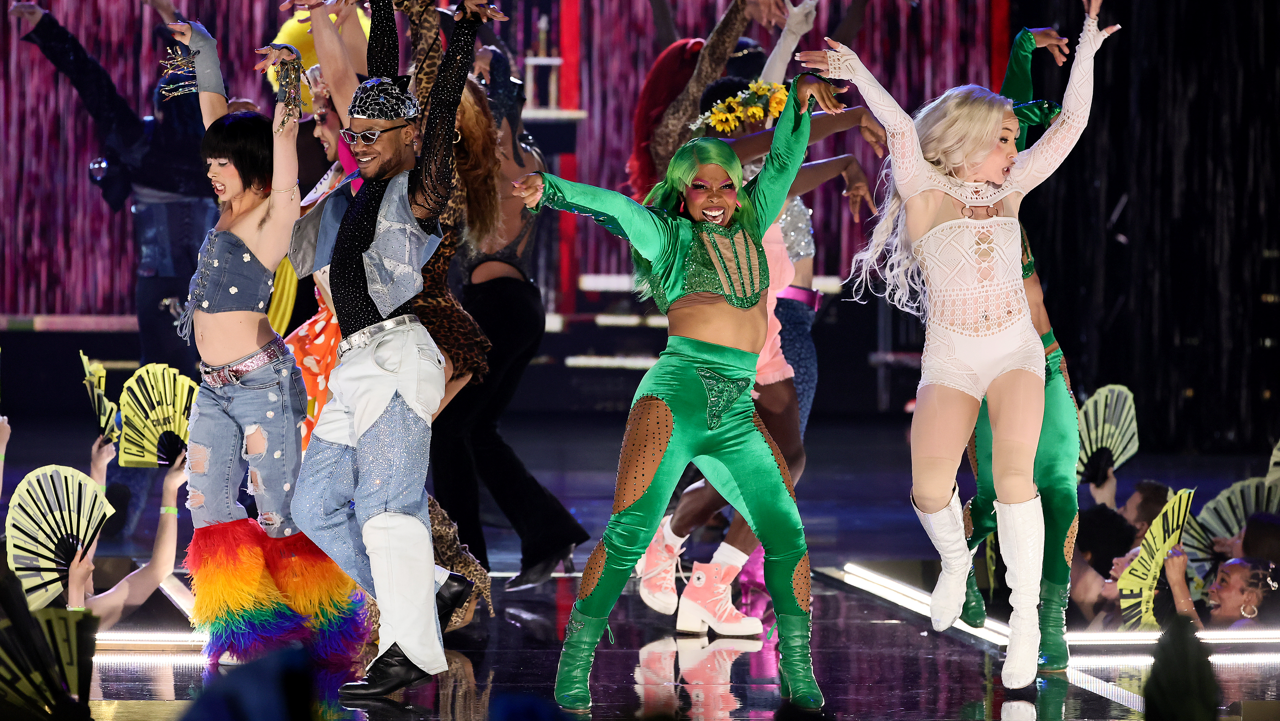
Jellicle Ball reimagines Andrew Lloyd Webber’s 1981 musical in the world of the Harlem ballroom scene. The production premiered in 2024 off Broadway for a limited summer run before transferring to Broadway this March. When I scored tickets for me and my boyfriend, I felt the same twinge of excitement that I had for the Renaissance tour.
Which is a bit funny, because if near the start of the pandemic you had told me that I’d be champing at the bit for any version of Cats, I would have thought you’d been isolating for too long. As a child in the 1980s, I was unnerved by the commercials featuring performers in full cat makeup, and, as an adult, I found the CGI used in the 2019 film version so awful I couldn’t even watch clips of Jennifer Hudson’s in-movie performance of its signature song, “Memory.”
Cats has never been a plot-forward musical. The idea that a group of felines gather annually for one to be chosen to ascend to their version of heaven and be reborn sounds like the foundation for an A24 elevated horror movie. Among the marvels of Jellicle Ball is how the new framework allows the story to deepen in meaning. Now, a band of scrappy outsiders find release in music and movement with the promise that one of them might be transformed and seen anew. It presents a ball as communion for the purpose of rebirth. How could the idea of being liberated to pursue a new life not resonate with queer people?
Take Grizabella, the Glamour Cat. She is old, unkempt and shunned for hanging out in the wrong places. Misogyny and ageism of course remain relevant, but the role has little to say about those issues.
Jellicle Ball updates her role to become that of an abandoned house mother, played by “Tempress” Chasity Moore, which shines a new light on the character. In the original, the other characters shame Grizabella for frequenting seedy bars, but in a queer context that’s less a judgment than a statement on a fact of life. “Memory,” which is about her loneliness and mourning the past while trying to rally for a better tomorrow, is recontextualized by the disproportionate violence and financial instability Black trans women face.
Similarly, when Gus, the Theatre Cat, reminisces about his bygone heydays as a legend, I felt a whooshing in my heart because of Junior LaBeija’s performance. I was transported through time. Here was someone pivotal in the starting days of ballroom sharing his story through this character. Through LaBeija, Gus is no longer merely nostalgic but a testimony to the audience: he lived his life so fully that there was no other option but to give him his dues on one of the greatest stages in the world.
That blend of the real and the fictional is the alchemy of Jellicle Ball. Yes, the performers are playing characters, but they themselves also embody its themes. When I learned Jellicle Ball was several of the cast members’ Broadway debut, I teared up. In the theatre, watching the cast of nearly 30 performers, that feeling intensified. I recognized how centring the world of ballroom created an opportunity for so many Black and Latine queer and trans people to be on Broadway.
This awe was mirrored by my boyfriend, a multiracial Afro-Puerto Rican artist who creates wearable art from found objects. The connections between New York and Puerto Rico run strong, and queer Puerto Rican artists such as theatre director and poet Manuel Ramos Otero and fashion illustrator Antonio Lopez found safety and full self-expression in New York. My boyfriend comes from the San Juan ballroom scene, and got emotional seeing so much of himself and his community onstage at a full-capacity theatre of people cheering on the performers and clacking their Jellicle Ball-branded fans.
The show reflects and honours the communities it springs from, including Afro-Latine cast members like Shereen Pimentel (who played Jellylorum off Broadway) and Leiomy Maldonado (who plays Macavity on Broadway). This distinction matters because the origins of ballroom are often described in the media as Black and Latino, and in mainstream racial discourse, the two are often treated as never overlapping. I see this demarcation first-hand when my boyfriend visits Toronto and servers in Latin American restaurants seem confused when he speaks Spanish. The inclusion of performers like Pimentel and Maldonado addresses this erasure and pays tribute to historic Afro-Latine figures of ballroom, such as Hector Valle, the Afro-Puerto Rican founder of the House of Xtravaganza.
I think of how Beyoncé described the process of creating Renaissance as “a place to dream and to find escape during a scary time for the world.” The triumph of Jellicle Ball is the creation of a place to not just escape but to restore a feeling of safety, to hold a space to rejoice. My boyfriend and I left Jellicle Ball agreeing that it was the best thing we saw that trip, and perhaps the whole year. We felt so energized the rest of the trip that we kept asking people, “But have you seen Jellicle Ball?”
Seeing Maldonado on stage was a particular thrill. I’d watched the “Wonder Woman of Vogue” as a judge on Legendary, and I’d known Jellicle Ball would be a rare chance to see her perform in person. This proved to be true when news came that Jellicle Ball would close on Aug. 8, just four months after opening on Broadway.
The announcement took Broadway by surprise, as the show had previously announced an extension to January 2027. The loss to Ragtime for Best Revival at the Tonys certainly played a major factor: even with three wins (including costume design for Qween Jean, who made history as the first openly trans Tony winner), attendance steadily declined after the ceremony. The World Cup exacerbated this, dampening sales across all Broadway shows, but perhaps a Best Revival win would have encouraged producers to hold out longer.
Maybe it should have stayed off Broadway as a countercultural gem and ran more sustainably. (Given the sky-high prices of Broadway shows, I wonder how many of the real-life ballroom kids depicted on stage would’ve been able to attend?) However, the momentousness of Jellicle Ball this time around was in part the front-and-centre nature of being on Broadway, with a budget of that calibre.
The closure, while shocking, was not totally unexpected: it’s why I had leapt to grab tickets. Life has taught me that when something is this glorious, this bursting with queer and trans joy—especially racialized queer and trans joy—it will be ephemeral. You have to catch it if you can.
It’s also why you have to give flowers to people while they’re still around to receive them. One of the legacies of the show will be as a vessel for outpouring love to legends. To Junior LaBeija. To Leiomy Maldonado. To André De Shields, who, with Hadestown in 2019, was the first openly queer Black man to win the Tony for featured actor in a musical. The audience roared during their parts in the show because Jellicle Ball was a celebration of those performing in the show.
Ballroom will continue its ever-growing impact. There will be new channels for joy and queer livingness. And the victories that happened can’t be taken away: the Broadway debuts, the Tony first, the flowers, the fact that something so daring was attempted at this scale in the first place. The fight doesn’t end just because a moment was fleeting—but endeavour, always, to bask in the feeling.

 Why you can trust Xtra