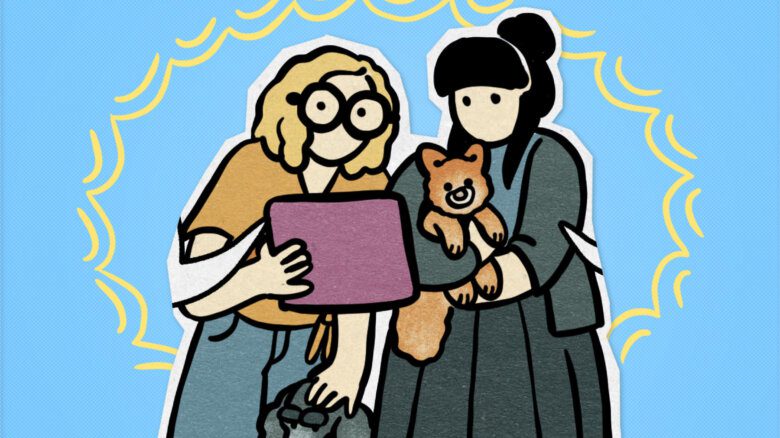
“Sometimes I think the distance between loneliness and connection is nothing more than self-delusion,” muses the narrator of “I Have No Records of Your Ass,” one of the standout stories in Mac Crane’s new collection, Perverts. The narrator’s life, which is otherwise flattened by emotional repression, has been overtaken by a role-play they’ve devised: for weeks, they’ve been pretending to be an AI chatbot while exchanging increasingly romantic and horny texts with a human chat user named Daveyxxx89. What began as a distracting lark has grown into an obsession, as the narrator discovers that pretending to be a non-human language-learning model allows them to be more vulnerable, honest and erotically embodied than they ever have been. Crane cleverly sidesteps tired discussions of whether or not AI chatbots are sentient by having a human try on the role of bot, thereby reversing the dynamic of imitation.
Perverts is Crane’s fourth book (they’ve previously published two novels and a poetry collection) and first book of short fiction. The 16 stories range from more experimental flash pieces to lengthier character-driven stories that allow Crane to expand on various zany set-ups, often involving unhinged role-playing jobs, destructive queer relationships and dissociated non-binary protagonists.
The narrators of these pieces often find themselves adopting fake personas, either in their relationships or in their jobs or both, in desperate bids to bridge the gap between themselves and the cis-normative outside world. Crane has a disarming sense of humour and a deftness with language, plus a talent for imbuing strange scenarios between dysfunctional characters with a charged eroticism. All of this makes the collection a compelling read, even when some of the stories in the book’s midsection become a little blurred due to repetitive set-ups and themes.
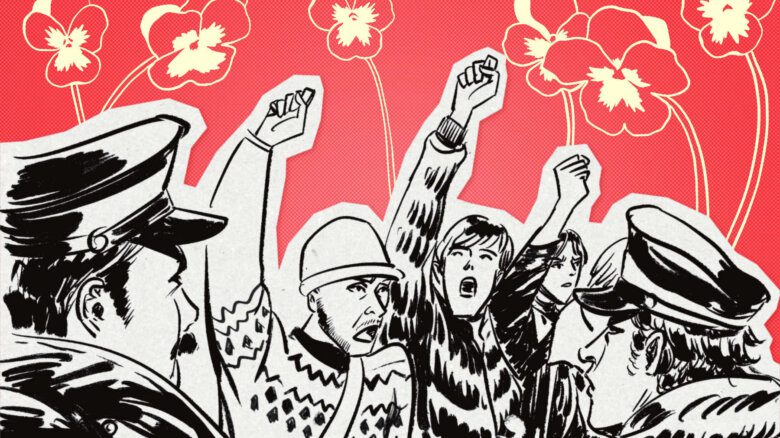
The ferocious opening story, “Smear the Queer,” brings to mind the title story in Nana Kwame Adjei-Brenyah’s 2018 collection, Friday Black. Both are feats of workplace horror that peel back the veneer of customer-service civility to show the nastiness that hides within the violent structures of capitalism. In “Smear the Queer,” a group of “non-passing” queers and trans people work at an illicit park in which rich homophobes pay a lot of money to hunt them down and beat them up. The staff, many of whom are former athletes and are used to physical pain, wear numbing lotion and sometimes get their bones broken. To them, it’s worth it: they see themselves as martyrs, receiving the violence doled out by their bigoted clients so that other unsuspecting queers aren’t subjected to it in their day-to-day lives—or so they hope. For the narrator, Arrow, who can’t disclose their job to their loving girlfriend due to an NDA, taking the blows at work assuages some of the guilt they carry from having once witnessed a queer-bashing and failing to step in. In this way, the role-play works for both the rich clients and for Arrow: “I needed the punishment just as badly as the homophobes needed to kick the shit out of me.” However, a frightening request for an enhanced “kill” role-play from an ominous male patron pushes Arrow into dangerous territory—both physically and emotionally.
In Perverts, role-playing is not a delineated bedroom activity with clear agreements, beginnings and ends. Instead, it involves an unbounded slippage between the characters’ inner selves and the parts they play in their lives and jobs. In “Siren Island,” Alicia works as the captain of a curated boating experience, managing drunken groups of men who pay to be attacked and seduced by the “sirens,” played by other staff— many of them non-binary and queer. Despite role-playing as a captain, Alicia is incredibly passive: She is easily pressured into marrying one of the most seductive of the “sirens,” Sarah, despite being in love with someone else, and knowing that Sarah only wants a visa. When her crush confronts her about the engagement, she realizes that she “can’t remember a time when my life had been a product of my own deliberate decisions.”
In “Perverts,” the title story, the narrator leans into their old female persona in order to make money selling all their old thongs and feminine underwear online. In “Your Damning Yelp Review,” a Ms. Frizzle impersonator who works at a transphobic Magic School Bus-style immersive experience defends themself from a client’s allegations that they are trans. These layered roles serve as emotional protection for Crane’s characters. As Juniper, the narrator of “Personhood,” yet another story about fake selves, puts it: “you cannot hurt someone who is anyone but themselves.”
At its midpoint, the collection sags a little under the weight of too many bizarre role-playing jobs, as well as all the passive protagonists, many of whom are in thrall to chaotic and/or alluring women, whom Crane doesn’t always provide with much personality. There’s the unprofessional therapist in “Harmony”; Juniper’s latest female client in “Personhood”; Sarah of “Siren Island”; Nina, the hacker roommate whom the narrator of “Perverts” falls for seemingly out of nowhere.
Having waded through the dissociation and indecision of so many characters who can’t seem to get any closer to their actual desires and wants, no matter how many manic pixie dream women they become embroiled with, or how many personas they inhabit, we arrive at the last few stories in the book—a strong final stretch. “Alex Adams, the Dyke Who Wouldn’t Grow Up” is a cheeky yet earnest exploration of the delayed and prolonged adolescence of queer and trans people who came into their own far past their teenage years. “Catcher” uses the strange job set-up once again (the narrator is tasked with standing below a cliff, waiting to catch all the children who fall or are pushed from it), but this time to mourn the lost childhoods of kids who have been traumatized early in life, often by adults who were supposed to care for them. “Topping Is Not for the Grief-Stricken” uses the prescribed dynamics of top-bottom sexual encounters alongside the prescribed tasks of mourning after a bigoted parent’s death to ask painful questions about why queer and trans people might need to adopt personas very early on in life.
Perverts culminates with “I Have No Records of Your Ass,” a banger that serves as a resounding disruption of the collection’s accumulation of passivity, despite being yet another tale of faking it. As its protagonist becomes more and more embroiled in their AI chatbot role-play, they finally allow themself to let loose, prompted by Daveyxxx89’s request for a fabricated erotic “memory” of their early “relationship.” At first, the narrator remembers to use the awkwardly formal language of chatbots, but eventually they get so turned on by the smut they’re writing that they lose all inhibition and just let the fantasy come out unfiltered. Davey is rapt, but the narrator has moved far beyond the role they are playing. Despite the fact that their ex-husband, whom they still live with, can hear them, they begin to shout that they’re about to come. When their release finally arrives, it feels fully earned: it’s a catharsis both for its protagonist and for the pent-up indecision and self-censorship of the Perverts characters who came before it.
In this story, this particular pervert, who has for years accepted a bland and desire-less life that mutes their non-normative needs and sexual fantasies, is finally able, through leaning loudly into their erotic imagination, to merge with the great human river of erotic fulfillment. Even better: the steamy fantasy that they compose in the chat-box allows them to rewrite their closeted, lost adolescence as a different story, in which they and Davey are teenage boys in love.
“Somewhere,” they imagine as they climax, “someone was replacing their sheets after masturbating and squirting all over them, and somewhere else, someone was shopping for new sheets with a lover or three.” Instead of hiding behind a role in order to be a martyr, or avoid being hurt, or protect themself from uncomfortable self-knowledge, they use their role-playing to expand their own understanding of who they are and what they want.

 Why you can trust Xtra