Gay bars are special. They can be spaces where people take their first steps into the queer community, rare safe havens in small towns or rambunctious and much-needed third places even in the world’s biggest cities. But they’re far from perfect.
For those who abstain from alcohol, queer bars and bar nights can be difficult to navigate amid pressures to imbibe. And bars have historically excluded people of colour, women, trans people and disabled people in favour of catering to cis white gay men. Other bars are outright dangerous, and the sites of violence and assault.
For those seeking alternatives, queer bookstores have long been spaces of community, of information-sharing and of representation when all of that was nonexistent. And these spaces often serve a dual purpose of allowing allies and the curious among us to seek out information or resources without judgment, whether it’s someone exploring their identities, someone wanting to educate themselves to better support a loved one or someone who’s too young to cross a bar’s threshold just yet.
But these spaces are also where history has been made. In fact, queer bookstores have been at the forefront of queer liberation for decades.
When Craig Rodwell opened the world’s first LGBTQ2S+ bookstore, the Oscar Wilde Memorial Bookshop, in 1967, he had already made history for queer people in New York City. In 1966, Rodwell and other members of the Mattachine Society staged a “sip-in” at the tavern Julius’ to protest discrimination against queer people in bars in the city. On a spring afternoon that year, a trio of men, including Rodwell, walked into the cozy bar, openly declared themselves as gay men and ordered a drink—and refused to leave until they were served. The site was recently designated a historical landmark by city officials.
Rodwell would later help organize New York City’s first-ever Pride march—then known as the Christopher Street Gay Liberation Day March—in 1970 to commemorate the Stonewall Riots that took place the year prior.
But Rodwell and the Oscar Wilde Memorial Bookshop aren’t alone in being on the forefront of LGBTQ2S+ rights victories in North America, even decades after the 1969 riots that catapulted the modern queer rights movement.
And 25 years ago in Canada, Little Sister’s Book & Art Emporium in Vancouver won a landmark legal victory against the Canada Border Services Agency after officials repeatedly classified its LGBTQ2S+-related imports as obscene and seized them at the border, leaving the shelves barren and the store struggling to stay open. In 2000, after more than a decade of legal disputes between Little Sister’s and CBSA, the Supreme Court of Canada ruled in favour of the store, and put the onus on customs officials to prove that materials are obscene.
That legacy of resilience and focus on community lives on in queer bookstores that exist today—especially amid escalating anti-LGBTQ2S+ violence and discrimination that hearkens back to darker moments in our cultural history, as well as capitalistic pressures that may be an existential threat to these crucial spaces.
For Tianna Henry, the educational speaker and events and community outreach lead at Glad Day Bookshop in Toronto, the political threats the queer community is facing only make the store’s work more important.
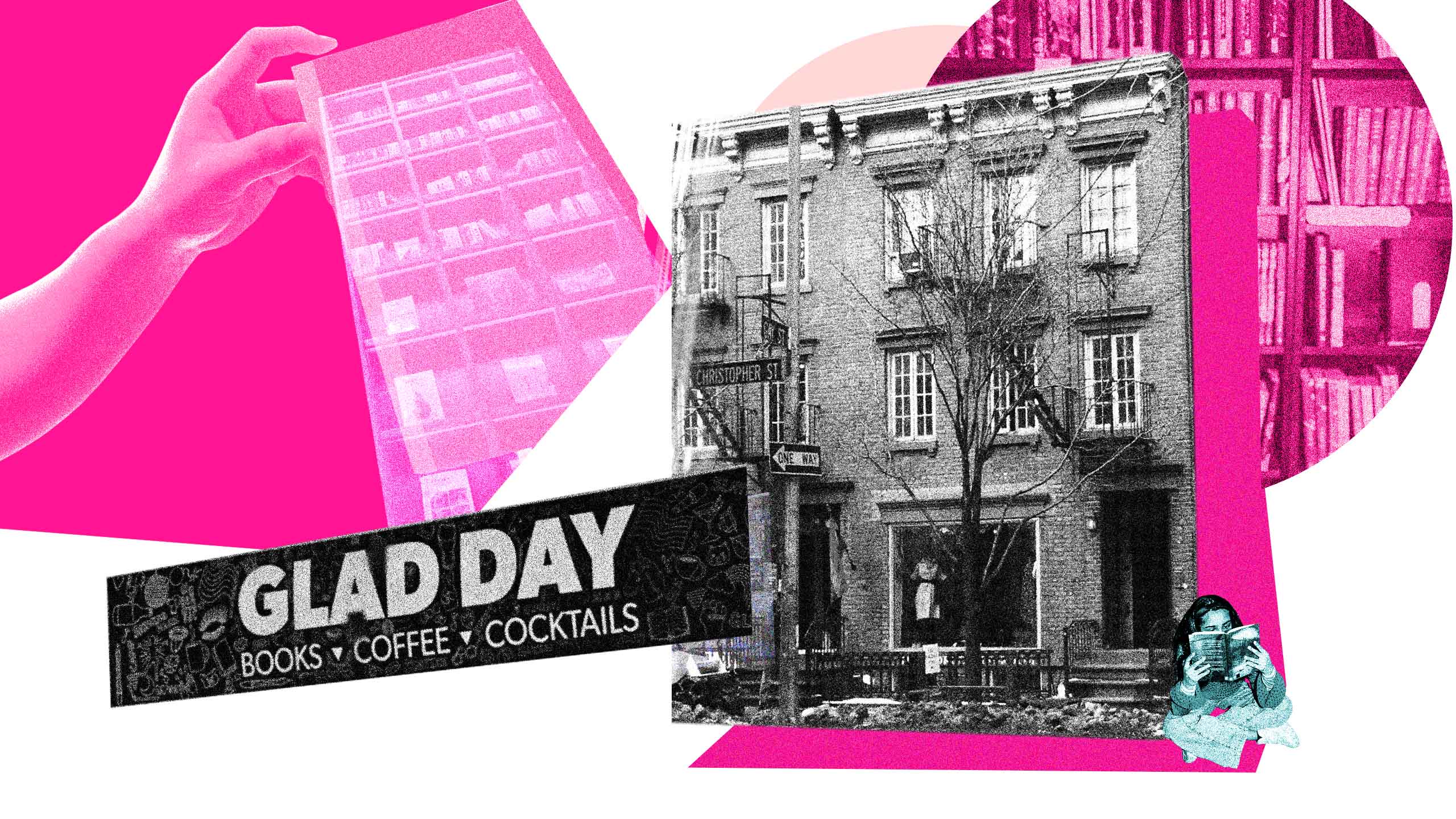
Founded by Jearld Moldenhauer in 1970, Glad Day was born out of a dearth of LGBTQ2S+ literature in the city and started as a mail-order service operating out of Moldenhauer’s backpack.
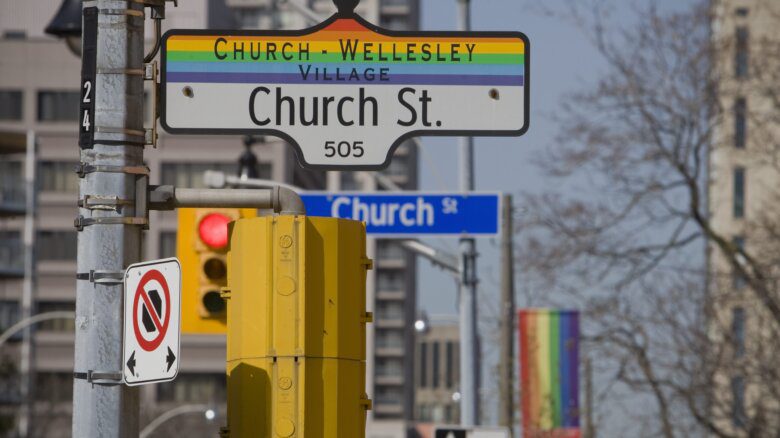
Known as the world’s oldest LGBTQ2S+ bookstore, Glad Day has long called the heart of the Village neighbourhood its home. For Henry, programming for a wide spectrum of identities is crucial to the spirit of the store. Events include writing workshops and discussions with authors, as well as drag family dinners, trans and non-binary film screenings, Sapphic and trans-focused singles events and all-Black burlesque and drag shows.
Henry says prioritizing events that focus on historically excluded communities is just part of her job at Glad Day. And that goes doubly as she sees nightlife spaces in the community focus primarily on cis white gay men.
“[Bar owners] don’t necessarily think, or their business model doesn’t allow for, other groups under the umbrella to occupy space—that has gotten better in the last few years,” she says.
Her words echo what Raven Stubbs Stone of Women & Children First (WCF) in Chicago says is the spirit behind the work at the proudly trans-inclusive feminist bookstore, which carries sizable collections of LGBTQ2S+ literature and inclusive children’s books.
In what she says is a noticeably gentrifying neighbourhood as people are pushed out of the city’s principal queer enclave, programming for the most marginalized members of the community is crucial.
“The sentiments are shifting very much so and we’re this trans-inclusive feminist bookstore, we believe very much so in abolition and we believe very much so in racial and social justice,” she says. “But if the people we centre our politics on, if those people don’t come to our neighbourhood because they don’t feel welcomed, what’s the point?
“We have to remain consistent in making sure that folks know that Women & Children First is a place where they can come.”
Stubbs Stone says the store took a strong stance in support of trans people and trans inclusion roughly a decade ago, angering some longtime customers, some of whom had been shopping at the store for decades. But the store stood fast in its support of trans people, and continues to do so.
That commitment extends to other social justice causes as well. More recently, in April 2024, the store’s pro-Palestine window display was smashed, but the co-owners doubled down on their support for a ceasefire in Gaza.
Henry says Glad Day has faced its share of violence: raids by police, staff arrested for promoting so-called pornography, immigration officers showing up to the store—but one of the most significant challenges may echo the financial pressures faced by its predecessor, the Oscar Wilde Memorial Bookshop.
Last May, Glad Day announced on social media that it was facing eviction after frequently being short on rent. The store received more than $112,000 in donations in the first four days of its fundraising campaign, allowing it to avoid an impending eviction from its location in Toronto’s gay village. The effort has since raised a total of almost $200,000 as of December 2024, and Henry says some of that money will go toward preventing another crisis and stabilizing the store for the future. The shop recently posted on Instagram about its move to a new, temporary location in the Queen West neighbourhood.
“The money that we’re raising will help us continue to pay artists and performers,” Henry says. “It will help us continue to stock local queer and trans art and merchandise. It will help us be on top of our book collection. It will help pay for our staff wages. I mean, the list goes on and on. We need any sort of support that we can get at this point.”
And while bookstores continue to battle online retailers and booksellers, queer bookshops simultaneously face safety concerns that others don’t, especially in the current political climate.
Henry says the shop has always had to deal with some level of violence, from the state and individual bigots alike. She says that they have often received books or other materials slashed and damaged—if they arrive at all.
The Halifax location of Venus Envy, an education-focused feminist sex shop and bookstore, has been repeatedly vandalized recently in what staff and the owner say is unlike anything the space has faced in decades. Staff members Wren and Charity (who asked to use only their first names out of concerns for their safety) say that alongside education and social events, the shop has also long been a space for queer people to exist, feel safe and find connection.
“Despite being like a bookstore and sex shop, it is a place where people hang out,” Charity says. “More and more people are getting interested in workshops where they’re not necessarily learning about things, but just finding other people and gathering physically instead of online.”
But as with many LGBTQ2S+ spaces, particularly unapologetically sexual spaces like Venus Envy, anti-LGBTQ2S+ vandals have recently targeted the shop.
Since February, the store has been vandalized three times with anti-LGBTQ2S+ statements, including claims that the store “supports child grooming” and a phrase connecting the business to “pedo freaks.” The third instance also came with a handwritten letter that included Nazi symbols.
“To the degree of, like, the physicality of this store, nothing has actually happened in the last 27 years like the last couple months,” Wren says. “It has been notable emboldenedness for sure.”
But like those at Glad Day and WCF, Charity says the attacks and hate they’re facing has only shined a light on how important the work they’re doing really is.
“It’s definitely difficult,” they say. “But I think, if anything, it feels more like a motivator to be even more in community, even more on it with education.”
And amid all these different threats to their survival, the booksellers say no amount of gentrification, bigotry or anti-queer pressures from the government will stop the work they do. That is a sentiment echoed by queer bookshops, booksellers and libraries across North America: they’ve always been on the margins, they know how to operate in this sort of climate and they will continue to do so for as long as possible.
“We started in a backpack, and we moved to a shed and have been in this current venue for over a decade,” Henry says of Glad Day. “And if we have to leave, it doesn’t mean that we’ll be gone. It just means that we’ll just have a different iteration.
“You can’t rent-evict the idea or the concept of Glad Day. It will keep carrying on and it will just look a little differently.”
 Why you can trust Xtra