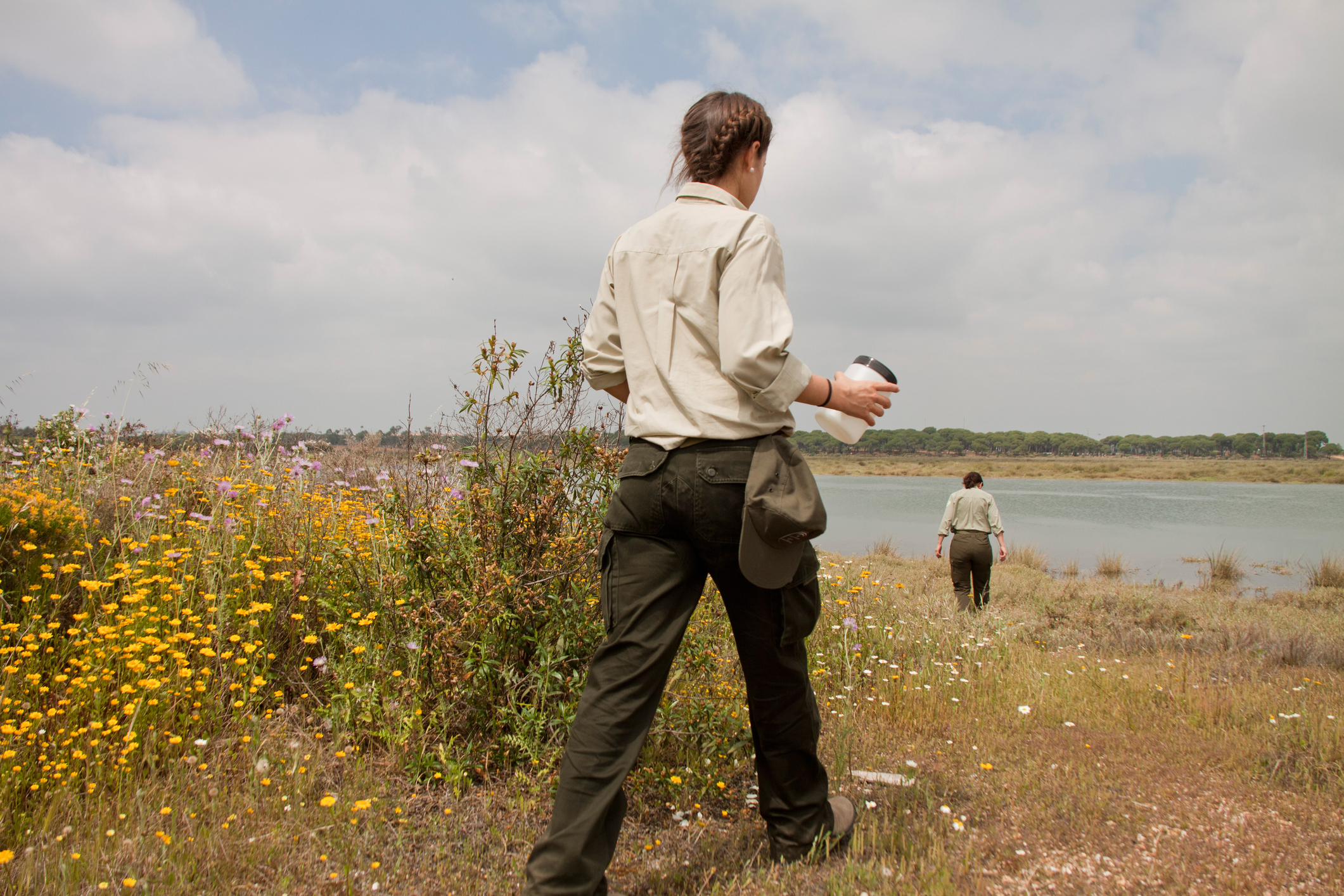
When Brier Ryver got a job as a park ranger for the Crystal River National Wildlife Refuge in April 2024, they were planning to stay with the U.S. Fish and Wildlife Service (FWS) for the long haul. A job with the U.S. federal government is coveted and the hiring process is extremely complex. With only a handful of available positions, stringent resumé requirements and a months-long process before hiring decisions are final. So, when Ryver got a public-facing job in the country’s only manatee preserve, they saw it as a great opportunity to start a lifetime of service with the FWS. In February 2025, they got fired, with just over a month left in their probationary period. “It felt like getting 40 years of my career flushed down the toilet,” they say.
Ryver was one of hundreds of employees in their department who were fired by the Trump administration in February of this year. Along with the FWS, the Trump administration fired about 1,000 employees from the National Park Service (NPS), and about 2,000 employees from the U.S. Forest Service, part of the Trump administration’s broader efforts to downsize the government. Due to buyouts, early retirements and employees deciding to leave public service, the real number of personnel losses is higher. Experts and advocates have been warning the public since February that these aggressive job cuts could result in national parks, forests and wildlife refuges experiencing issues such as campground closures, shorter visitor hours and problems with park maintenance and public safety.
The warnings from advocates and experts are on track to becoming a reality. The New York Times reported that almost 4,000 campsites across California’s national forests could close this summer, and warned readers about long lines, closed trails and uncollected trash in national parks. In some parks, ranger-led programs such as guided hikes, and nature presentations have been cancelled for the entire season. For agencies like the already short-staffed FWS, whose main focus is conserving ecosystems and animals—the only government agency with such a mandate—the aggressive job cuts mean removing experts that keep the environment intact and Americans safe from the effects of pollution and habitat destruction. Not only are public-facing aspects of the outdoors taking a hit, but the very ecosystems we live in can be put at risk.
“There’s no other place where I can be without thinking about, ‘Oh, how are people perceiving me? How are people looking at me? Are they judging me?’ There’s none of that when I’m out in the outdoors.”
Historically, outdoor spaces have served as areas where the queer people built community. Urban parks and beaches like Toronto’s Hanlan’s Point have served as spaces the LGBTQ2S+ community turned to in order to escape judgment and violence. Outside cities, wilderness groups such as the Venture Out Project and Queer Out Here have helped build communities for LGBTQ2S+ people in the outdoors, providing them with a sense of belonging in a space that has traditionally been dominated by cis white men. With widespread firing in the U.S. Department of the Interior, along with the rollback of DEI programs that served as avenues for LGBTQ2S+ people to get jobs in the outdoors, access to the outdoors is getting put at risk for the many queer people who view it as a safe space. Ryver, like other members of the LGBTQ2S+ community, feels the outdoors affirm their identity. “There’s no other place where I can be without thinking about, ‘Oh, how are people perceiving me? How are people looking at me? Are they judging me?’ There’s none of that when I’m out in the outdoors.” Lyla Harrod, a professional hiker and the first trans woman to finish the “Triple Crown”—a long-distance hiking achievement earned by completing the Appalachian Trail, the Pacific Crest Trail and the Continental Divide Trail—says something similar. The Bay Circuit Trail—a long-distance trail surrounding the Greater Boston area, was a safe space for Harrod when she was first figuring out her gender presentation, she says. “It’s somewhere that I felt safe, and it was a place to lay the armour down for a little bit each day, or every couple days when I had the time.”
Perry Cohen is the founder of the Venture Out Project, an organization aimed at lowering barriers to access to the outdoors for the LGBTQ2S+ community. He says that the closures of spaces can cause bigger crowds at lesser-known parks and trails that don’t usually see much visitor traffic, threatening the sense of refuge that queer people find in quieter outdoor spaces. Cohen recalls seeing the small parks and trails near his home in northern New England getting huge amounts of visitors during the COVID-19 lockdowns, and having no place to park at trailheads due to the surge in tourists, and worries that a potential new increase in visitors to smaller parks might damage them due to overuse.
Impending park closures aren’t the only new barrier for members of the LGBTQ2S+ community who want to experience the outdoors. Ryver credits the FWS’s Directorate Fellows Program for helping them get their foot in the door for a job with the FWS. The competitive Directorate Fellows program gives recipients a direct appointment to a job in the service upon completion of an undergraduate or graduate degree. The program accepted candidates from diverse backgrounds, helping them enter a service that has historically been very white and male dominated. This year, the program is not running, and Ryver is worried that due to the Trump administration’s crackdown on DEI programs, it will never run again. Ryver believes that pausing programs that help underrepresented communities access government jobs in conservation and the outdoors will make it harder for those communities to work for the federal government. A lack of diversity in federal jobs can also make visitors from marginalized communities feel less represented.
Even while they were on the job, Ryver could feel their work environment getting more hostile amid federal DEI rollbacks. Before getting fired, they recall receiving a department-wide notice that all staff needed to remove their pronouns from email signoffs or risk losing their jobs. Mandatory anti-harassment and anti-discrimination training became optional, and Pride Employee Resource Group, the LGBTQ2S+ employee resource group in the FWS, was put on hold, according to Ryver. They believe that the queer erasure in government agencies translates to their approach to the lands they protect as well. Ryver says that people from marginalized communities will hesitate to venture into the outdoors if they do not feel protected by the federal employees who manage the land.
Sometimes, the barriers that LGBTQ2S+ people face to access the outdoors start at the outdoor supply store. Cohen notes that trans people often navigate very gendered spaces when purchasing gear like backpacks, which usually require fitting with the help of a staff member. The frames of backpacks can also require trans backpackers to shop in sections of the store that don’t match their gender presentation to find a pack that better fits their body. The story is the same with hiking boots. Cohen mentions an experience that a trip director at the Venture Out project, who is a trans man, always encounters where he gets redirected to the men’s section when trying on women’s hiking boots almost every time he’s buying new shoes, even though the women’s section was the only place that had his shoe size.
“People of colour and members of the LGBTQ2S+ community see a dearth of representation in the outdoors.”
The outdoors have become an increasingly diverse place in recent years, but these spaces have historically been dominated by and platformed white cis men. This is partly due to economic factors such as the prohibitive cost of camping equipment and taking time off work, as well as the fact that national parks in North America were used as justifications to displace Indigenous peoples from their land. Multiple founders of the arms of the U.S. government that conserve public lands today such as John Muir, and Gifford Pinchot, the first head of the U.S. Forest Service, envisioned national parks and forests as spaces reserved for white Americans. Even today, people of colour and members of the LGBTQ2S+ community see a dearth of representation in the outdoors. Harrod remembers googling “trans thru-hiker” when she started thru-hiking in 2021, and seeing no results come up. Thru-hiking is the practice of continuously hiking a long-distance trail end to end. Harrod also notes the toxic masculinity pervasive in thru-hiker culture, where there is often a focus on speed and a lighter pack weight. Owning lighter gear usually indicates a higher financial status, as lighter backpacking gear is often more expensive. “It’s kind of a gross thing that I don’t want to participate in, and that I found most other non-men and queer folks don’t really have as much of an interest in participating in,” she says. “That’s a function of the values of queerness, and certainly something that I value, is I want to create my own script, and I want to decide how I want to interact with the outdoors. And just because these guys want to know how much my pack weighs, that doesn’t mean I have to tell them.”
At the Venture Out Project, Cohen is seeing a lot of changes. With many corporations in the U.S. cutting their DEI programs, the Venture Out Project is losing a lot of funding. Cohen estimates that the Venture Out project lost about a third of its revenue this year due to DEI cutbacks. Tariffs have also made it harder for companies still interested in donating to allocate the funds to do so. Cohen recalls a company asking to go on a payment plan with the Venture Out Project instead of paying in a lump sum. “It just kind of broke my heart that they were like ‘we’re still so committed to giving this to you, but we have to do it in a different way,’” he says.
Even before the federal government enacted anti queer and trans legislation, queer people have faced uncomfortable situations in the outdoors. Cohen remembers a potentially dangerous situation when leading a trip on Vermont’s Long Trail in 2015, where the group encountered an inebriated man in the hut the group was supposed to stay at one night early on in the trip. Cohen says that the many transmasculine and non-binary hikers on the trip looked younger than their actual age. He remembers the man looking like he was scared of the hikers, getting confused about the group members’ ages and identities, asking if they were a school group, or a church group, until finally getting more agitated and asking in an aggressive tone, “Then what the hell are you?”“It wasn’t ‘who are you,’ it was “what,”” Cohen says. “I still get chills when I tell this story.”
The group was worried that something might happen to them if they stayed the night in the same hut with the man. Cohen and the group left the hut for water, and he presented the group with a choice: either stay the night in a potentially unsafe situation, or keep hiking and camp in the woods, in a less convenient and comfortable sleeping arrangement. The group decided to keep hiking. Hikers in Cohen’s group expressed gratitude to be travelling as part of a queer outdoor group because it gave them the courage to make the decision to camp in the woods, and to be able to talk about how they felt in a potentially bad situation with a group of people that understood and empathized. “We slept on a slope. It was pretty uncomfortable, but it was this incredible bonding moment for us of just, like, ‘Hey, we don’t have to succumb to what the world throws at us all the time, over and over. We actually can be empowered, and find community in this group,’” Cohen says. He’s seen the Venture Out Project serve as the gateway for queer people interested in the outdoors to gain more confidence and eventually take on huge hiking trips. “I think people find us for a reason. They wanted to get outdoors. They didn’t know how, they didn’t have an access point. We helped them find an access point.”
Despite observing thru-hiking culture as having a lot of toxic masculinity, Harrod has had largely positive experiences on the trail. In her fifth year of thru-hiking, Harrod has gained confidence too. On her travels, she has found that people have treated her with respect, even in areas that are very politically conservative. She feels grateful that good encounters with people as a visibly trans woman have given her the confidence to walk through spaces that would have previously scared her. This summer, Harrod is attempting the women’s record for the fastest known time for a self supported thru-hike of the Appalachian Trail. To her, making a fastest known time attempt on such a well-known trail feels crucial in today’s political climate. “I don’t have interest in backing down from people who would reject my humanity. I have interest in taking up space in this community and saying, ‘I think we need to have a discussion about how we keep queer and trans hikers safe in the outdoors.’”
While legal battles challenging the legality of the mass firing ensued, Ryver left federal service. The jobs are just too unstable now, they say. They are now a 4H youth development educator with Purdue University, and they’re hoping to be able to work outdoors again in the future. Ryver says that there needs to be more money and vocal support for public lands and the agencies that protect them; otherwise, Americans risk losing public lands altogether. To Ryver, the outdoors becoming less welcoming for queer and BIPOC people is a conservation issue. “I just hope that in federal work and otherwise in conservation, we continue to seek out diverse perspectives—and that honestly helps to understand nature itself,” says Ryver, “Nature is super gay. There’s all kinds of things in nature that don’t line up with what traditional values people have come up with.”

 Why you can trust Xtra