Photographer Toni Latour hopes her new exhibit, The Femme Project, will pull queer femmes out of the shadows and into the community spotlight where they rightfully belong.
“The impetus of The Femme Project was really born out of a sense of invisibility for me in the queer community,” Latour says, remembering the smiles and nods her butch partner would receive from other community members on the street, while she generally got nothing.
It was isolating being ignored, she says. “It made me angry.”
“If how you look is too straight, then you can be perceived as an outsider or perceived as not necessarily believing you are really queer,” she says.
She began to wonder what other femmes were experiencing and whether they, too, shared “a common experience of invisibility.”
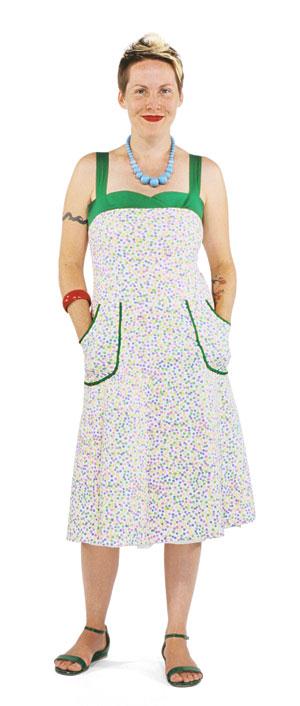
The resulting exhibit, four years in the making and opening in two galleries this month, will showcase 70 photographs of 35 self-identified queer femmes.
“Some women talked about discrimination and about going to a queer bar and being told that the straight bar was down the street. It was basically a belief that they were not legitimate queers,” she says of the experiences some of her participants shared.
“I thought this was an important subject and something I have to explore as a way to offer something to the community,” she says.
Latour initially selected only lesbian femmes for her project but, on the advice of a friend, broadened her scope to include all femmes, including those who identify as bisexual and non-cisgendered.
“There’s a broad spectrum,” she acknowledges. “The voice from participants was that they wanted the project to be more diverse and include everyone who identifies as femme within the queer community.”
Each model in Latour’s exhibit is featured in two photographs: a full-body shot and a closer portrait. “The intent around the body shot is to get a full visual of how someone presents themselves in the world,” she explains. “I wanted to capture that full body because the women were making very conscious choices about every part of their bodies, from head to toe.”
“Identity has a lot to do with visual indicators and markers,” Latour notes. How people present and express themselves physically “also becomes a signifier of what you’re interested in and who you’re attracted to.”
The Femme Project is a sister exhibit to Latour’s 2005 The Drag King Project, which featured 26 photos of local drag kings. The Portrait Gallery of Canada acquired The Drag King Project in 2008.
Latour says she hopes The Femme Project, which she received a $20,000 grant from the Canada Council to create, will break down walls of segregation in the queer community and beyond.
In a community where labels are often shunned, Latour says she has no qualms about using them. “I love labels and boxes. It’s not a very fashionable thing to say,” she admits. “But I think it’s important because I think it’s community building. It’s a way that we can relate to each other, and it’s a way that we can frame a dialogue. It’s a way that we can belong.”
 Why you can trust Xtra