A hate-motivated stabbing at the University of Waterloo that left two students and a teacher hospitalized is not an isolated incident and deserves a national response to quell spiking violence against queer and trans communities.
It’s time for “politicians to take note and hear the alerts and warnings” that community organizations have been raising for years, Tyler Boyce, executive director of the Enchanté Network, said during a press conference Friday.
“We don’t need a Pulse nightclub or a mosque shooting for action to happen,” Boyce said. The press conference was organized by Enchanté, a national network that supports queer and trans community groups across Canada. “When human rights are rolled back it really does push us all back. When human rights are rolled forward it pushes us all forward.”
There was a 64 percent increase in hate-motivated violence targeting the LGBTQ2S+ community between 2020 and 2021 alone, according to Statistics Canada. Politicians have acknowledged the trend but have not offered meaningful solutions, critics say.
The Waterloo campus, meanwhile, is still grappling with the aftermath of the Wednesday attack during which a former student is accused of walking into a gender studies class and stabbing the teacher and two others.
The accused has been charged with four counts of assault with a weapon and two counts of possession of a weapon for a dangerous purpose. The victims’ injuries were not life threatening, police said.
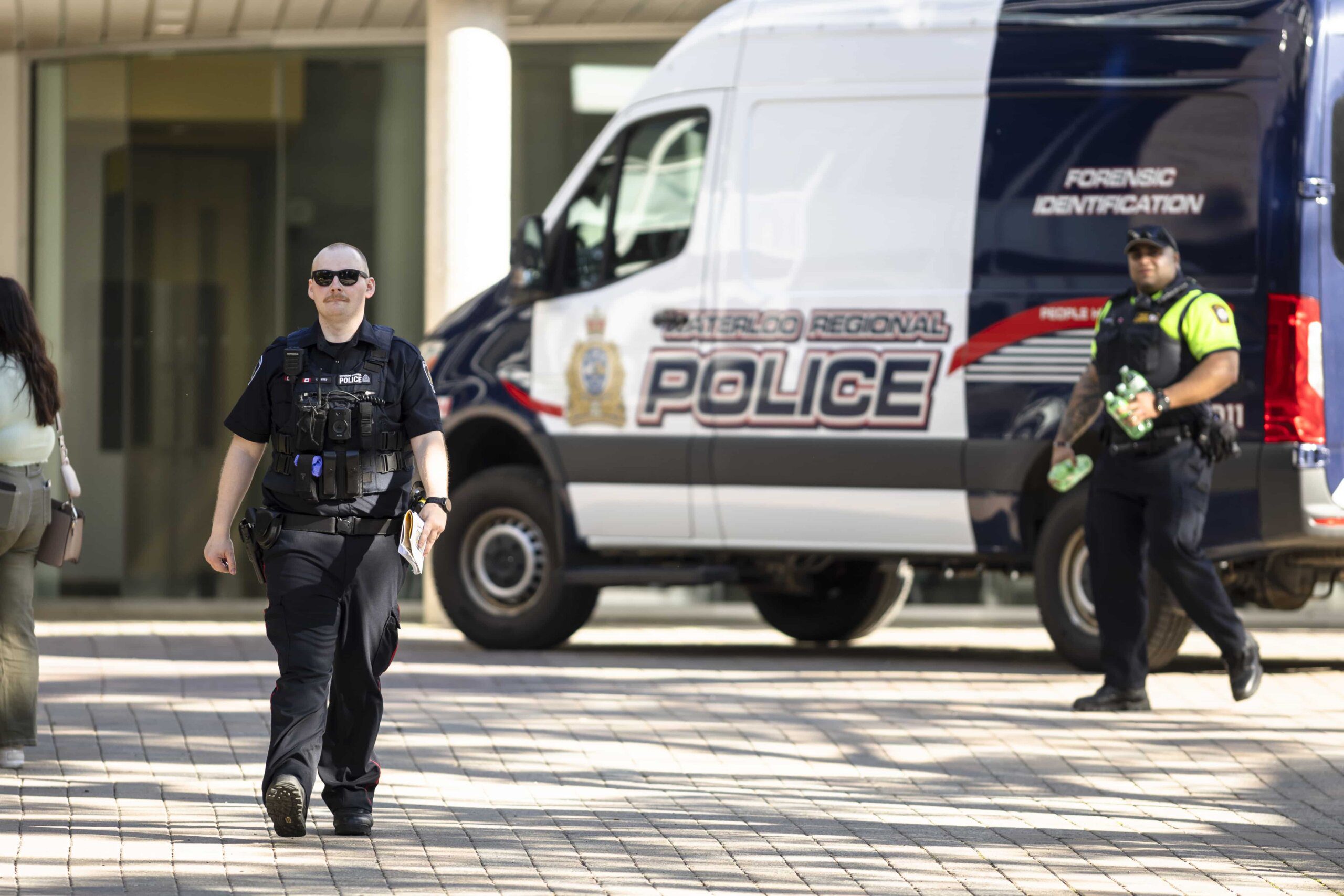
“Investigators have reason to believe that this was a planned and targeted attack motivated by hate related to gender expression and gender identity,” said Waterloo Regional police chief Mark Crowell at a news conference on Thursday. “The LGBTQ2S+ community, we believe, was targeted.”
“There’s a shadow of a lack of safety on campus right now. While the Pride flag is bright, I don’t think it’s bright enough to do all the heavy lifting.”
For many queer and trans students, the Waterloo campus, especially the student-run Glow Centre for Sexual and Gender Diversity, is their “safe space,” said Kelsey Zhao, who was the service coordinator at the centre until earlier this year. It was a spot where people could escape their home life, or other environments, that might not be safe for them.
Now, some of those people no longer feel safe on campus, Zhao said.
“They are scared. People have been saying it’s not out of the question at all that this could have happened at the Glow Centre,” she added.
Elena Cornick, a Waterloo student, said they dropped into the Glow Centre yesterday and only one person was there, which is out of the ordinary. That person, they said, was planning to leave because they didn’t feel safe being there alone.
“All of my queer friends are not on campus. Everyone is kind of afraid,” Cornick said.
Cornick is among the Waterloo students looking to the university’s administration for concrete solutions to protect students.
University President Vivek Goel delivered a speech on campus Thursday denouncing hate.
“There are those who would like to intimidate us. They want us to be afraid. Afraid to learn. Afraid to share. Afraid to speak our truth,” he said. “But we will not let them deter us from proclaiming loudly our values of inclusion and openness.”
He also announced a decision to keep flags raised for Pride Month in place through the end of July. The university has directed students to counselling services and community support programs, as well as saying it will be lenient about missed classes and assignments.
Boyce said the university’s response needs to be concrete.
“There’s a shadow of a lack of safety on campus right now,” he said. “While the Pride flag is bright, I don’t think it’s bright enough to do all the heavy lifting.”
A rally this week was the first in what’s expected to be an organized and vocal movement from students who want to see change, Cornick said.
“I think it’s going to take a little bit of time … for people to really be able to plan and organize things,” they said. “It will take time for people to process.”

 Why you can trust Xtra