Does anyone still read Radclyffe Hall?
I found myself entertaining this idle, surprising thought as I stood in front of the DVD shelf of my neighbourhood library, weighing the merits of the cover of a BBC adaptation of Sarah Waters’ Tipping the Velvet.
Out of the corner of my eye I could spy a copy of Karen X Tulchinsky’s One Book One Vancouver prize-winning novel on the “our staff recommends” shelf. And I knew I would find a number of lesbian-themed novels sprinkled throughout the library’s collection if I looked.
So, in these days of relatively plenty, does anyone still read Radclyffe Hall, whose most famous novel, The Well of Loneliness, was for many years the lesbian primer?
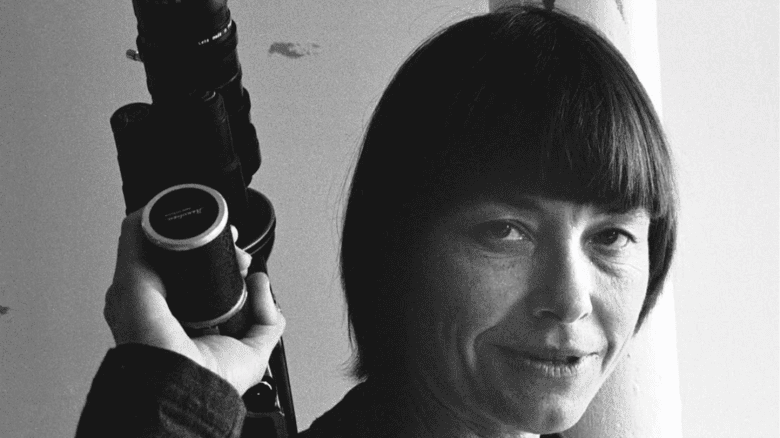
Radclyffe Hall, christened Marguerite but called John by her friends and intimates, was a moderately successful British poet and novelist when, in 1928, she published The Well of Loneliness and suddenly found herself a frontline apologist for lesbianism, which she called sexual inversion and characterized as part of God’s natural order.
It is the only one of her eight novels to feature an explicitly lesbian storyline, and the only one to have remained in print.
It made her famous — notorious, really — it made her a great deal of money, and terrific old Tory that she was, it made her an outcast when the great and the good turned against her and suppressed her novel in Great Britain.
By an extraordinary coincidence, 1928 also saw the publication of Virginia Wolff’s artier but just as explicitly lesbian Orlando, and of Extraordinary Women, a comic novel by the now mostly forgotten Compton MacKenzie.
Orlando escaped legal censure, presumably because its whimsical avant-gardism made it difficult to take seriously.
Extraordinary Women, despite its amusing manner and unapologetic presentation of a cast of lesbian characters, sold only 2,000 copies, leaving its author publicly wishing for an obscenity trial like Radclyffe Hall’s to improve sales.
No, it was left to Radclyffe Hall’s earnest, heartfelt novel to bear the brunt of English prejudice.
The legal proceedings, and the political manoeuvrings which preceded them, were long and complex, and notable for the advocacy role played by Virginia Woolf and EM Forster, neither of whom really liked the book or its author for that matter (“she screamed like a herring gull,” Forster wrote about Hall, “mad with egotism and vanity,”) but who were sufficiently alarmed by the potential loss of artistic freedom to attempt to rally public opinion in her favour.
They lost and the book was banned in the UK.
In the United States, however, a similar attempt failed and the book’s American publisher sold 100,000 copies of the novel in the first year alone.
Radclyffe Hall never forgave her country or many of her fellow writers and intellectuals who failed to rise to her defence (“Most of our friends are trying to evade the witness box,” wrote Virginia Wolff to Quentin Bell), and until the end of her days used the UK trial as a yardstick against which people and events were measured.
The Well of Loneliness became for many gay women a necessary prelude to realizing their sexual identity. The late and great Jane Rule read The Well of Loneliness at 15 and said she “suddenly discovered that I was a freak, a genetic monster, a member of a third sex.”
She later wrote about Hall’s work in her 1975 essay Lesbian Images: “The Well of Loneliness… remains the lesbian novel, a title familiar to most readers of fiction, either a bible or a horror story for any lesbian who reads at all. There have been other books published since, better written, more accurate according to recent moral and psychological speculation, but none of them has seriously challenged the position of The Well of Loneliness.”
Veteran feminist and Vancouver community activist Frances Wasserlein also notes that “most of the lesbians of my generation I know read it at one time or another. I read it because I was hungry for books, for stories, and for information about lesbians — any lesbians. I read Jane Rule’s Lesbian Images in 1976, and over the next few years I read every book she mentioned. I don’t remember now exactly when I read The Well of Loneliness, but I do remember thinking how glad I was that it wasn’t the 1920s anymore. What made me weep then, and sad to remember now, is that the novel’s main character — and Radclyffe Hall, too — lived in a world as yet untouched by the liberation movements of the sixties.”
Although many critics now dismiss Radclyffe Hall’s theory of inversion and criticize her for confusing lesbianism with masculine behaviour in order to obtain male power and privilege, Wasserlein feels that The Well of Loneliness remains compelling reading because “it is important to see how powerful stereotypes have remained. It’s a long novel. Was it necessary to read? Yes. It told me part of the story of my people.”
 Why you can trust Xtra