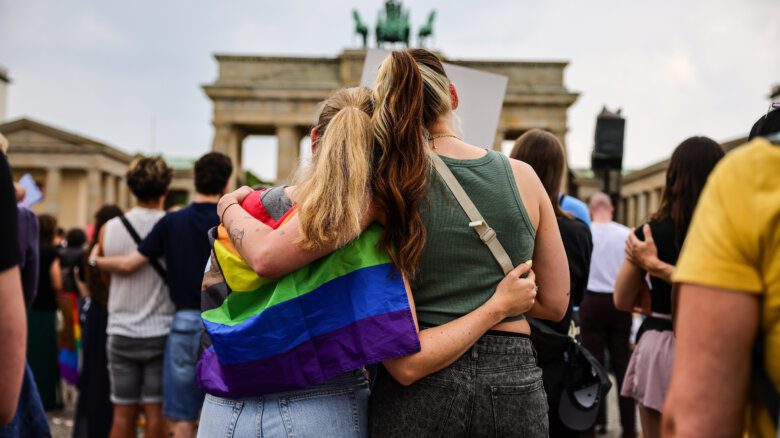
A town-wide vote to ban rainbow crosswalks and Pride flags flown on town property passed this week in Westlock, Alberta.
The town council of Westlock—a town with a population just under 5,000 located north of Edmonton—voted unanimously back in November to hold a plebiscite, meaning town-wide vote, on a proposed “crosswalk and flagpole” bylaw which would ban crosswalks or flags that support “political, social, or religious movements or commercial entities.” The result of the vote, held Thursday Feb. 22, saw the new law endorsed by a slim margin of 663 to 639.
Town council must now move to ban rainbow crosswalks and Pride flags on public property. In a statement Thursday night Westlock mayor Jon Kramer said council did not support the law, but the vote is binding.
“We will continue to find ways to embrace those in our community who need a helping hand, including marginalized groups. Equity is the reason we require wheelchair accessible parking; it is why we are developing an accessible playground; and yes, it is the reason we show support to marginalized groups like our local 2SLGBTQ+ community. That won’t stop, it will just take on a different form.”
It’s the first town with such a law in Alberta, and could mark a dangerous precedent for others to follow.
Xtra senior editor Mel Woods tells us more.
 Why you can trust Xtra