Second Alberta town votes to ban Pride flags, rainbow crosswalks

Barrhead residents voted this week in favour of new “neutrality” bylaw

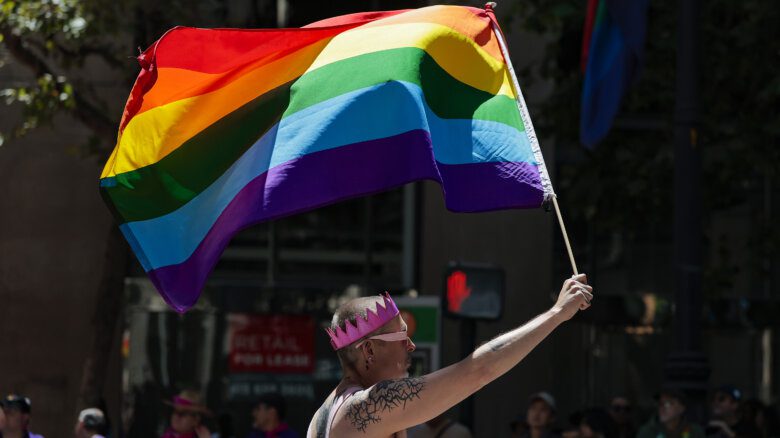
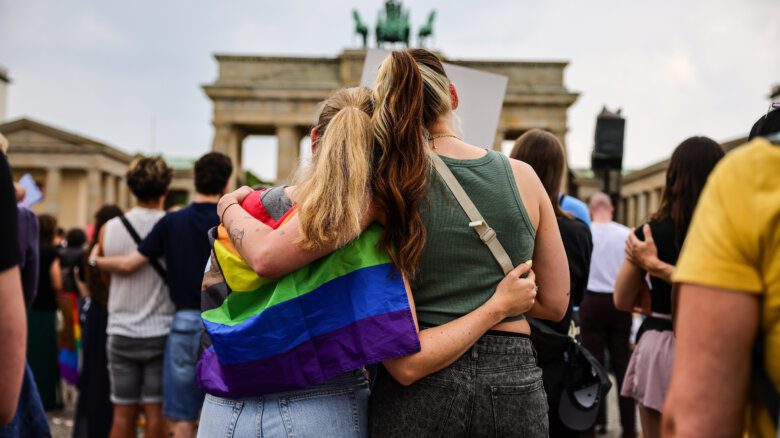
A second small Alberta town just voted to ban rainbow crosswalks and Pride flags on town property.

This week, residents of Barrhead—a small town of just over 4,000 people north of Edmonton—voted in a plebiscite in favour of a so-called “neutrality bylaw” that would ban decorative and non-governmental crosswalks and flags from public property. 

Barrhead follows Westlock, Alberta, which made national headlines when its residents voted in a similar bylaw back in February.

Such votes are possible thanks to a pair of laws introduced in 2022 by then premier Jason Kenney’s United Conservative government. Senior editor Mel Woods breaks down why you might expect to see even more towns across Alberta following suit.

Senior editor Mel Woods is an English-speaking Vancouver-based writer, editor and audio producer and a former associate editor with HuffPost Canada. A proud prairie queer and ranch dressing expert, their work has also appeared in Vice, Slate, the Tyee, the CBC, the Globe and Mail and the Walrus.

Read More About:
Video, Power, Politics, Video, Pride, Alberta

Keep Reading

Alberta UCP to consider policy proposal banning Pride flags on public property

Danielle Smith’s party will also consider changes to DEI in schools and the disclosure of students’ participation in gay-straight alliances at their annual convention

DULF was found guilty of trafficking charges. The legal battle isn’t over

Eris Nyx and Jeremy Kalicum have mounted a constitutional challenge that could alter Canada’s drug policy 
A view of the Olympic rings flag during the Men's Javelin Throw Qualification at the Tokyo 2020 Olympic Games.

Will the IOC ban trans women from the Olympics?

While reports claim a ban on trans women athletes could take shape before the Winter Games in Milan, the decision likely won’t be made until next summer
Two kiss-in protests, one from 2002 at a New York Liberty Game and another in 1990.

The history of queer kiss-in protests

Kiss-ins have been used as a nonviolent form of activism since the 1970s