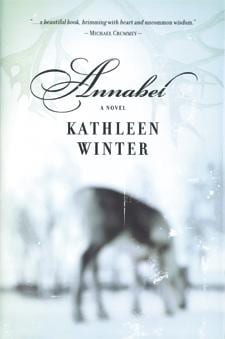
Let’s put aside the intricacies of Annabel, Kathleen Winter’s debut novel, for a minute, and admit that a mainstream novel, nominated for several of the country’s biggest literary awards, that deals in a nonjudgmental way with an intersex main character is, on balance, a good thing.
Let’s add to the math passages that acknowledge the arbitrariness of the hyper-gendered world in which we live.
“Wayne saw that the faces, bodies, clothes and shoes of the men and women who passed him had been divided and thinned. The male or female in them had been both diluted and exaggerated. They were one, extremely so, or they were the other. The women trailed tapered gloves behind them and walked in ludicrous heels, while the men, with their fuzzy sideburns and brown briefcases, looked as boring as little beagles out for the same rabbit.”
It’s a good thing, especially for all our parents, siblings and straight friends to read — gently educational, entirely sympathetic.
For gay readers, however, there are two cheats that keep Annabel from being a great novel. The first is the investment of Wayne, the intersex main character, with an eerie, otherworldly birth narrative. It’s a throwback, a strange choice for a book that wants to look intersex experience directly between the eyes. Then, inexplicably, the magical qualities of the infant Wayne evaporate as the novel progresses.
Secondly, the novel resolves — or begins to resolve — when Wayne, in his late teens, moves out of his suffocating small town and away from his suffocating parents. That rings true, but his effortless acquisition of housing, job, vehicle and romantic interest do not. Without giving too much away, there is a significant third-act obstacle, but it too is strangely pat in its introduction and resolution.
Even so, there are some memorable moments, and the adults in Wayne’s life — his parents and family friend Thomasina — are meticulously drawn and feel alive.
It may be middle-brow fiction for your middle-brow family members, but like Wayne, it will surely find its place in the world.

 Why you can trust Xtra