When I asked my white gay partner how he understood the dynamics of our interracial relationship, he replied, “well, you’re different, but you’re not the help.”
As a visibly brown, queer and first generation Filipino immigrant with a French name, I was curious about how he felt about dating someone from a different ethno-cultural background — someone who is typically cast into service industry or domestic worker roles.
Often viewed as an ethnically ambiguous brown person, when I tell people about my Filipino identity, I find that I am often stereotyped as a hard-working, compliant and resilient model minority destined to work at the nearest Tim Hortons. And the complexity of my identity doesn’t end there: I am also a person of faith from the Latter-Day Saint (Mormon) community and I also identify on the asexual spectrum, or to use the common moniker, ace. I’m demisexual, which means I am a person who does not experience sexual attraction unless I form a strong emotional connection.
Due to my several intersecting identities, I experience stigma and marginalization in many ways.
Classism and racism are prevalent in the queer community, and they affect the way we find partners. Although my partner apologized, saying he wasn’t trying to be offensive, I couldn’t help but wonder: if I was “the help,” would that make me less desirable as his partner? Did my social position matter to him? Did my education, ethnicity and socio-economic situation really impact how I am desired by others?
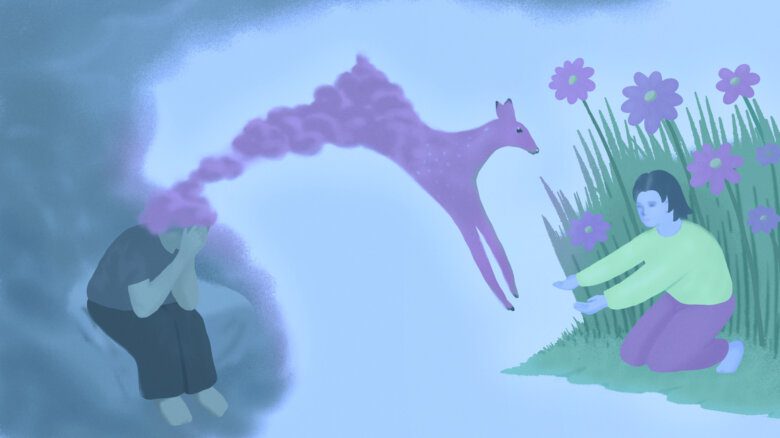
At the intersections of being both queer and Mormon, I have been told that I have to choose one identity or the other by associates, friends, leaders and even family at one point. I’ve been told that I am too queer to be Mormon and too Mormon to be queer. I feel like an interloper, like I don’t belong in either community — tolerated instead of welcomed, jeered at for wanting to nurture my spirituality along with my identity as an out, proud queer person. I became convinced that I would never be loved for who I truly am.
It wasn’t until I came across an “It Gets Better” video from Brigham Young University that I realized I wasn’t alone in this experience. As it turns out, there are many people in my faith community who honour, to varying degrees, their queer identity and their beliefs. This motivated me to seek counseling and guidance, through which I learned to embrace myself more fully. I finally felt validated — in this aspect of my identity, at least.
I still struggle with the most prominent image of a gay man as someone who is very sexual and sexualized. As someone who identifies on the asexual spectrum, this is yet another aspect of my life where I don’t fit in. According to the dominant culture, a majority of what is valued in gay culture seems to be based on looks or the pursuit of the next hookup, evidenced through the prevalence of gay hookup apps.
There is hardly any space for guys who want to meet others and just talk. And when I am spoken to, some questions I have been asked were directly aimed at my ace experience: do you identify sexually as a plant? Do you envision reproducing yourself by splitting in half? Isn’t asexuality just celibacy?
Although I still face acephobia within the gay community, I’ve also witnessed some positive change. While attending a gay men’s health summit, I noticed a shift from use of the term “men who have sex with men” (MSM) to “guys who like guys” (GLG) to describe the larger community. This new term acknowledges both the romantic aspect of queerness and affirms the experiences of those who do not always experience sexual attraction.
My queer identity is composed of inextricably racial, spiritual and asexual elements. It is bound to and wound into the roots of the queer liberation movement, nourished by the notion that “no one is free until we are all free.” There are others who, just like me, are looking for a place where they can exist as they are. After all, to be queer is to defy that which is considered the norm, is it not?

 Why you can trust Xtra