Ever since I was a little boy, I knew I wanted to be a dad of something.
I wasn’t like most of the boys I grew up with. I didn’t care much for sports—I was more into puppet shows and action figures (GI Joe and Action Jackson and maybe a Barbie tossed in there). One Christmas, I got a Jerry Mahoney ventriloquist dummy, and that thing became my son. I fed it real food—pretzels, cookies, milk, whatever I could sneak into its mouth—of course it would always get jammed. My mother was not happy. But in my mind, I wasn’t playing. I was parenting this thing.
I remember in 1968, when I was six, the movie Oliver! came out. I was so taken by it—the orphans and the idea of no one being there for those kids. It stuck with me. I remember thinking, even as a child, that I would take care of them and be their parent. I’d be good to them and feed them anything but mush.
There was also a woman down the hall from us in our apartment building who had a baby in 1972. I was 10 years old. I was constantly asking if I could come help feed the baby. I must’ve driven her nuts, but she always let me. I loved every second of it. That feeling, even back then, was strong: one day, I wanted a child of my own to feed Gerber applesauce.
Then came the Cabbage Patch Kids craze of the 1980s, and I wanted one so badly—not because it was popular at the time, but because I wanted to adopt something that didn’t have a home. Something to love. That instinct to nurture was always just there within me.
I grew up in the tight-knit, very suburban New Rochelle, New York—bike rides, Saturday bagels, coupon clipping at Waldbaum’s with my mom. It was your standard 1970s upbringing. Rotary phones. MAD Magazine. The Partridge Family and The Brady Bunch. Saturday morning cartoons, Tang, Pet Rocks. You missed a show on your Zenith TV? Too bad. Wait for the rerun. No social media, no YouTube, no group texts. Just Schwinn bikes with bells and banana seats, comic books, Bazooka Gum and the occasional yelling parent from the window to get inside because it was getting dark out.
I didn’t know it then, but I wasn’t like the other boys in more ways than just not playing Little League. I kept a lot of things buried.
I went through elementary school being bullied at times, and high school was the worst period of my life. Then came college in the ’80s. I went to school in upstate New York, where things were fun, wild and deeply closeted. Being gay wasn’t talked about openly in a co-ed dorm. You either kept it to yourself or pretended you were straight. I did both. I had a blast and made great friends, but I wasn’t fully me yet.
“I danced at the Roxy, partied on Fire Island, spent weekends bar-hopping in Chelsea and the Village, and worked my way up the corporate ladder while leading a double life.”
After college, I moved to New York City and got into the media world. My first job was with ABC. I lived in a cramped studio on the Upper West Side and jumped into the scene headfirst—working, clubbing, hustling, networking. I danced at the Roxy, partied on Fire Island, spent weekends bar-hopping in Chelsea and the Village, and worked my way up the corporate ladder while leading a double life. I was out late, chasing deals by day and drink specials by night. It was a fast life. Messy and filled with stories, steakhouse lunches and celebrities.
I left ABC after a decade to become the first sales manager at XM Radio and eventually began closing deals with Howard Stern when he moved over to Sirius. After that run, I moved on to iHeartRadio as a sales executive bringing voiced endorsement deals to A- list celebrities.
It was during that time that I finally came out to friends and family—although I had been leading a double life for years. I’d spend Monday through Friday in sleek, glass offices closing six-figure endorsement deals, then hit the bars in Chelsea on the weekends, telling coworkers I was “just catching up with friends.” I had a “roommate” instead of a boyfriend. I skipped company picnics and weddings so I wouldn’t have to answer awkward questions about my personal life. Once, at a SiriusXM event, someone asked if I had a wife and kids, and I laughed it off with a joke about being “married to the job.” Inside, it stung. I was tired of hiding. I came out. Quietly. No big speech. Just me, owning it. I was in my early 40s. It took me longer than some, shorter than others—but it was mine and I was relieved it was finally out there.
Years passed. I got older, worked hard, dated a little and one day I woke up and it hit me. I was 47. Where did the years go? I panicked. I wasn’t in a relationship, and I didn’t see one starting any time soon. And I didn’t want to live the rest of my life with just my cat. I was craving something deeper: just as I had sensed all those years ago, I wanted to be a dad.
When I told my family over dinner what I was considering doing, the reactions were mixed. My brother thought I had lost my mind. But my mother had always dreamed of being a grandmother. And since my brother wasn’t married and didn’t have kids, this was her best shot. She was cautious but open. Hopeful, even.
Some of my extended family? Not so much. My cousins cut me off completely. They didn’t want anything to do with me after they found out. It’s been over ten years since I’ve seen them. That still stings. But I wasn’t doing this for them. I was doing it because I had love to give, and I wanted to raise a child. Period.
I started the process with a fertility clinic, searching for both a carrier and an egg donor. It was exciting. It was terrifying. It was expensive. But I was all in.
I had found a carrier through my own research and the egg donor from the clinic. The first time I tried and did a transfer, it failed. There was no pregnancy.
I was devastated. I had spent nearly everything I had. No pregnancy. No more embryos. No backup plan. I felt like the dream was slipping away.
Six months later, after a lot of soul searching—and cashing out my 401(k)—I tried again. And this time … it worked.
The surrogate was pregnant. I remember the moment I got the call. It didn’t feel real. At the doctor’s office, I kept reading the word “positive” on the test results and, to my surprise, there were two heartbeats. But it was real. I was going to be a dad.
Knowing I’d be doing this solo, I hired a live-in nanny—a warm, strong Jamaican woman who became a lifeline during those first two years after the twins were born. She lived with us and helped me through the endless feedings, sleepless nights, diapers and doctor visits, the moments where I just didn’t know what to do. She didn’t just help me with the girls—she helped me. Amy became family.
My mom had been thrilled when the girls were born. She finally had the grandchildren she’d always dreamed of. But life had other plans. Not long after, she was diagnosed with cancer.
What followed was a nightmare. I was juggling two babies while trying to navigate the healthcare system with my mother—doctors, chemo treatments, hospital visits, insurance battles. I was exhausted, grieving before she was even gone, trying to be everything to everyone.
One day I told her we were going outside of the hospice for a little air. I wheeled her out past the nurses’ station, calm as can be, said I’d be right back—and then I took off. Full sprint, pushing her in the wheelchair down the driveway to my waiting car, her arms flailing, both of us laughing. I’ll never forget her face. She was laughing like a kid again.
I put her in the car and flew straight to New York Presbyterian Hospital. Pulled up to the ER, ran inside and begged them—Please! She can’t die. Please save her.
They tried. But we lost her.
It was one of the most devastating moments of my life. I had two infants, no partner and now no mother. In this moment of profound loss, I felt adrift. My brother was somewhat helpful. But since I had a spare bedroom, a good friend, Alp, stepped in and helped me carry the weight. He moved into the house to help with everyday chores and taking care of the babies. He was a lifeline.
Are there moments of regret? Honestly—yeah.
I think back to that room with the Dixie cup, the moment everything began, and I wonder what I was thinking. There are days when I’m just completely overwhelmed raising 13-year-olds. The world is on my shoulders—getting them to school, picking them up, grocery shopping, laundry, cooking, paying the bills, making sure we have a roof over our heads. Taking their phones away or grounding them when their behaviour calls for it. It never stops. I worry about money going out more than it comes in. I’m never really at ease. I’m always juggling.
There are days when I feel smothered by the routine, that there’s no one to pitch in when I’m burned out. Alp has since moved on with his husband, so he is less available.
But then comes nighttime. The house is finally quiet. I peek in at them sleeping—my daughters, so peaceful, so still, no screaming or singing Drake at the top of their lungs—and in those moments, the chaos fades. I feel a wave of love that’s deep and pure.
And in those moments, I don’t regret a thing.
In many ways, becoming a father let me relive my own childhood. We go to amusement parks, Disney, apple-picking, trick-or-treating. Christmas is always a big deal in our house—over the top, with a mountain of presents under the tree. I went all in because I loved seeing the joy in their faces. It reminded me of how I felt as a kid.
They like McDonald’s, just like I did. They love the junk food I grew up on—so of course, I bought them Twinkies and Yodels, even though I pretended to be the health-conscious dad. We watched cartoons together when they were younger, Peppa Pig, played games like Twister, laughed a lot. It wasn’t just about raising them—it was about reconnecting with the kid I used to be.
They’re smart. Like, really smart. Both of them are on the honour roll—straight A’s with the occasional B—and I always say, “They definitely didn’t get that from me.” I was more of a C+/B- kind of student, to be honest. So they must’ve inherited their brains from the egg donor. Either way, I’m proud beyond words.
Of course, it’s not always calm in the house. They fight—like, really fight—and I’m constantly in referee mode trying to break it up before someone slams a door. One of them even had a boyfriend and I nearly fell over. The drama, the breakup, the crying—welcome to teenage life. And then came the periods. When that happened for the first time, I was in full-on panic mode. I had no idea what I was doing. No playbook. Just me in the pharmacy aisle, googling products and praying I was picking the right one.
And through it all, I’m trying my best to stay alive and well—for as long as I can.
After I moved to New Jersey from NYC, my days were filled with babies and toddlers—bottles, diapers, bath time, playdates. I didn’t have a second to think. But now they’re teenagers and they’ve got their own lives, friends, plans. These days, I’m mostly an ATM and a chauffeur—driving them to Sephora to buy whatever latest cosmetics trend is blowing up on TikTok.
And suddenly, I find myself with time. Too much of it, some days.
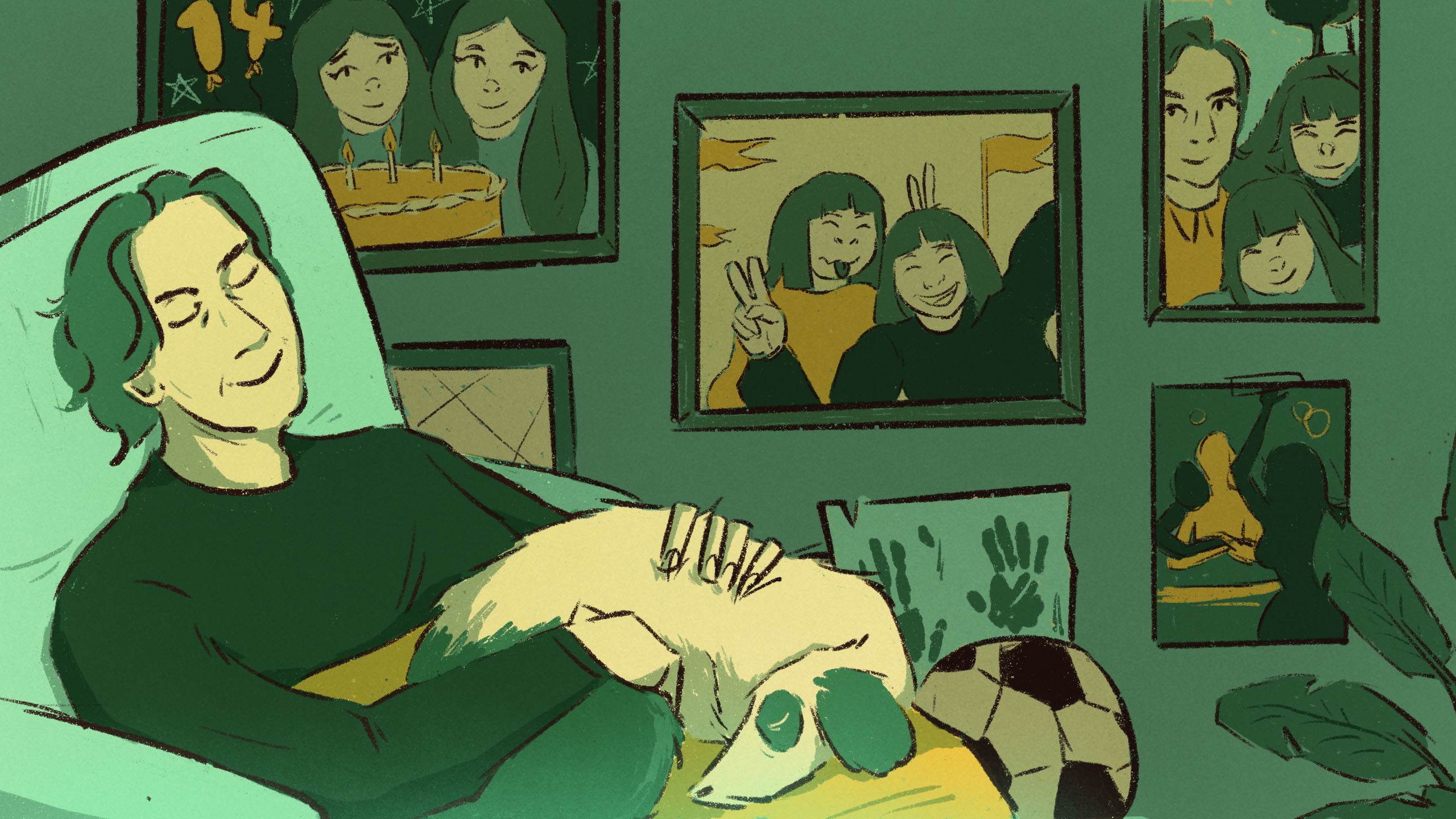
Many nights, it’s just me and my dog, Oreo, on the couch, while the girls are sleeping.
I sit there and think, How did I end up here? In the quiet suburbs of New Jersey, in a house full of makeup brushes and soccer gear, far from the life I once knew. And there are moments—real, honest moments—when I would give anything to go back. Back to my New York City days. Back to the Porsche, the dates, the clubs, the energy, the feeling of possibility.
It’s lonely sometimes. This town is beautiful, but it’s very straight, very family-focused. There aren’t many single men around here, and I feel that. I feel the absence of community, of connection. I don’t know what the future holds—maybe one day I’ll head to Florida, or someplace warmer, someplace that feels freer.
And until then, it’s PTA meetings, soccer games, orthodontist appointments and writing big cheques for summer camp.
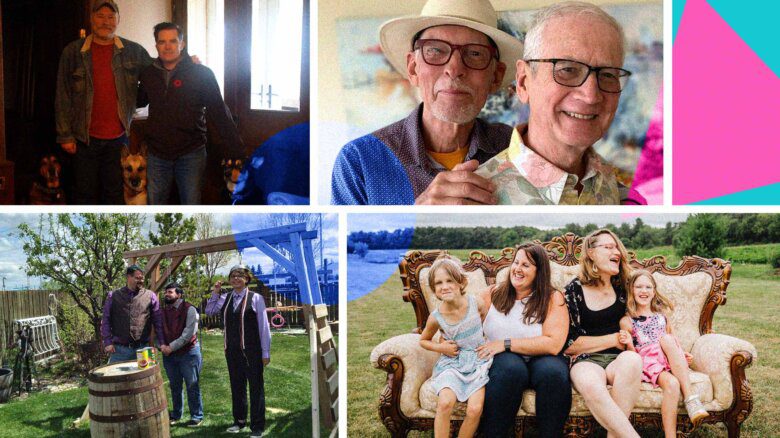
When the kids were 12, I got curious about the egg donor. The clinic had long shut down, but I reached out on LinkedIn to the doctor to see if he could reach out to the donor and ask if she would be willing to meet the children. Days later, he replied: she said yes. We met her on a warm July afternoon by the Long Island Sound. I brought flowers. The girls were buzzing with questions. The moment she walked in, there was this calm recognition—a kind of familiarity I can’t explain. The girls hugged her instantly. She gave them matching bracelets. It was magic.
A few months later, we met her again—this time with her wife, which I hadn’t known she had. Over pancakes and bumper lanes at the bowling alley, the girls laughed nonstop. Watching them together—this beautiful, unlikely constellation of people—felt like witnessing a little miracle. We don’t have a label for what we are, but somehow it works.
That’s my life. Not the one I imagined—but the one I built. The one I’m proud of. Even if I sometimes miss the old one.

 Why you can trust Xtra