It would be nice, some day, if the questions about being a female “insert profession here” were no longer posited. I’ve been answering that question for a couple of professions for decades now.
Last career, it was about being a female lawyer. No one asks me that question anymore. Maybe it’s because there are so many female lawyers or maybe it’s because I quit that profession, so how could I know at this point? I just remember the complaints from my female colleagues way back when. No childcare. Hard to network. “We don’t golf, so we’re not part of the male privilege set” (that one didn’t apply to me — hello, ladies and gentlemen: live the stereotype).
At present, because my full-time profession is in comedy, I’m asked a lot about the challenges I face as a female comic. Is it an all-boys club? Do men get booked more? Do men stick together?
Yes, of course they do.
Now ask me if I give a shit.
The fact is, I don’t. Sure, I did at some point, but I no longer do.
Since I stepped onto the stage, mentored by Lea DeLaria, who became my writing partner and frequent performing partner, I put my head down, self-produced, self-promoted and managed to make a living.
Sure I complained sometimes. For example, it’s hard to be a current-events comic and be told by one of the country’s bigger comedy fests that you can’t do your current-events material because it’s not “evergreen” (timely becomes dated and therefore less valuable in reruns). So you do the material they tell you to — some generic, not timely, material — only to see a very straight white guy (albeit a famous one) shooting his own special in which he cracks wise solely about current events.
But what’s the point of complaining, really? I tried to exist within their confines. I don’t want to. So I don’t ask to be a part of that festival anymore. But I also don’t care to be famous. I just want to make a living. If they want me, they know where to find me. In the meantime, I keep busy trying to make work for myself and others like me.
And yes, there is the added factor of being queer. But for me, being a comic in North America and being a part of the first wave of queer comics was actually a perk. When I first started doing standup (1988, and I was always out), a lot of queer people would throw money at you to hear you talk about your queer experience. Now, in a lot of parts of North America anyway, it’s not as big a deal. But I understand that’s here. A queer standup in a country like, say, Uganda? Obviously a much different experience requiring a whole different kind of courage and nuance finding comedy in living your life threatened by death. But that’s a whole other editorial.
In the meantime, here in Toronto where I work and live, I try to pay it forward, mentoring female comics who I think have the chops, are interested in my help, and just need a venue, a kick in the ass or some encouragement to move in a particular direction.
Besides, as much as it’s how I make my living, if I think about being oppressed in the world of comedy versus the oppression that exists for women in the world in general, well, I take a step back.
The statistics on the status of women and girls in the world are beyond the beyond. You have only to look at the news for a nanosecond to see the atrocities, from trafficking to stoning to rape as a strategy of war. The list is unbearable and goes on.
So to carp about the status of women in comedy? I dunno. I look at Tina Fey, Whoopi Goldberg, Roseanne Barr, Rosie O’Donnell, Carol Burnett, Joan Rivers, Wanda Sykes, Bea Arthur, Sarah Silverman, Lea DeLaria, Kate Clinton — and then reeeeally look back and see Moms Mabley (confined by her race but still found a way), Jean Carroll, Gertrude Berg, and I think, Yep, I know they all ran into walls, but damn if those broads didn’t either bash them down or hoist themselves over the top.
And with a list like that in my thick, Italian, queer, female, ex-lawyer head, I just put said head down, think about the plight of my sisters all over the world, and run into that wall as hard as I can.
Eventually, it’s gonna fall; someday they all will. And when they do — well, look out, boys.
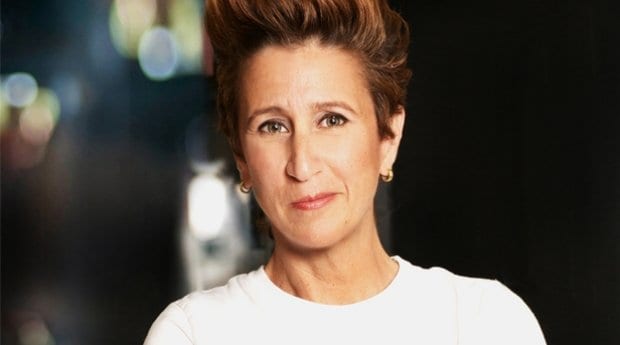
Maggie Cassella is the co-owner of The Flying Beaver Pubaret.
 Why you can trust Xtra