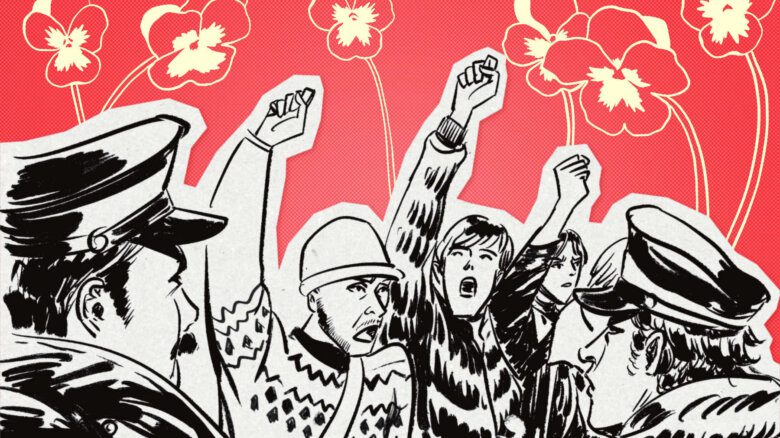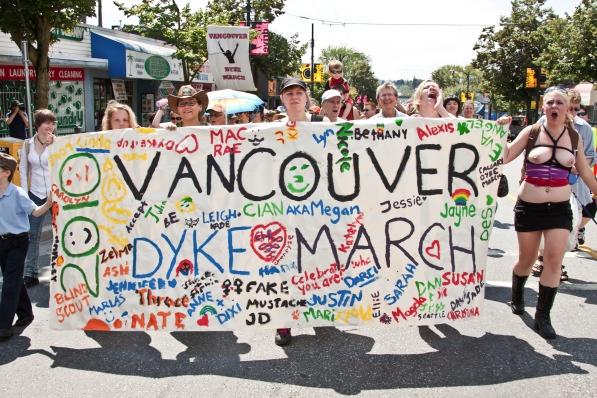
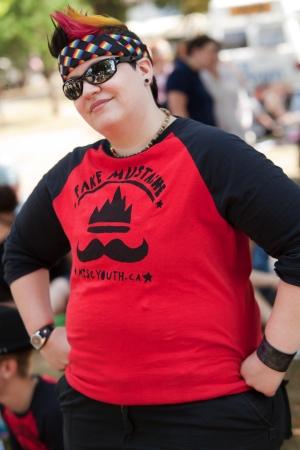
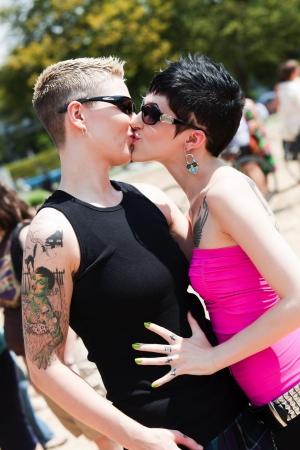
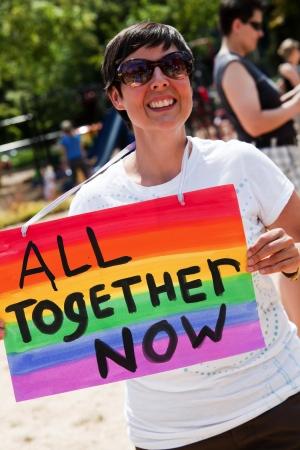
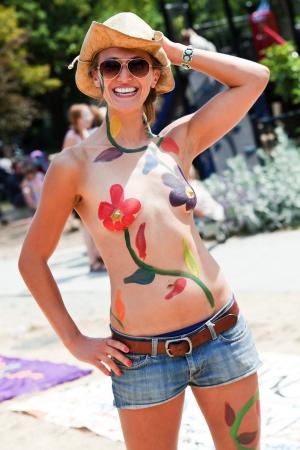
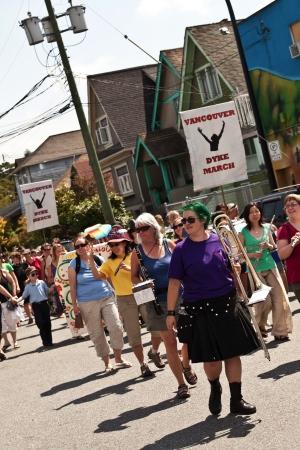
The sun shone brightly on Commercial Dr on Saturday, July 31 as the seventh annual Vancouver Dyke March made its way down the street.
Shopkeepers, cyclists and brunching couples on sidewalk patios cheered as the energetic procession of queer women, their families and supporters marched to celebrate the Eastside’s most beloved Pride event.
The march assembled at McSpadden Park near 5th and Commercial, proceeded down the Drive and ended at nearby Victoria Park, marking a return to the destination of the first Vancouver Dyke March, in 2003.
In recent years, the march has ended at Grandview Park, but a construction-related park closure forced organizers to change their plans, resulting in extra costs for marketing, advertising and stage construction.
“It was definitely not our preferred turn of events that we would not be in our usual home,” says Vancouver Dyke March president Sam Levy. “But it’s kind of fun to go back to our roots and to an event that has grown over the last couple of years.”
The main thing that will ensure the continued livelihood of the march, Levy said, is a new generation of leaders. “It’s effectively been a core set over the last seven years,” she says. “It would be really lovely to see the younger generation come out and be a part.”
WHAT DOES THE DYKE MARCH MEAN TO YOU?
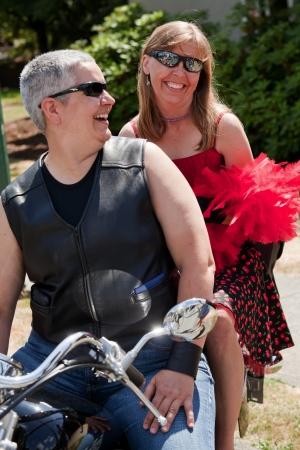
“The [Pride] parade has been co-opted so much by commercial venture. You know, every second float is a business. Where this is just grassroots. It’s just people.”
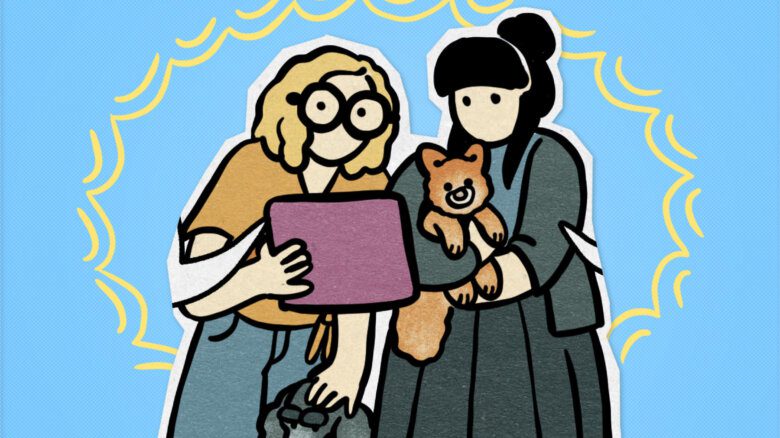
– Lisa Langevin (back, with Ticha Albino)
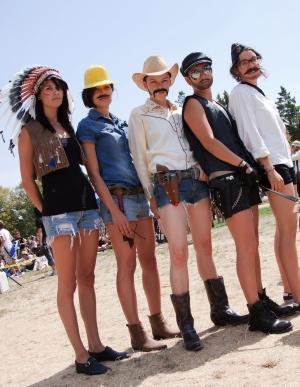
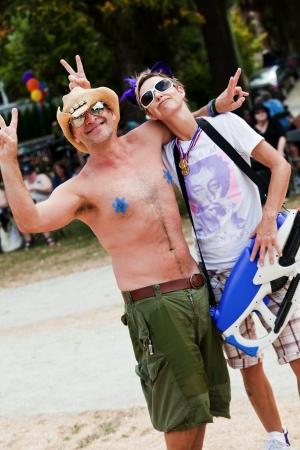
“I think that everybody has their own definition of dyke but I know that me, and a few of the people I’m hanging out with today, identify with a completely undefinable gender identity and undefinable sexual identity, and it’s just an amazing opportunity to be able to express whatever you feel like expressing — whether you feel like you’re a woman, whether you feel like you’re a man, whether you feel like you’re genderqueer.”
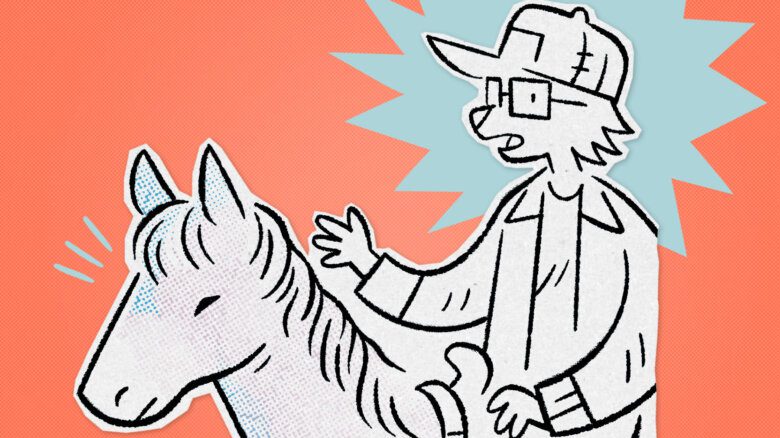
– Paige “Pony Boy” Frewer (centre)
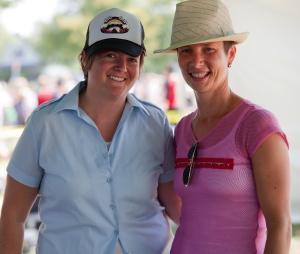
“I come because it’s just a great opportunity to show solidarity amongst a really diverse community, and see all the diversity, and be a part of it. And I just think it’s important to honour our past, and all the people that came before us. They did all the hard work. Now that we can actually march together, I think it’s a way to honour some of our forewomen, foremothers.”
– Barbara Baumgartner (right, with Kate Duffy)
“Vancouver was important [to visit] because it’s such a big community. In Calgary, ours isn’t as massive as this one. So participating in something like a dyke march here would really put it in perspective for us to see the community and really feel the vibe of a big community as opposed to a small one.”
– Jennifer Jeans, co-chair of the Miscellaneous Youth Network, Calgary, AB
“It’s all your kind, right. And the haircuts are so amazing. And there’s so many hotties!”
– Megan Wiens (right)
“This is my first one, but I felt it was important for our daughter to be a witness of equality and embracing different cultures and other families. Inclusion is a huge part of what we’ve been teaching her. She’s only been in our family for three months. It’s gradual, but teaching those values is important to us.”
– Aileen Tuck
“I think it’s really important to be proud of who you are, no matter what you are. This isn’t just about being a lesbian or transgender, whatever. It’s just about being something, no matter what, and feeling good in your own skin. Being proud of who you are, who everyone else is.”
– Cian Zybutz
“I’ve noticed over the years, and especially today, the schism in the homosexual women’s and men’s community. It’s time to bridge this gap, and we’re doing it. So I’m honoured to be here and doing the Dyke March. It’s a pleasure, an absolute pleasure.”
– Barry Wayne (left)
Photos by Brittney Kwasney.
 Why you can trust Xtra