
The winning entry of a national literary contest tells a story that is often lived but rarely spoken about.
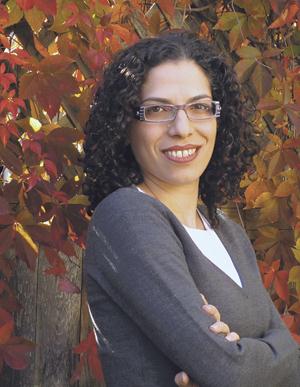
In The Lebanese Dishwasher, Ottawa author Sonia Saikaley tackles the taboo subject of homosexuality in Middle Eastern immigrant communities. Her book won the 2012 Ken Konsky Novella Contest.
“The Lebanese Dishwasher was selected because of the elegance of its style and the strength of its story,” says Luciano Iacobelli, co-founder of Quattro Books, which runs the annual contest. “It concerns itself with two cultures, Lebanese and Palestinian, and it deals with the issue of homosexuality within these cultures. The book is about a minority within a minority.”
The novella’s protagonist is Amir, a gay man who immigrates to Montreal from Lebanon after suffering through civil war and a traumatic childhood. He finds a job as a dishwasher in Montreal but continues to struggle with his past. At work he meets a man named Rami who gives him hope and serves as a companion.
“My initial response,” says Mark McCawley, editor and publisher of the online magazine Urban Graffiti, “was that it was a splendidly written, sensitive depiction of a same-sex relationship . . . that avoided both traditional immigrant stereotypes and any clichéd depictions of gay lifestyle . . . It is neither a ‘gay’ book nor an ‘immigrant’ book. The book is essentially a love story and a uniquely Canadian one.”
While she is not a lesbian, Saikeley knows the problems gay immigrants encounter.
She says the reality is that many gay Middle Eastern immigrants remain closeted even after they come to Canada. “In my own community, it’s rarely spoken about,” she says. “I grew up in a traditional Lebanese household, and I find the most important thing is marriage and having children.”
Iacobelli expects some within immigrant communities will be upset by the book’s content. “I’m sure some people will be shocked and morally outraged,” he says.
However, he says the invisibility of the struggles of gay people is a universal issue.
“If these realities are not faced, they lead to ignorance and cruelty, and the result is unhappiness for all,” Iacobelli says. “My hope is that some of these people will read the book and see that love happens between two members of the same sex in much the same way that it happens between a man and a woman. It’s the same joy. It’s the same loyalty.”

 Why you can trust Xtra