My mom became a hero the evening she arrived home from Costco with a Nintendo Wii. The gaming console was notoriously difficult to get your hands on in those first few years after its 2006 launch, and seven-year-old me couldn’t wait to try its motion controls. Having older brothers and cousins meant I’d played hand-me-down titles on many outdated consoles, and these experiences had fostered my lifelong love of the flexibility offered in virtual worlds. I could hop from character to character, living through experiences that were often unconceivable in reality. Getting a brand-new Wii gave me the freedom to explore games with a clean slate.
Like many 2000s kids, I fondly recall visiting the Mii Channel to create my virtual lookalike. Where the memories probably differ, though, is in how I decided to represent myself. I made two Miis: one that represented the girl the world saw me as, and another that reflected who I was inside: a boy. The male avatar looked vastly different from my real-life self. He wore shoulder-length shaggy hair, had a mole on the right side of his face and didn’t wear glasses. While I didn’t know about the concept of being trans at the time, I felt that the character I’ll call “Z,” after the first letter of his name, represented an alternate version of myself.
This wasn’t atypical behaviour for me. Before the age of 10, I’d constantly beg my mom to let me buy clothes from the boys’ section at Walmart. My family teased that I “should have” been born as a boy. I felt more comfortable choosing male avatars in games, and my online profiles reflected this preference. On Neopets, my user’s gender was male despite sharing my deadname.
But my gut told me that having this other Mii was odd. I felt like I needed to hide Z’s existence from people, even my own brothers. Only my sister knew he existed at first, and I never knew how to explain myself when I got asked about him. Sometimes, Wii Sports would place my two Miis on opposing teams while generating rosters for a baseball game. It would feel strange seeing my two selves playing against each other. They were intrinsically connected and co-existed as parts of my real self, but at that point in my life, they were not at odds quite yet.
Z would remain locked inside my old Wii, which was thrown out at some point in the 2010s. By the time I purchased a Nintendo 3DS in Grade 7, I only had one Mii to represent myself. I did not need a second Mii reminding me of the gender confusion I’d swatted away. My Mii still sported a shaggy shoulder-length hairstyle, but, trust me, they were totally female.
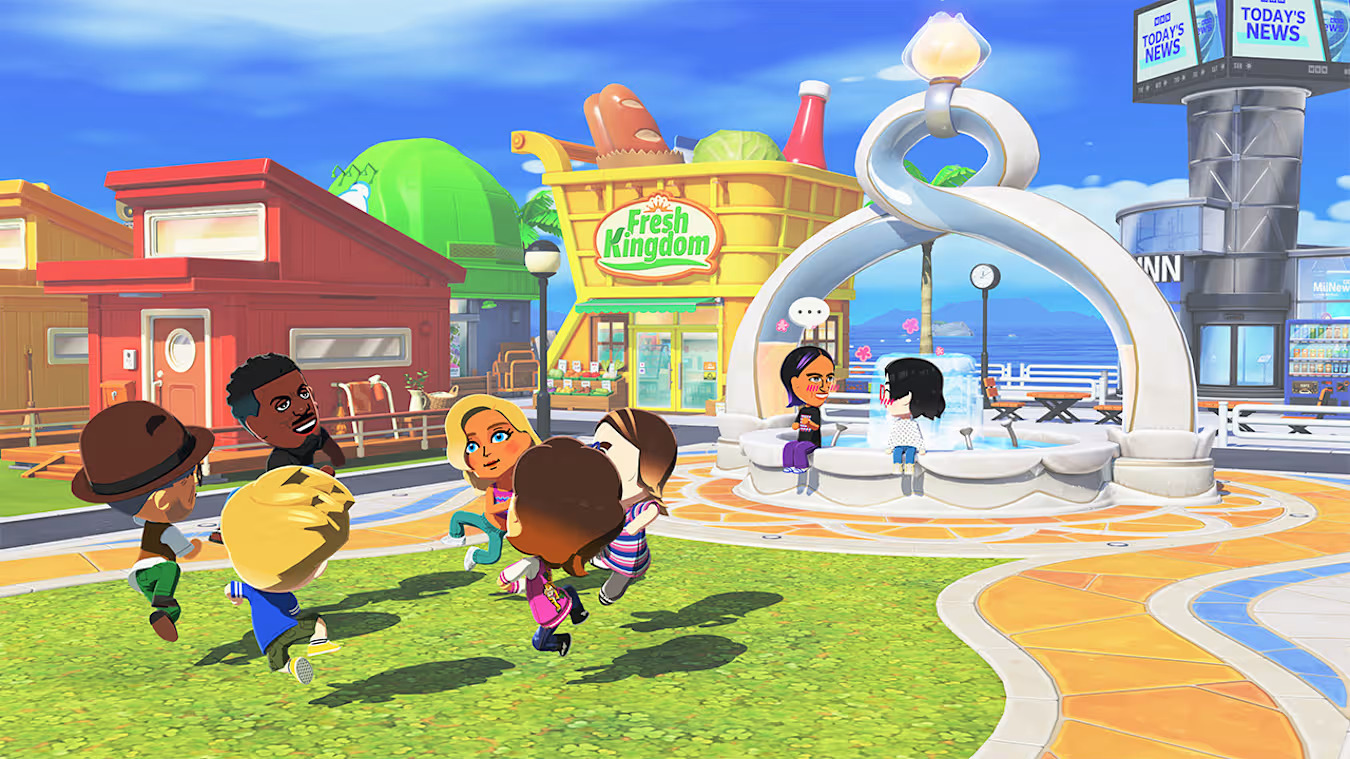
The release of Tomodachi Life in North America in 2014 would pose new questions that I didn’t want to answer. The life-simulation game allows players to populate an island with Miis of their choice. Islanders can live in their own apartments, play silly minigames, make friends, go on dates and create families of their own.
By then, I knew a little bit more about my queer identity and identified as a lesbian. I wasn’t public with my queerness in my real life, and that wasn’t about to change in the game: my character had to be straight because non-heterosexual relationships hadn’t been programmed into Tomodachi Life.
At the time, I wasn’t bothered by this because I saw it as only a game. My Mii went on to have a very heterosexual life, marrying a straight man and having three kids with him. Still, I managed to express my idealized masculine style through clothing. My Mii definitely looked queer with their button-up shirts, slacks and baseball caps.
Queer gamers will no longer have to play straight in the new Tomodachi Life game, which was released today. Players can once again create their own islands of Miis with wacky lives. But this installment adds more personalization options, including aspects that queer and trans players in particular would appreciate. Users can choose from “male,” “female” or “nonbinary” for each Mii’s gender, select their dating preferences (any combination of the three gender options, or none at all), indicate one set of pronouns (“he/him,” “she/her” or “they/them”) and pick a preferred clothing style (tuxes or dresses) for special events like weddings. Miis are also no longer just visual representations of people; they have evolved into characters that can include more depth from the human experience. They have fleshed out personalities, distinct mannerisms and unique relationship dynamics.
All of this comes more than a decade after the previous Tomodachi Life was announced for release in North America and quickly garnered controversy for its exclusion of non-heterosexual relationships. After realizing that he couldn’t marry his fiancé’s and his Miis in game, American fan Tye Marini spearheaded Miiquality, an online movement urging Nintendo to include same-sex marriage in Tomodachi Life. Though social media users championed #Miiquality, Nintendo refused to change the game’s contents. The company initially stated that Tomodachi Life was intended to be a “whimsical and quirky game,” and that the company was “absolutely not trying to provide social commentary.” However, five days later, Nintendo apologized, noting that it could not structurally change the game but pledging to “design a game-play experience from the ground up that is more inclusive, and better represents all players” if it creates another installment in the series.
At the time, the inclusion of queer identities and relationships in gaming was still taboo. While the similar life-simulation franchise The Sims has included same-sex attraction options since its original 2000 version, that decision almost didn’t happen. Programmer Patrick J. Barrett III told the New Yorker in 2014 that after months of deliberation, The Sims’ development team had decided to exclude same-sex relationships from the code amid fears of backlash. “No other game had facilitated same-sex relationships before—at least, to this extent,” said Barrett. The game mechanic only resurfaced when Barrett joined the team and wrote the code for social interactions, implementing details outlined in an outdated document he’d received.
The risk paid off. An unplanned kiss between two background female Sims during the game’s demo at the 1999 Electronic Entertainment Expo stole the show. As Barrett explained to the New Yorker in 2014, The Sims’ publisher was more concerned about the game’s success, and “it was also a different time; people weren’t so violently for or against same-sex relationships.”
In 2014, Nintendo found itself in a unique position with its child-friendly image and existence in a digital age that quickly circulates and amplifies discourse across the political spectrum. That year alone, 19 American states legalized same-sex marriage—nationwide legalization would come the following year—but that didn’t stop homophobic rhetoric. Similar debates have flared in recent years, as vocal groups of parents and politicians have opposed LGBTQ2S+ content in media marketed toward children.
For its part, Nintendo has been more open to recognizing gender and sexual fluidity over the past decade. In 2016’s Miitopia, a RPG game where players create a travelling team of warriors, Miis of the same gender can form closer bonds that some players have interpreted as queer. The Nintendo Switch 2, which launched last year, asks players to choose a “style” rather than a binary gender during the Mii creation process. But Living the Dream’s usage of the term “non-binary” and its inclusion of diverse attraction options sets a precedent for direct acknowledgement of queerness among Miis.
It’s nice to see that a video game can seamlessly incorporate queer existence and offer a kind of escape, especially in a time when LGBTQ2S+ rights are in contention in many places. Japan, where Nintendo is headquartered, does not recognize same-sex marriage. In November, a Tokyo court ruled that the nationwide ban is constitutional. However, the Supreme Court is expected to deliberate the case, with a ruling anticipated for as early as next year. In the meantime, Living the Dream delivers comfort to its queer and trans players by welcoming the community with open arms. A queer character can live on an island that cares more for outlandish gossip than anyone’s identity, alongside residents who would prefer to take a trip to outer space over leading anti-gay protests in front of city hall.
Since Nintendo surprise dropped a demo of the game last month, gamers have been plotting their own queer utopias. Some have made queer icons like RuPaul into Mii characters. Others have marvelled at the opportunity to populate their virtual island with characters of diverse genders and sexualities. One X user stated, “Never thought I’d see the day where I could make my mii a non-binary he/him lesbian.”
This warm response from queer players makes me wonder how my younger self would have reacted to queer inclusion in Tomodachi Life. I had a hard time envisioning a positive queer future, but I can only imagine how seeing a gay wedding in the game would have eased my anxieties. I would’ve also used the new attraction options for the fictional characters I’d added to my island. In real life, I was glued to episodes of Adventure Time, wondering if the romantic subtext between Princess Bubblegum and Marceline would blossom into something more onscreen. I would’ve felt ecstatic if I could’ve made them queer in the game before the show made them a canon couple in 2018. Especially when I didn’t have a supportive network in real life, seeing queer characters thrive in-game would have helped me feel more hopeful.
When I first contemplated transitioning in 2019, the letter “Z” naturally popped into my brain. I chose not to name myself after my old Mii, but I briefly considered another “Z” name like “Zack.” It all connects to that experience back on the Wii, which allowed me to visualize what my inner self knew all along.
The Wii’s Mii maker brought my wishes to life. It gave me the chance to ask myself what truly represented me, and what that looked like. Although it took until my twenties to identify the gender conflict I felt inside, my younger self had clearly solved that puzzle years before.
When I receive my copy of Tomodachi Life: Living the Dream, the Mii that will appear on my island will finally be me—no more shaggy shoulder-length hair, and instead, something shorter with spiky bangs. The island will feature an accurate representation of me, a trans guy, and my queer friends, who can finally see their real selves reflected in the virtual world. If the queer experience has taught me anything, it’s that no matter how many times you change your identities, they all represent parts of yourself. If I change again, I’ll be reassured in knowing the flexibility exists in-game too.

 Why you can trust Xtra