Anthony Roth Costanzo is a bit of an anomaly in the world of opera.
Costanzo is a countertenor, which means he sings in what is typically a woman’s register.
“It’s still definitely a bit of a niche,” says Paul Gravett, executive director of the Vancouver Recital Society.
While rare, countertenors have, according to Gravett, opened a door in opera to rediscover a lot of forgotten music, such as Handel’s operas (which, incidentally, happen to be Costanzo’s favourite pieces to sing).
Countertenors will often sing parts written for the castrati in the 17th and 18th centuries, the Baroque era. The castrati were men who had their testes removed so they would be able to sing in a high register. They were the stars of opera for about 100 years, and now, thanks to countertenors, their parts are being sung again.
Although they were castrated, they were still sexually functional and attracted both men and women. It is said married women would carry on affairs with castrati because they had no fear of becoming pregnant. Casanova, the famous womanizer, even wrote about his attraction to a castrato.
“They took on a certain virility and excitement that I think carries on to Michael Jackson or Mick Jagger and all of these artists who sing in very high registers and attract everybody to them, men and women, regardless of whether it might be considered, in some objective way, feminine,” Costanzo says.
Although Costanzo says opera is “all about sex,” he says his own sexuality doesn’t enter into the equation when he’s singing and choosing parts. “Sexuality, like opera, is a fluid and malleable thing and doesn’t take well to too much predetermination.
“I bring a lot of who I am into every note I sing, so I can’t say that my sexuality is completely disconnected from my singing, since it is a part of who I am,” says Costanzo, who is gay. “At the same time, I never let it define my portrayal of a character or my choice of a role.”
Gender norms are a major issue in opera, with women often playing male parts and, less often, men playing female parts. “I think it’s a huge part of things, and I enjoy being able to explore that aspect of it. It’s very real,” Costanzo says.
One of his goals is to normalize the gender dissonance people may feel when they see him sing. “The innate advantage that I have there is at least a 30-second window in which they’re saying, ‘I don’t understand what the hell is going on. Why is that guy singing like a girl?’ In that 30 seconds, if I can do something really beautiful, I feel that people are listening very keenly to what I’m doing, and . . . I may have hooked a new audience.”
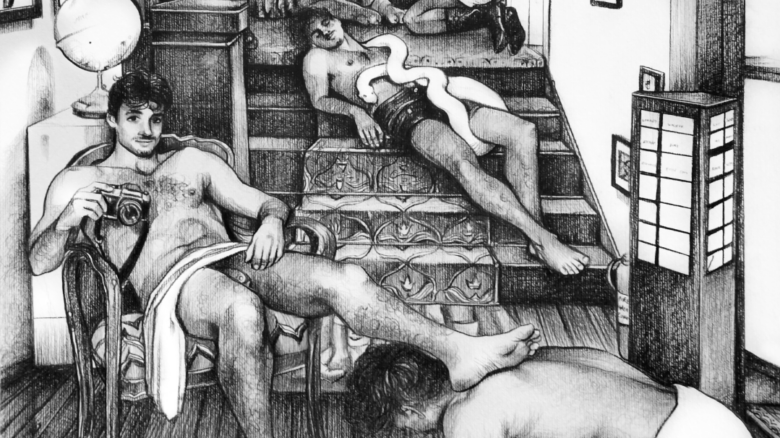
For his senior thesis at Princeton in 2004, Costanzo created a performance piece that wove together six “lost” pieces of music written for castrati, spoken word, choreographed dance and stage design. The piece was called The Double Life of Zefirino, and filmmaker Gerardo Puglia directed a short documentary about it, which screened at the Cannes Film Festival in 2007.
Above all else, Costanzo says he is driven by his constant quest for beauty. “Our job as the performer is not just to sing beautifully — not just to be perfect in our musicality or to be satisfied that we know what we’re doing — but rather that we have to bridge that gap [between audience and performer].”
“The thing with Anthony is, he pushes boundaries. He doesn’t play it safe,” Gravett says. “He likes to make people think.”
Unlike a lot of singers of his type, Gravett thinks Costanzo “could have a broad, long career.”
To succeed in the world of opera, Gravett says, “first and foremost, you have to be good. You have to stand out in the crowd — the right sound, talent, the goods — so many things have to come together at the same time. He’s standing out in the crowd.”
Costanzo has received numerous awards and accolades, most recently first prize at the 2012 Operalia competition.
“I honestly think the biggest challenge on the horizon is getting people to respond to opera,” Costanzo says. “I wish I could spend most of my career going to places that have nothing to do with classical music and doing it for people and getting them engaged in it.”
He describes the rush of emotion he can feel when something in a performance touches him in the right way.
“It may only happen for an instant, and I often liken it to breaking open an orange peel when it sprays out a little bit of zest and you can’t even really see it, but it’s incredibly fragrant and it stays with you, and it’s this ephemeral thing.”
 Why you can trust Xtra