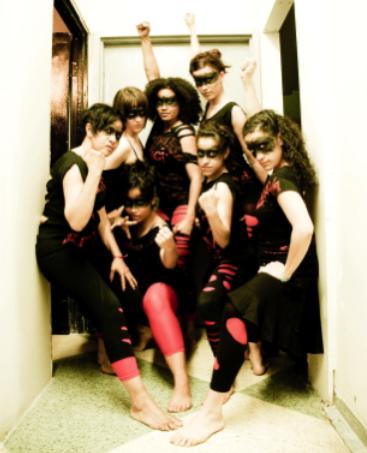
The MataDanZe Collective was born of movement. And it is a movement as well as a dance and theatre collective — one that celebrates women and their capacity for growth and expression, especially in the queer community.
On Nov 30, MataDanZe is celebrating its fifth anniversary.
“The event is in celebration of not having to do this on our own,” MataDanZe co-founder, Victoria Mata, says. “It’s for the people who believed in our story.”
Mata works with youth and aims to educate young people who might experience discrimination if they are not straight. She highlights the prejudice and bullying that still happens so frequently in Canadian schools.
The majority of the collective is Latina, but that is not the focus.
“We’ve been involved in the queer community,” Mata says. “I came out after I left Venezuela. I didn’t go through hiding it over there. When I was younger, I never imagined this kind of change. For me, I dated men. [Our sexuality] is fluid at different times of our lives.”
Mata’s intrinsic desire to foster acceptance for women of any background and sexual orientation is at the heart of the collective.
Her Venezuelan roots gave her the capacity to understand prejudice and stigma outside of Canada, though she emphasizes that while the face of homophobia can be more severe in other places, Toronto still has a lot of work to do.
“Toronto is not a great city overall,” she says. “There are still problems with homophobia. There are positive spaces in Toronto that allow for the culture to be constructed, so we do feel like we have backup.”
Members of the collective have performed in Venezuela, and while learning dance, the six current members do training and workshops about a variety of issues facing women and the queer community. While Mata explains “queer” has become the preferable term in Canada, encompassing gay, lesbian and trans communities, it doesn’t stand out nearly as much in Venezuela.
Since it is derived from the English language, it has little resonance there, Mata says.
Wednesday’s event will include videos, performances and sets by DJs Ale Beba and Cozmic Cat. Members and friends of the group will impersonate the collective.
“It’s an ongoing joke. Our community is going to imitate us,” Mata says, laughing.
MataDanZe has seen 14 members come and go, and the collective is about to put together a calendar that highlights six years of movement and activism. Their diverse backgrounds continue to further its reach.
The eldest member of the collective, Gricel Severino, 46, says her experience with the group has made her feel stronger as a woman in the queer community, as a mother, and also as a Latina.
“I feel great being part of the collective,” she says. “It’s totally different down there [in Venezuela]. People feel marginalized. I wasn’t out [then], but I saw other people feeling like that.”
Severino specializes in spoken word and theatre. Dance is also among her talents.
In the coming year, she’d like to increase awareness in the queer community by teaching youth dance and other forms of expression, which in turn can provide a healthy channel for dialogue.
“I would like to do a piece with both boys and girls, one that deals with youth violence,” she says.
MataDanZe recently won a resilience award from the Women’s Health in Women’s Hands organization.
“That was really touching,” Mata says. “It shows the footprint we’ve left.”
The Deets:
MataDanZe’s fifth anniversary
Wed, Nov 30, 7pm
Augusta House, 152A Augusta Ave
 Why you can trust Xtra