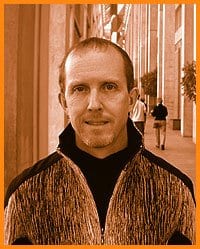
Ottawa is losing one of its leading literary lights.
After nearly 18 years here, John Barton, poet and co-editor of Arc: Canada’s Poetry Magazine, has left for The Malahat Review, a literary magazine in Victoria, British Columbia. The departure marks Barton’s return to his roots.
“I feel that there’s something kind of magic about this,” Barton says. “The Malahat was founded by the man I studied with – Robin Skelton. It’s a full circle.”
Barton lived in Victoria from 1978 to1983, completing a creative writing undergraduate degree at the University of Victoria. Skelton, his English professor, founded the Malahat in 1967.
While Barton was born in Edmonton and raised in Calgary, he made his name in Victoria, writing his first two books, A Poor Photographer and Hidden Structure.
“It’s where I began to become a writer,” Barton says. “I proved myself.”
As a poet, Barton found Ottawa’s literary scene welcoming upon his move and made friends such as poet Blaine Marchand and local librarian Philip Robert, who started Wilde About Sappho, the annual gay and lesbian literary event. Barton always wanted to start such an event.
“I thought it would be cool to call it Wilde About Sappho, but never got around to it,” Barton says. “Philip asked if he could use the name and I thought: ‘Why not?'”
Chris Levenson, Arc’s editor in 1987, made Barton an associate editor. He became co-editor with Nadine McInnis in 1990, and Rita Donovan in 1995. With Donovan, Barton created new poetry contests and publications, and a recent issue focusing on Ottawa poets. Recently, they both left Arc over a six-month transition period as more new blood arrives. Donovan enjoyed working with Barton.
“John’s nickname at Arc became John of Arc,” Donovan says.
Anita Lahey, who joined the Arc Board two years ago, also enjoyed Barton’s dark wit.
“He can find a simple solution that at first seems complicated and daunting,” Lahey says, “whether dealing with people or a piece of writing.
“He has quietly done a lot of work and not looked for huge amounts of credit.”
The Malahat flew Barton out west for an interview last fall. It offered him the job within a week. Barton quickly accepted.
Having worked as the National Gallery’s Publications Coordinator until last December, Barton will now work half-time with the Malahat Review and concentrate more on writing.
As for the nation’s capital, Barton will miss Ottawa’s gay community, literary friends, swimming with the Rideau Speedeaus and Meech Lake.
“Sometimes, I think I’m leaving Ottawa just at the time it’s about to come into its own,” Barton says. “There are lots of institutions starting to establish themselves. The Ottawa Art Gallery is one.”
When asked about having regrets, Barton was tight-lipped but humorous.
“Anything I regret I’m probably taking with me anyway.”
 Why you can trust Xtra