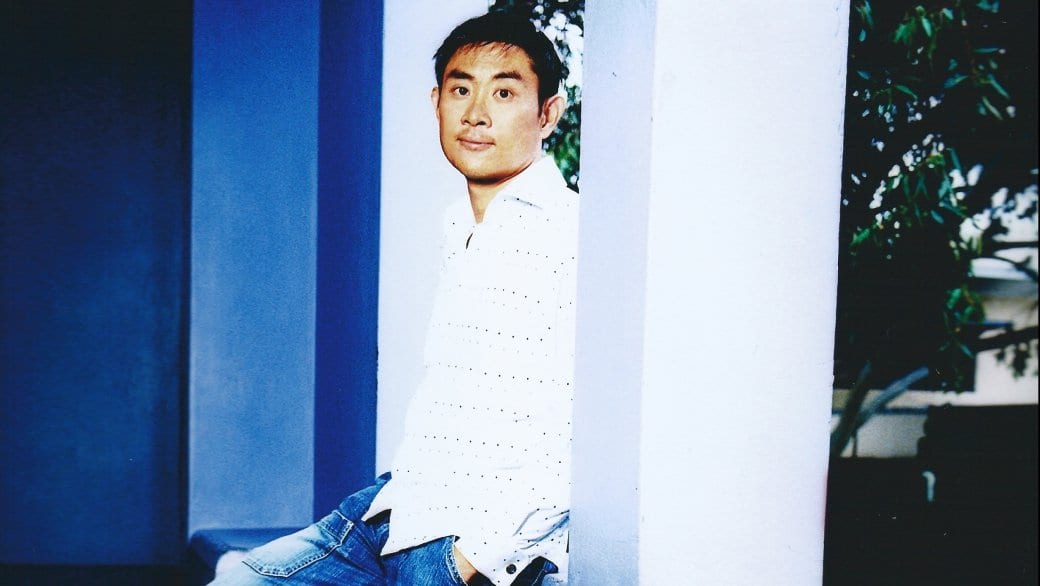
Lyle Chan interrupted his studies in classical music composition to become an AIDS activist. Now, his worlds have coalesced as he tells his story — and the story of that dark time — in String Quartet: An AIDS Activist’s Memoir in Music.
“I was studying music in Wisconsin in the late 1980s,” Chan says in a Skype interview from his home in Australia. “I suppose, if AIDS hadn’t happened, I would’ve become a full-time composer right away.”
Instead, he headed to Australia, where his family had moved from Wisconsin, and threw himself into protesting, starting a buyer’s club and importing unapproved AIDS drugs into the country. He lobbied the government to accelerate approval for drugs and experimental therapies.
He didn’t give up on music, though, and the pieces he composed amid the activism form the basis for the performance he’ll bring to Vancouver, with the Acacia Quartet, for the North American premiere of the piece, as part of the Queer Arts Festival.
While the four players perform the compositions, Chan will narrate unscripted about the inspirations behind the music.
“All painters paint from what they know, what they experience,” he says.
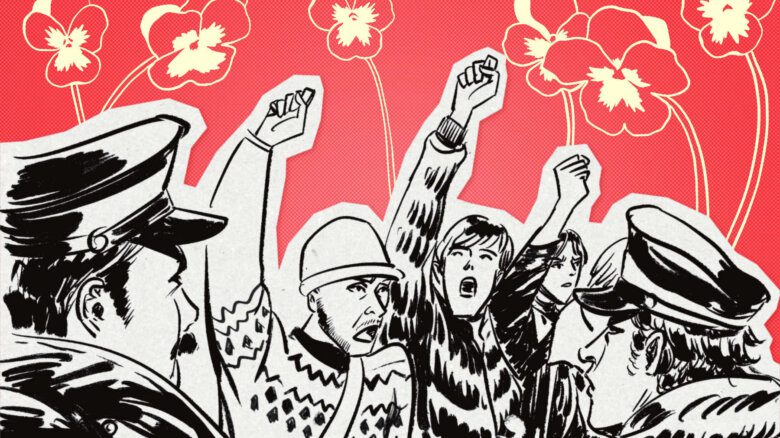
The music he composed during that time reflects the emotions he experienced. String Quartet may be the only classical music performance to include police whistles, a reference to Chan’s deep involvement in ACT UP, the AIDS Coalition to Unleash Power.
“In ACT UP, the public demonstrations were loud and furious,” he says. “We used whistles as we marched down the streets to sound bigger than we were, so a few hundred people can sound like thousands of people and could be heard from city blocks away.”
The performance also includes “portraits in music” of some of Chan’s heroes, including a friend and fellow musician who abandoned his craft entirely to dedicate himself to activism, and a Wall Street bond trader who did the same. Another profile features a friend who was a professional actor in New York who quit to return to Australia to add theatricality to ACT UP’s demonstrations and actions.
Chan and the Acacia Quartet have staged the piece in Australia and are now travelling here for a single performance.
While Chan says he would someday like to see other quartets perform the work, it is complicated material.
“It’s in 17 sections, 17 bits of story to be told,” he says. “Acacia took over two years to learn it.”
When protease inhibitors and other treatments assured Chan that there would be survivors of AIDS, in the second half of the 1990s, he transitioned from activism back to his music.
“AIDS isn’t over,” he cautions. “It has a happy ending for the affluent first world, but there’s still an expanding epidemic in Asia and Africa. It once again highlights the issue of discrimination within illnesses. It’s not just about having a drug that works. It’s about access to the drug that works.”
String Quartet: An AIDS Activist’s Memoir in Music
Friday, June 24, 7pm
Roundhouse Community Centre, 181 Roundhouse Mews, Vancouver
Tickets $15-30
queerartsfestival.com/event/lyle-chan-string-quartet-aids-activists-memoir/
 Why you can trust Xtra