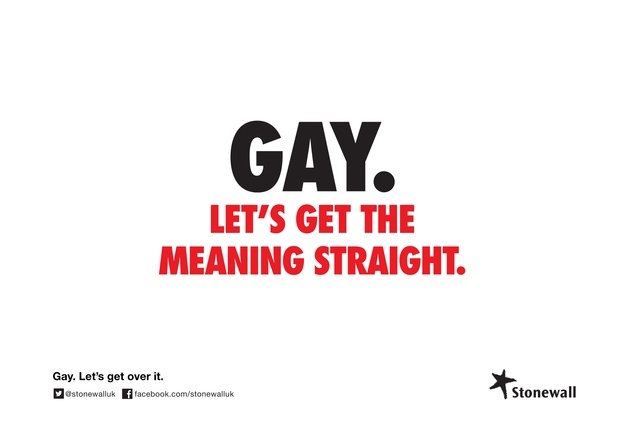
Pop singer Will Young recently debated journalist Milo Yiannopoulos on BBC’s Newsnight over the use of the word “gay.”
Ninety-nine percent of gay young people in the United Kingdom regularly hear the phrase “that’s so gay” in school playgrounds, and 84 percent find it upsetting. Stonewall’s campaign to educate children on the harmful effects of the word gay has reached 2,500 secondary schools, half the secondary schools in the UK.
Young is a part of Stonewall’s campaign and believes the word “gay” should be censored because of its damaging effects, while Yiannopoulos doesn’t believe in “language policing” or restricting the vocabulary of young people.
Their discussion is interesting and touches on the topical issue of word mongering as seen with Hallmark’s decision to omit “gay” from a Christmas decoration featuring lyrics of the carol “Deck the Halls,” while an article by Huffington Post asks, “Gay dudes, can you just not?” and is about the use of the word tranny, particularly its perceived misuse by gay men and drag queens.
Personally, I’m in agreement with Yiannopoulos on this one. Despite believing Young and Stonewall’s campaign is coming from the best possible place, “gay” is one of many words that has multiple meanings. Laying down the law and giving it one sole definition is confining. It goes against the very freedom words are meant to give us.
Check out Young’s and Yiannopoulos’s points of view:
 Why you can trust Xtra