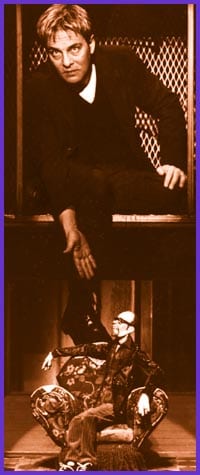
More than any other facet of a Ronnie Burkett play, character drives the action. Which is surprising in that his characters are 26-inches-tall marionettes.
Clothing, and more specifically, fabric, has always been a tool for Burkett when he is developing his characters. “Fabric! Fabric is the thing that speaks to me,” says Burkett, who’s new play Street Of Blood opens next week at Canadian Stage. “Just show me a swatch and I can tell you who should be wearing it.”
The search for patterned fabrics small enough for a miniature body is a never-ending quest for Burkett. While on the road, he makes sure to visit the local fabric store. “I have 72 boxes of fabric in my studio. Sometimes when I’m stuck on a character I go to those boxes for inspiration.
“But not so much any more. Now it’s the script for me. Who interacts with who comes very quickly to me. (These characters) are all out there.”
The artist, who defines his sensibility as “gay Albertan,” also draws inspiration from the population around him. “I am always recording. For instance, when I go for groceries – the recorder is on. I watch the senior citizen in her plum coloured sweat pants… or how someone ties their belt… the phrases people use.”
Phrases and voices, though, are not a character’s genesis for Burkett, even though, in any given show, he performs 20 or more different voices.
“I try to stay away from clichés, advertising and cartoons. I don’t do voice. The voice comes to me while I’m sculpting the head. I model them out of plasticine. And if the voice never comes, I walk away.”
In the lobby, Canadian Stage has set up a display on how Burkett builds his puppets.
 Why you can trust Xtra