BY ROB SALERNO – Against my better judgment, I stayed in and watched the embattled new ABC sitcom Work It last night. What can I say, readers? I do this for you. 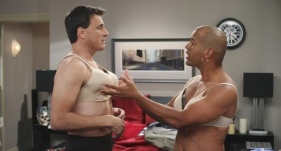
It’s only fair that I give this show a chance before rushing to judgment, after all.
I’m supposed to tell you now that the show is horribly transphobic and homophobic and it sets the gay rights movement back a generation. But that’s not really true.
Work It is godawful. It’s not funny — it’s ridiculous. It’s poorly written, shot and designed. It’s stale. Passing references to cellphones and the casual use of the word bang aside, the script reads like a warmed-over “war of the sexes” sitcom from the late ‘70s or early ‘80s. It would be more accurate to say that the show is attempting to undo the progress of all of American society and culture over the past generation.
And yet . . .
It really was fascinating to watch. Okay, hear me out. I love a good piece of trash every now and then. I’ve watched Gigli three times and own the VIP boxed edition of Showgirls. The interminable 22 minutes of Work It felt like a surreal experiment in television, where each scene dared the next one to be worse and lost.
That the cast members throw themselves gamely into this festering pile of crap is a tribute to them. It felt like watching Fear Factor or Survivor – what dignity-stealing scenario will lead actor Ben Koldyke be forced into next!?
As for the claims of homophobia and transphobia, I really couldn’t point to anything at all. There aren’t any trans characters on the show, nor are the men’s decisions to go in drag presented as degrading. It’s written as almost perversely empowering, which is actually an interesting decision.
If anything, the show could be described as misogynist. It’s a less-clever throwback to old men vs women sitcoms of yesteryear like Who’s the Boss, with the farcical elements of Three’s Company and minus any of the wit. It seems to take as its starting premise that women have won the war of the sexes: they’ve taken all the jobs, fired all the men and are planning to keep them around only as sex slaves (seriously, one of the characters actually says that).
On the other hand, when Koldyke’s character goes to apply for a sales job at a pharmaceutical company, he finds out that they’re hiring only women because all the doctors want to bang them (again, seriously, that’s the line). So, don’t worry, in this world, women have conquered all only to pimp themselves out to doctors, the only profession that is still exclusively male.
So he goes out in awful drag to become the sort of sales girl that every straight doctor will want to rail. And why not? No one else in the show seems to think Koldyke is anything but a rather large woman.
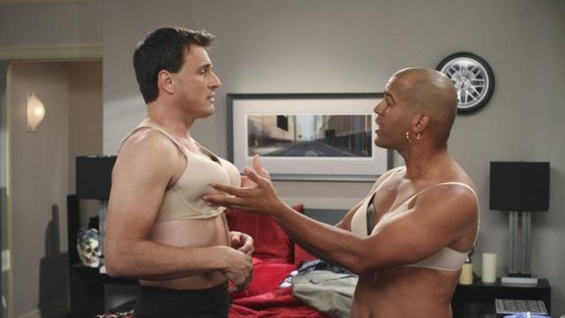
Interestingly, AV Club critic Todd VanDerWerff suggests “crossdressing farce just seems like one of those things that makes more sense when confined to a film or a stage play, where we won’t spend week after week watching the other characters seem like numbskulls.” I think he’s got a point here, and I wonder if it extends to the reason GLAAD and other groups got so upset.
Confined to film or stage or sketch comedy, audiences tend to accept that the men-forced-to-dress-as-women trope will come to a resolution that restores the status quo but all parties having learned something about themselves and about gender relations (see Tootsie). There’s rarely in these stories the suggestion that the characters are actually trans. But in a serialized story that has to keep up the charade indefinitely, it seems less likely that a proper resolution would come. Instead, it’s easy to assume that all of the characters will continue perpetuating the worst stereotypes of gender roles while teasing out the hysteria of men-hiding-as-women forever and ever until cancellation.
Based on Work It’s first episode, I think it’s unlikely to make any kind of point or develop any sophisticated understanding of gender fluidity. But given the myriad problems in the world, was scrapping over a doomed sitcom really necessary?
Look, it’s a low point of television history, no doubt. But was it really worth getting our titties in a twist over?

 Why you can trust Xtra