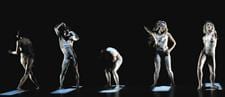
Dave St Pierre is sick of talking about tits and ass. I can see why the Montreal-based queer choreographer may be tired of journalists asking about the dancers in his new show Pornographie des Âmes (opening at Harbourfront Centre this week as part of the World Stage fest) spending most of their time on stage naked. But when you make a show where everyone’s private parts are flying every which way, wouldn’t you expect the question to come up?
“I’m surprised that people are so interested in the nudity as I’m certainly not the first choreographer to use it on stage,” St Pierre says. “Choreographers have been doing this for more than 40 years. I don’t know why it’s still so shocking.”
The title itself is likely to cause a bit of a stir, though St Pierre insists he isn’t thinking of porn in a sexual way. “For me porno- graphy represents those things about ourselves that we want to hide from society,” he says. “Just like a magazine under the bed or a DVD behind the bookshelf. There are all sorts of things we experience in life that we are ashamed for other people to know about.”
The piece itself touches on subjects as wide-ranging as fat-phobia, fast food and 9/11 and employs a pretty unconventional mixture of music including Maria Callas, Rob Zombie and Björk. The company of 14 dancers use text and movement to tell stories of murder, love and, not surprisingly, sex, while mostly naked with a few splatterings of fake blood here and there for good measure.
Though St Pierre says it wasn’t his intention to shock, he certainly got some attention when the work premiered in Montreal in 2004. Some critics hailed it as the product of a young genius, while others thought it was just plain offensive. St Pierre himself seems relatively indifferent to all the hype. “You have to follow your art, not what other people say,” he says. “I will always try to push the limits with my work. If someone tells me I can’t do something on stage, I’ll do it.”
The piece has been touring Europe for the last few years, building St Pierre’s fame as well as a demand for new work from him among presenters and the public alike. He has been dubbed both an enfant terrible and a rising star, but is quick to shrug off those labels. “In contemporary dance we don’t really have stars,” he laughs. “If I wanted to become a star I’d be on So You Think You Can Dance?”
Though he’s not intent on becoming a household name he certainly wants people to hear what he has to say. At one point in the show a group of naked female dancers spread their legs wide to the audience, only to have their innermost glory covered up by black censorship boards. Far from just being an opportunity to flash some pussy, St Pierre has something more in mind here. “I wanted to talk about the growing tide of censorship in our society,” he says. “The Harper government is working to censor artists that they don’t agree with by cutting funding to certain programs. They want to move our culture is a conservative direction and we need to talk about this.”

 Why you can trust Xtra