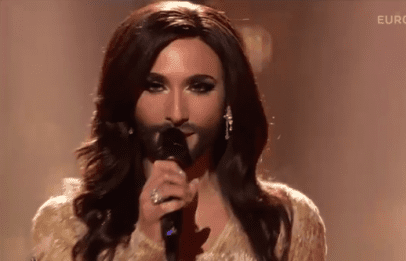

Conchita Wurst is probably in the middle of the best week ever. The bearded beauty not only won the Eurovision 2014 song contest, but she’s already making headlines around the world, she’s hit number one on the iTunes chart (in Russia, but still), and she’s even made a powerful ally: CHER. THE LORD AND SAVIOUR CHER.
While Cher didn’t actually get a chance to watch Eurovision, presumably because she was busy being CHER, she took time to log onto Twitter and lend her support for Conchita Wurst after seeing some of the hate being sent her way.
“Can Any1 Imagine The Tears This Boy Has SHED… Trying 2 B True 2 Himself ? The Sheer GUTS its taken 4 Him 2 Achieve His Dream..on His Terms” she wrote. “I Remember when Sonny & I were Called Names, Hit, Thrown out of restaurants, Stores CHURCH, Off TV Shows…JUST BECAUSE WE “LOOKED DIFFERENT” [Emoji of a crying face]”
Cher concluded by saying that “The Way Some1 Looks is Not a Threat [Emoji of a bouquet.]”
That being said, the legendary diva did have a final piece of advice for Conchita, saying “U Deserve a Lovelier Name & Wig [Rose.]” On one hand, my gut reaction is to defend Wurst because she did really look stunning and her wig looked great. On the other hand . . . it is Cher. When Cher critiques your wig game, you kinda have to just take the note and move on.
 Why you can trust Xtra