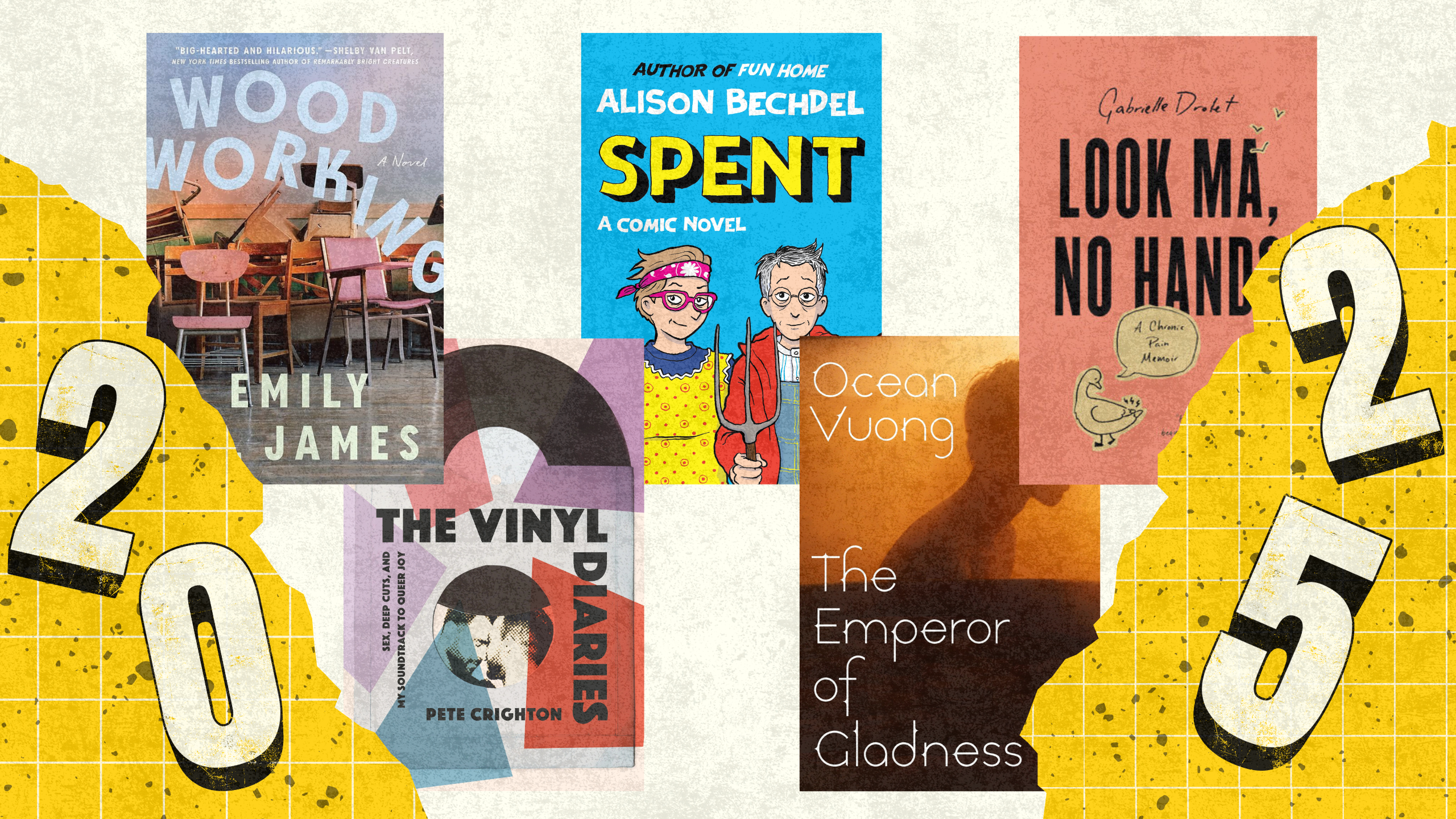
When life gets tough, reading a good book is a surefire and chic way to escape or expand your mind. Here are the Xtra team’s selections for the very best queer and trans books of the year.
Spent by Alison Bechdel
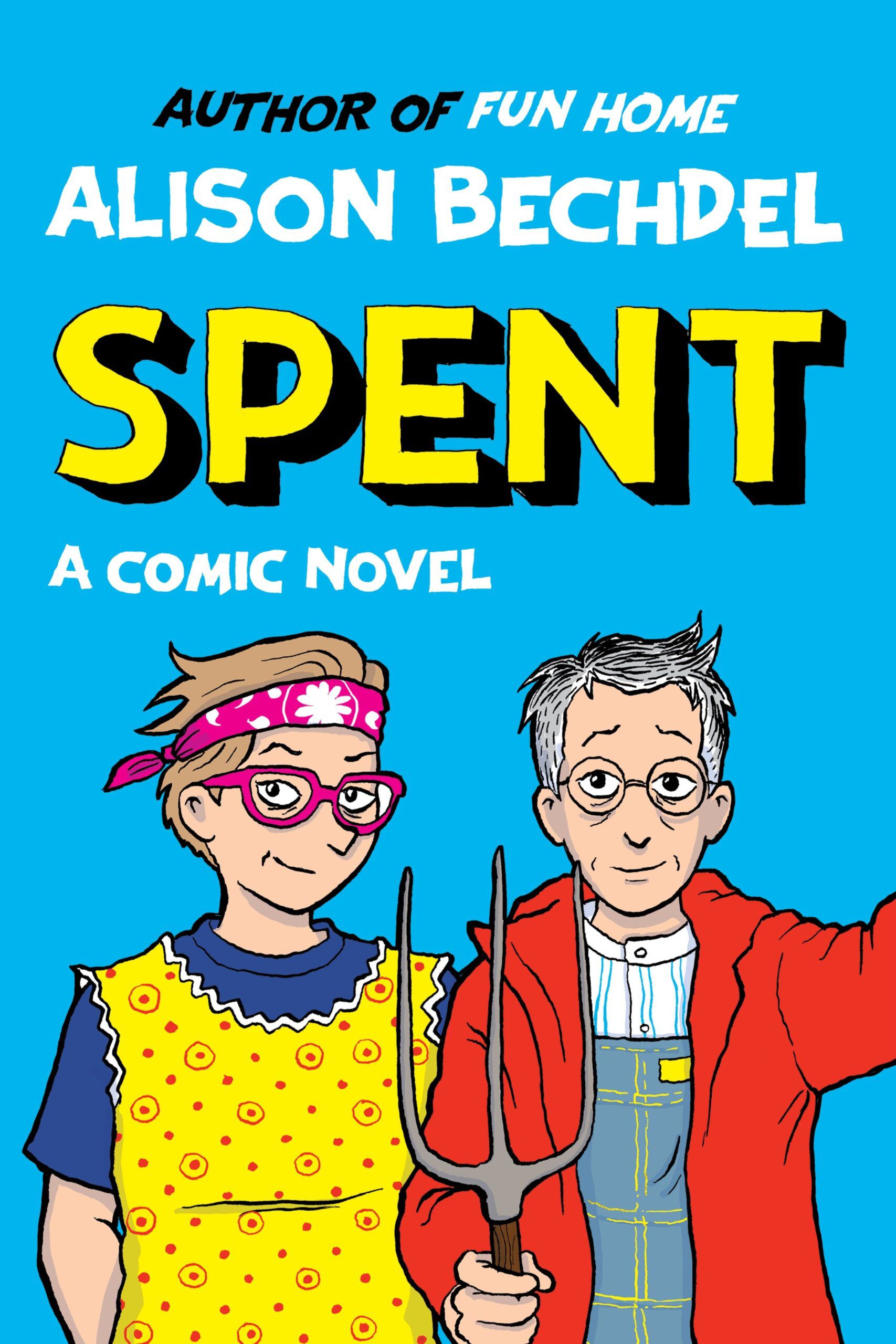
I came of age with Alison Bechdel’s comic strip Dykes to Watch Out For, though after they were originally published. Some people are Fun Home superfans, but DTWOF has my heart. It is the DTWOF cast of characters that is revived—and expanded upon—in Bechdel’s latest, Spent. Except Mo, the series’ protagonist, who has always had similarities with Bechdel, is Bechdel herself. Or, at least, is a cartoonist. Named Alison Bechdel. Enter, autofiction.
In it, Bechdel has written a memoir about growing up with her father (see: Fun Home) called Death and Taxidermy, which has been adapted for television (see Fun Home’s adaptation into a Broadway musical). She and her partner are raising goats, grappling with capitalism and technology and the demands of the day, all against the backdrop of the COVID-19 pandemic.
The book is about money and the ways money defines and eludes and shapes and limits us. But really, for me, the book is meta upon meta, a glimpse at the lives of beloved characters, and a refreshing look at queer middle age within intentional community and chosen family. It’s about living your values, or trying to and sometimes succeeding, while the people around you attempt the same, or don’t. I didn’t realize how much I needed to read about people at a similar life stage, albeit a bit older, navigating queer life at a time where coming out is not top of mind, but the changing landscape and language of queer life as we age is.
—Tara-Michelle Ziniuk, managing editor
The Unworthy by Agustina Bazterrica
In Agustina Bazterrica’s new novel, a group of women live in a secluded convent ruled over by a mysterious figure known only by His capitalized pronouns. Outside the convent, the world is in ruins, having fallen to a perhaps-too-on-the-nose lethal combination of climate change and artificial intelligence. Inside its walls, the society is organized according to a disturbing religious system whereby women are separated into classes according to their spiritual purity. And of course, true to the parameters of the fucked-up-convent genre, lesbianism abounds.
On its face, The Unworthy is a tale of religion. On a deeper level, it’s about how meaning is made, and why people come to accept abject violence and dehumanization. Like Bazterrica’s much-acclaimed Tender Is the Flesh, this follow-up novel is deeply concerned with the normalization of extremism in societies, particularly with how the erosion of meaning begins with language. The women of the convent selected as spiritually pure aren’t brutally mutilated when they have their mouths and eyes sewn shut, they’re “Enlightened.” The place where women are trapped in solitary confinement among human bones isn’t a prison, it’s the “Tower of Silence.” It’s this replacement of meaning that allows the book’s characters to shrug at staggering acts of cruelty. Despite the fantastical setting of the novel, its philosophical concerns are very relevant to our world, making for a story that is as illuminating as it is grotesque.
—Nour Abi-Nakhoul, contributor
Woodworking by Emily St. James
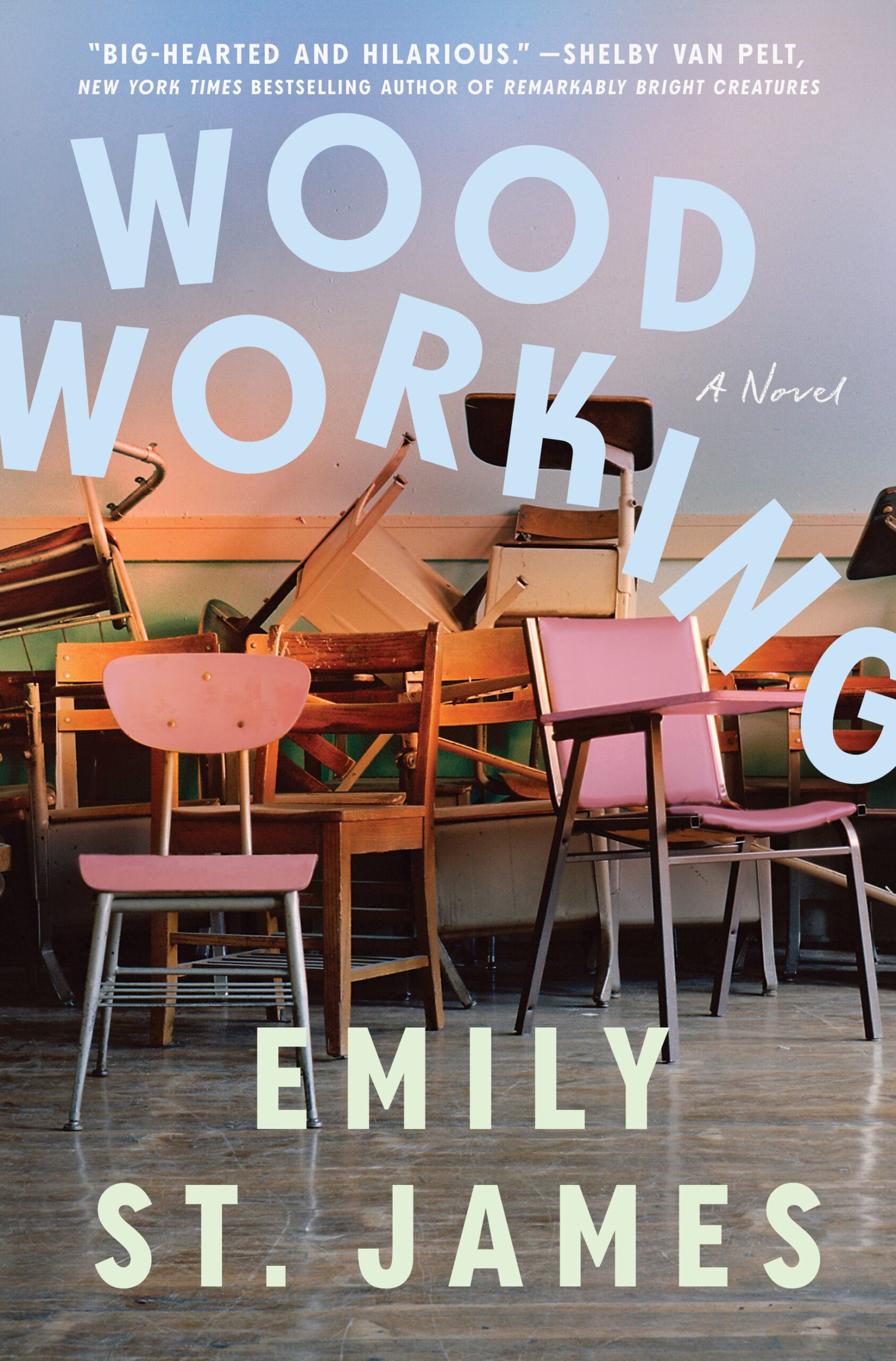
I’ve followed the work of Emily St. James for what feels like—and in a way is literally—a lifetime, dating back over a decade when we both had very different names and lives and she was my favourite critic at The A.V. Club. Now out as trans, St. James has largely pivoted away from criticism and into the realm of fiction as a novelist and TV writer for Yellowjackets—and I’m so glad she has.
Her first novel, Woodworking, was far and away my favourite thing I read this year. Set in South Dakota ahead of the 2016 U.S. election, the book follows Erica, a freshly out-to-herself trans woman high school teacher, and Abigail, the brash and very out trans student she confides in. It’s a witty and multi-layered look at intergenerational trans relationships set amidst a rough political moment, and St. James delivers plenty of painfully accurate internal monologues from both sides of the coin. But the book has a surprising number of layers beyond its central relationship, best captured by a twist about two-thirds of the way through that will have you rethinking everything and everyone you’ve learned so far.
Woodworking asks key questions about what it means to be trans not simply as an individual, but in community, and what we take and give in order to lead the lives we know we deserve. While its setting predates this current political moment, it feels even more necessary today as we all grapple with what we owe one another amidst a torrent of hate. St. James deserves a spot on the Mount Rushmore of transfeminine authors of our current moment (see also: Torrey Peters, Casey Plett), and I’m excited to see what she follows this up with.
—Mel Woods, senior editor, audience engagement
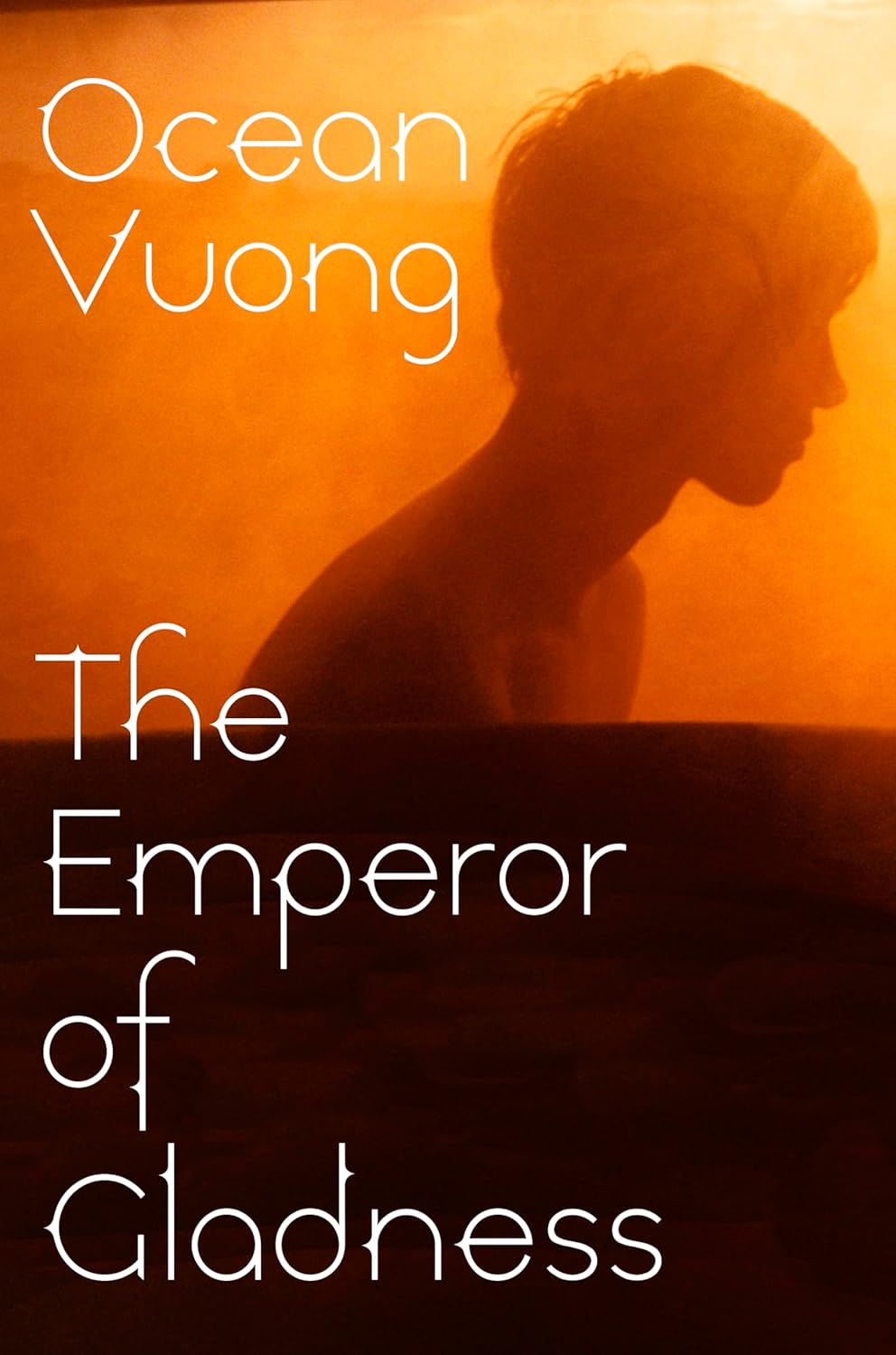
The Emperor of Gladness by Ocean Vuong
I remember when Ocean Vuong stormed the queer literary scene in 2019 with his first novel, On Earth We’re Briefly Gorgeous. The book was a deeply personal and award-winning mediation on the ties that bind us to our parents, home and race. Expectations were high, then, for Vuong’s follow-up. Yet despite the pressure, The Emperor of Gladness surpasses its predecessor. The book opens on Hai, a gay 19-year-old about to jump from a bridge to die by suicide, only to be stopped by Grazina, an elderly woman suffering from dementia. The two form the unlikeliest of bonds, and we follow Hai on the most universal of challenges: to wake up, each day, and face what comes.
Trained and often published as a poet, Vuong brings elegance and dignity to the mundanity of Hai’s life. From his minimum-wage job at a local fast food joint, to the favours he does for Grazina and his co-worker, there is undeniable value to Hai’s exsistence—no matter how seemingly small or unnoticed. The Emperor of Gladness is reframing that in which we deem things to escape—quiet towns, the service industry, elder care. These are not failures, nor is our queerness. We can be royalty in even the most compact of kingdoms.
—Kevin Hurren, contributor
Paradise Logic by Sophie Kemp
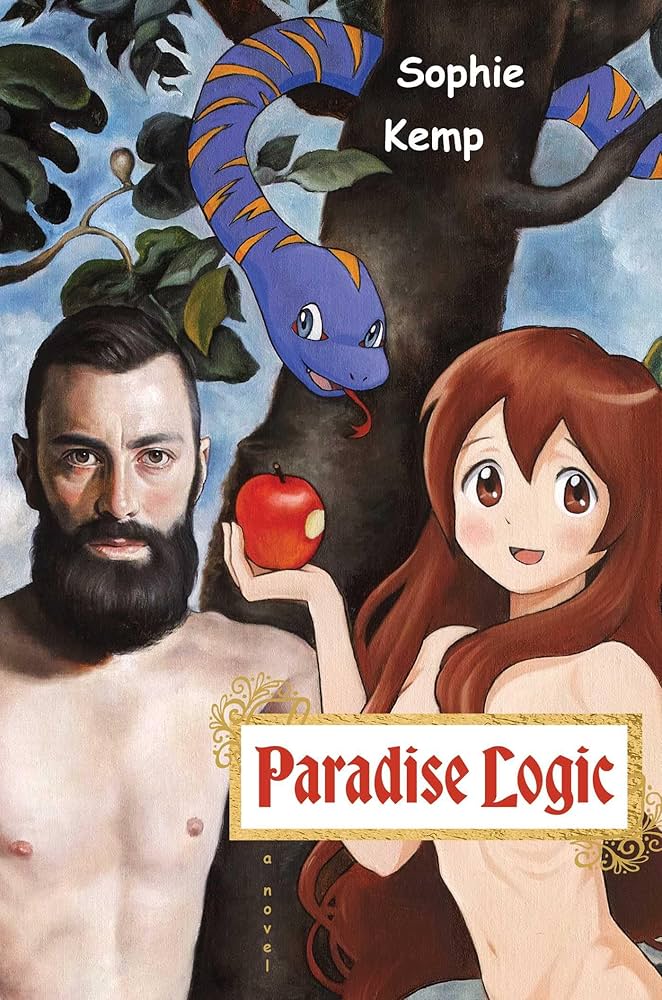
Don’t let the cover scare you off—let it draw you in. Sure, at first blush, Sophie Kemp’s debut novel, Paradise Logic, may seem to be a book in the vein of those movies where they put an animated character in the real world and hijinks ensue. But dig a little deeper and you’ll discover that the cartoon might be realer than what’s real. Paradise Logic follows 23-year-old Reality Kahn, who is on a quest to become the “greatest girlfriend of all time.” She traipses through Brooklyn, valiantly striving for the affections of Ariel, a boy whom she meets at a DIY venue known as “Paradise.” She joins a clinical trial run by a shady doctor to become a better girlfriend. She stars in water-park commercials. What can’t she do?
While Paradise Logic’s premise is almost absurdly heterosexual, it’s in its extremes that it finds its queerness—not just in the main character’s buried memories of past queer encounters that surface from time to time, but in the camp and extreme measures to which she resorts in her quest to acquire—and keep—a Boyfriend. Kemp understands well how our quests for love are eternal, terrible and deeply, darkly funny; the more absurd the narrative gets, the more true it feels. Is true love possible in a patriarchal world? Will Reality become the greatest girlfriend of all time? You’ll have to read it to find out.
—Oliver Haug, contributing editor
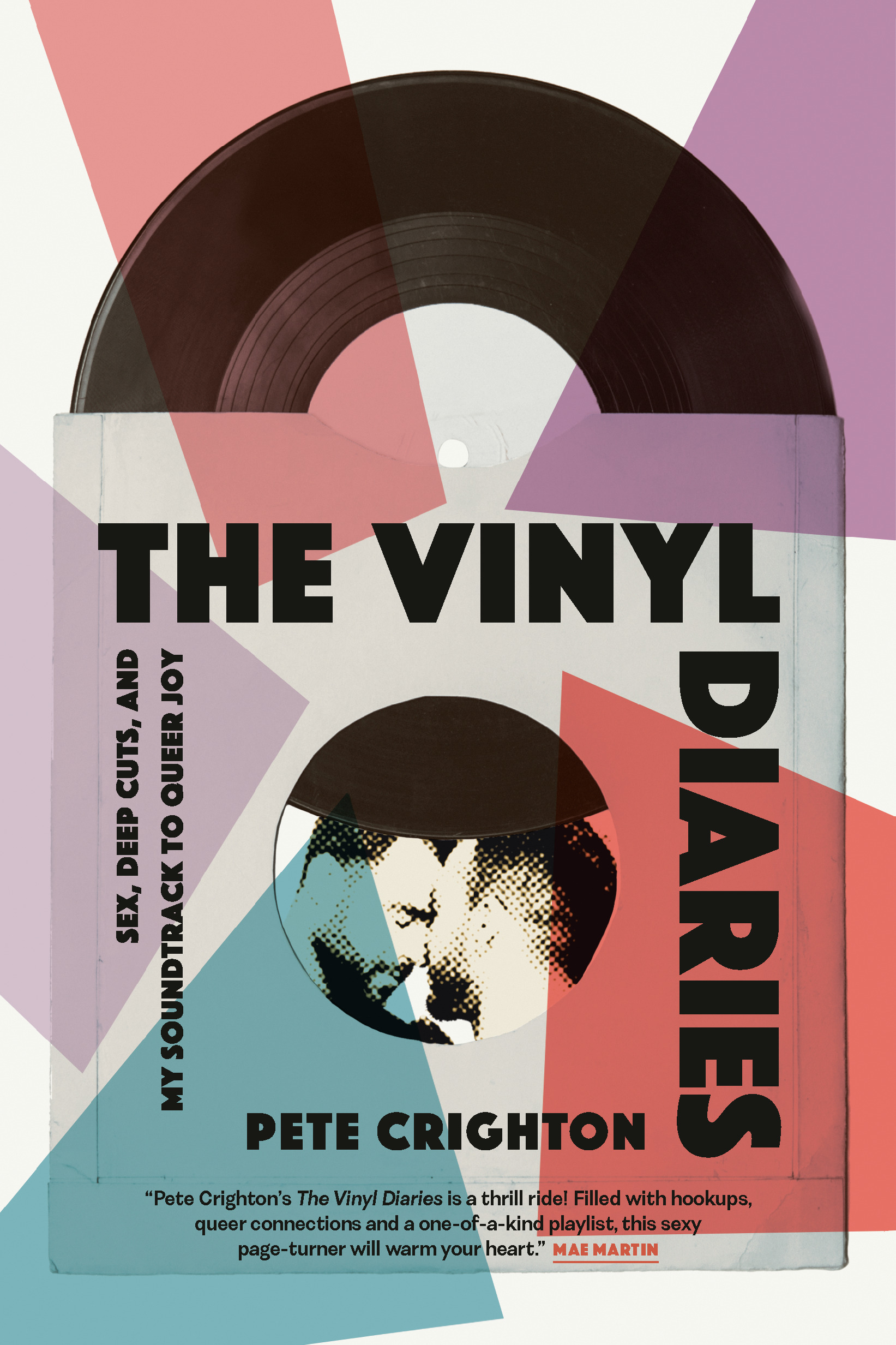
The Vinyl Diaries by Pete Crighton
Very early in his life, Pete Crighton embraced pop music as his primary delight and a balm for growing up gay in uptight 1970s Toronto; he bought the eponymously titled B-52s’ debut album when he was 11. But the pleasures of casual sex eluded Crighton until middle age. Like many gay men of his generation, he was terrified of HIV/AIDS. When his long-term relationship ended, he started, to be blunt, sleeping around, pairing each encounter with a well-chosen soundtrack. Gay men of a certain age will relate intimately to Crighton’s anxieties and sexual awakening, while other readers will marvel at his plucky/horny approach to sex and life, as well as his encyclopedic knowledge of left-of-centre pop music. The artists he name-checks and analyzes (Marianne Faithfull, Kate Bush, Tears for Fears, Björk, Stars, John Grant, just to name a few) will trigger nostalgia for those in the know—and FOMO for those who aren’t.
—Paul Gallant, contributor
Look Ma, No Hands by Gabrielle Drolet
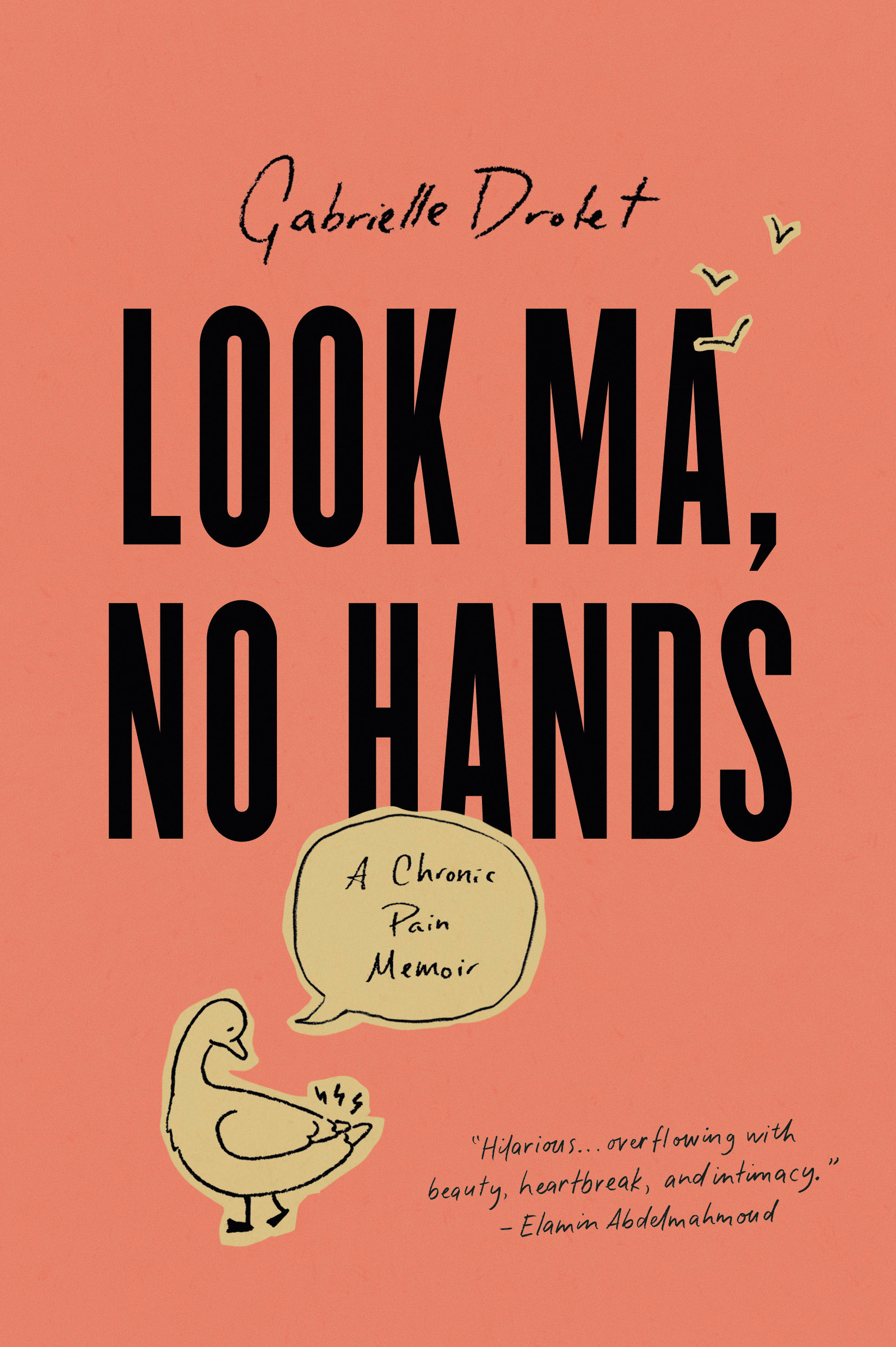
Gabrielle Drolet’s debut memoir presents itself as an account of how she adapted to a life-altering chronic pain diagnosis, but, like any great book, Look Ma, No Hands reaches far beyond its conceit. Drolet’s testimony about trying to date and schedule doctor’s appointments and scrape together rent as a 20-something unmoored by circumstances outside of her control is plain-spoken, clear-eyed and open-hearted. The book’s episodes are invariably delightful and profound. Look Ma, No Hands is a generational coming-of-age story about the inevitability of pain—and the unparalleled healing that can arise when one trudges through it.
—KC Hoard, associate editor, culture
 Why you can trust Xtra