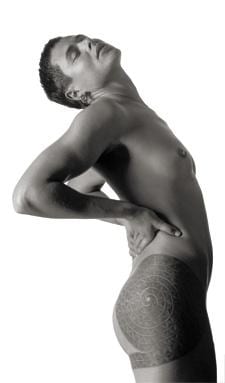
It’s an arresting image: a muscular naked Maori warrior, short-haired, square-jawed, with intricate tattoos cupping a pair of sculpted buttocks, the tip of a cock protruding down below but discreetly cloaked in shadow. Look closer and you’ll notice just a hint of a breast where you might not expect one.
The photograph is of performer Ema Lyon, and it appears on the cover of Assume Nothing, a book of gender-challenging photography published by New Zealand artist Rebecca Swan in 2004. That book inspired filmmaker Kirsty MacDonald to create a documentary of the same name in which the eloquent gender-variant New Zealanders who grace the pages of Swan’s book tell their stories. They include intersex activist Mani Bruce Mitchell, Japanese-Samoan fa’afafine art photographer Shigeyuki Kihara and transgender human rights activist Jack Byrne, among others.
Xtra recently chatted with Kirsty MacDonald about the film, which will screen at the Female Eye Film Festival.
Xtra: What inspired you to make Assume Nothing? What’s your connection with Rebecca Swan?
Kirsty MacDonald: I decided that I’d apply to do a master’s in documentary film at the University of Auckland, and to get into the course I had to write a proposal for a film I’d like to make. I walked past a bookshop and saw the cover of Rebecca’s book. So I went into the shop and pretty much read the book cover to cover and got goosebumps.
Everything it was talking about were the things that I wanted to make a film about — gender and sexuality and representation and power. I didn’t know Rebecca, but I tracked her down. It definitely was a collaboration in that Rebecca is central to the film, and she facilitated my meeting the other people who are in the film. The film kept evolving; it took five years to complete in the end, partly for my master’s, and then I spent an extra three years after that working on it.
Xtra: So the film represents nearly a decade of work for Rebecca, and seven years for you.
KM: Yes! It’s been quite a huge amount of work, and something I’m really passionate about and very committed to, but it’s hard to describe the toll it has taken. I don’t regret it at all, but I’d probably never do it again. It’s just all-consuming. But then I think about what happens when people see the film, that people might walk out of the cinema talking about the people they saw, take courage from it, examine their own ideas.
Xtra: What was your purpose with the film? It seems like a compendium of short biographies on gender.
KM: I’m really comfortable with the idea that it’s an activist film and that it comes from an activist position. Art doesn’t have to be about social and political issues at all, but art that can be political or raise questions, open up your mind and your heart, really throws me because it’s not easy to do without being heavy-handed. I definitely wanted to open up cracks in people’s thinking. Gender is one of the most powerful things we think we know about people. I definitely wanted to unsettle the certainty around gender.
Also, with all the people in the film, I chose to focus on either their creative process or how art or creativity or images have impacted their lives. I didn’t want it to be argumentative, heavy, talking to experts and psychologists. I wanted people talking about their own lives, and I wanted it to be a celebration. Not sensational or voyeuristic. None of them are ashamed or hiding or broken. They’re all really quite grounded in who they are. And it doesn’t stop. It’s a commitment to being real.

 Why you can trust Xtra